
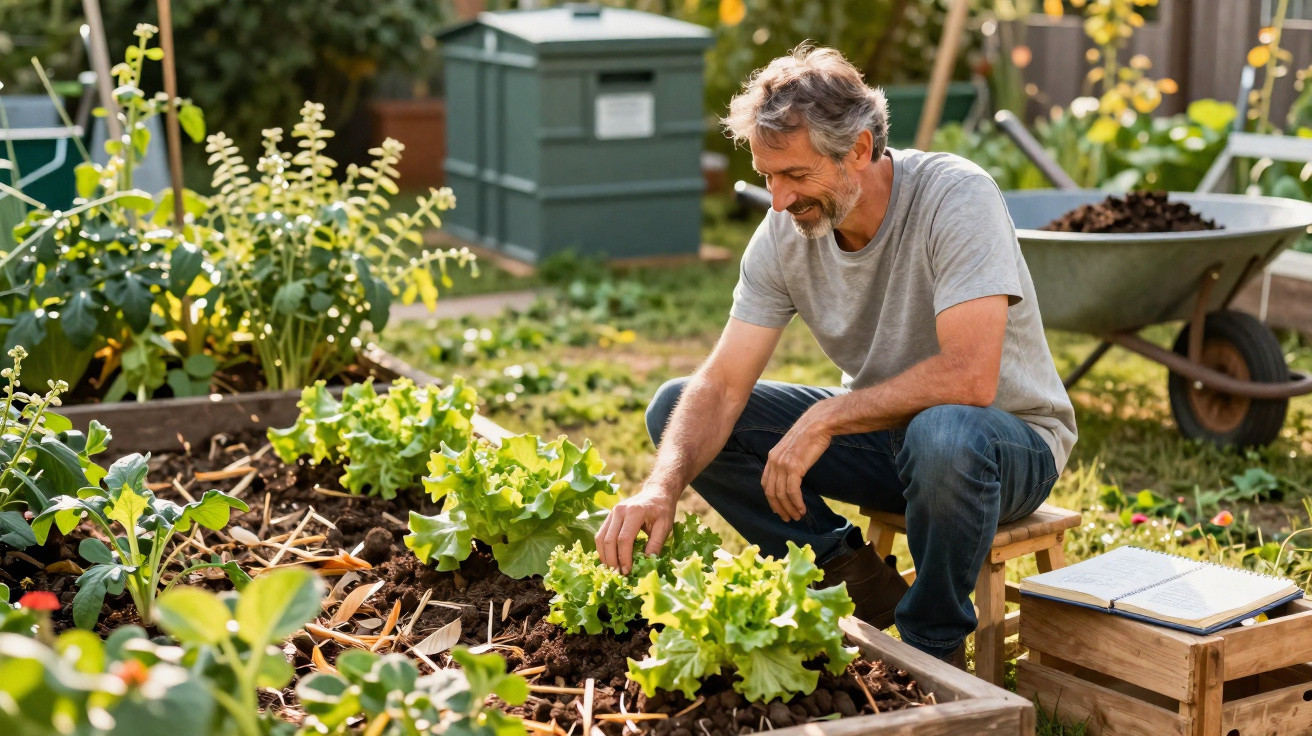
Late in the afternoon, with the sun sitting low, your neighbour is back at the fence.
His tomatoes shine like little red lanterns, beans winding upwards in relaxed spirals, and herbs tumbling out of every spare gap.
You look over at your own beds: lettuce in uneven patches, coriander that’s already bolted, and a miserable tomato cage that seems to contain more rust than fruit. You ask him-slightly suspiciously-how many hours he actually spends out there. He shrugs. “Honestly? Not that much.”
On every street there always seems to be one garden that looks as if it practically looks after itself.
No fuss, no heroic weeding marathons, no desperate watering sessions at sunset.
It can feel as though the soil is doing the gardening for them.
In a sense, it is.
The quiet secret of “lazy” productive gardens
Step into a genuinely flourishing, low-effort garden and something is immediately noticeable.
There are weeds, but they aren’t taking over. There are leaves on the ground, but it doesn’t look chaotic. The beds have a slightly untamed look-yet the whole space feels strangely settled.
The gardener isn’t outside every day with a hoe in one hand and a spreadsheet in the other.
More often, they’re having a coffee, pinching out two or three weeds by hand, then heading back indoors.
The garden seems designed to run on autopilot, with the person acting more like a calm overseer than a full-time labourer.
Claire is a good example. She’s a nurse who works irregular shifts.
Five years ago, she started a vegetable patch behind her small house, with one firm promise to herself: it wasn’t going to become a second job.
Rather than stripping everything bare each spring, she laid down cardboard and straw, planted into it, and left roots in the soil after harvesting. Year one looked untidy. By year two, neighbours were asking why her kale made it through the heatwave while theirs crisped and failed.
She waters less than they do.
She rarely tills.
And still, season after season, the beds keep producing.
The reasoning is straightforward-almost dull: when soil is kept covered, regularly fed, and not endlessly disturbed, it starts handling most of the hard work itself. Fungi thread their way around roots, earthworms draw organic matter downwards, and countless tiny organisms turn mulch into slow-release nourishment.
Instead of battling nature, the whole set-up relies on it.
That’s why some gardens seem to cruise along while others feel like a treadmill.
The more you work against the natural processes under your feet, the more work you create for yourself.
Methods that turn a garden into a self-running machine
The first quiet superpower in a low-effort garden is permanent soil cover.
That might be mulch, living plants, or a combination of both.
Imagine bare soil as exposed skin in a snowstorm: it dries out, cracks, burns, and erodes. Add a layer of straw, leaves, wood chips, or even a low-growing clover, and suddenly the soil stays cooler, moister, and protected.
Mulch works like a slow-release pantry for your plants.
It feeds soil life, and soil life feeds the roots.
In practice, that means less watering, fewer weeds, and fewer setbacks when there’s heat or heavy rain.
The second habit that separates “tired” gardens from the ones that quietly keep going is crop rotation and diversity. You don’t need a PhD-level plan-just a simple rule such as “don’t grow tomatoes in the same spot two years running.”
Different plants draw on different nutrients, attract different insects, and support different microbes.
Changing things up from season to season interrupts pest cycles and reduces disease-especially with classic troublemakers such as tomatoes, brassicas, and potatoes.
We’ve all done it: you plant the same crop in the same bed because it worked once and you don’t want to overthink it.
Then, by the third year, everything seems to fall ill at the same time.
The “lucky” gardeners are often just rotating quietly in the background.
The third pillar is what older gardeners call “feeding the soil, not the plant.”
In other words: compost, well-rotted manure, chopped leaves, and kitchen scraps going back into the ground in a steady trickle, instead of one big annual fertiliser binge.
Let’s be realistic: almost nobody manages this every single day.
Even so, a small, regular compost habit changes a garden dramatically over a few seasons.
“Once I stopped chasing miracle fertilizers and just built compost heaps, the garden kind of… relaxed,” an older gardener told me. “I realized the soil wanted to work, I just had to give it something to chew on.”
- Add a 2–5 cm layer of compost or well-rotted manure once or twice a year.
- Top it with mulch so it doesn’t dry and crust.
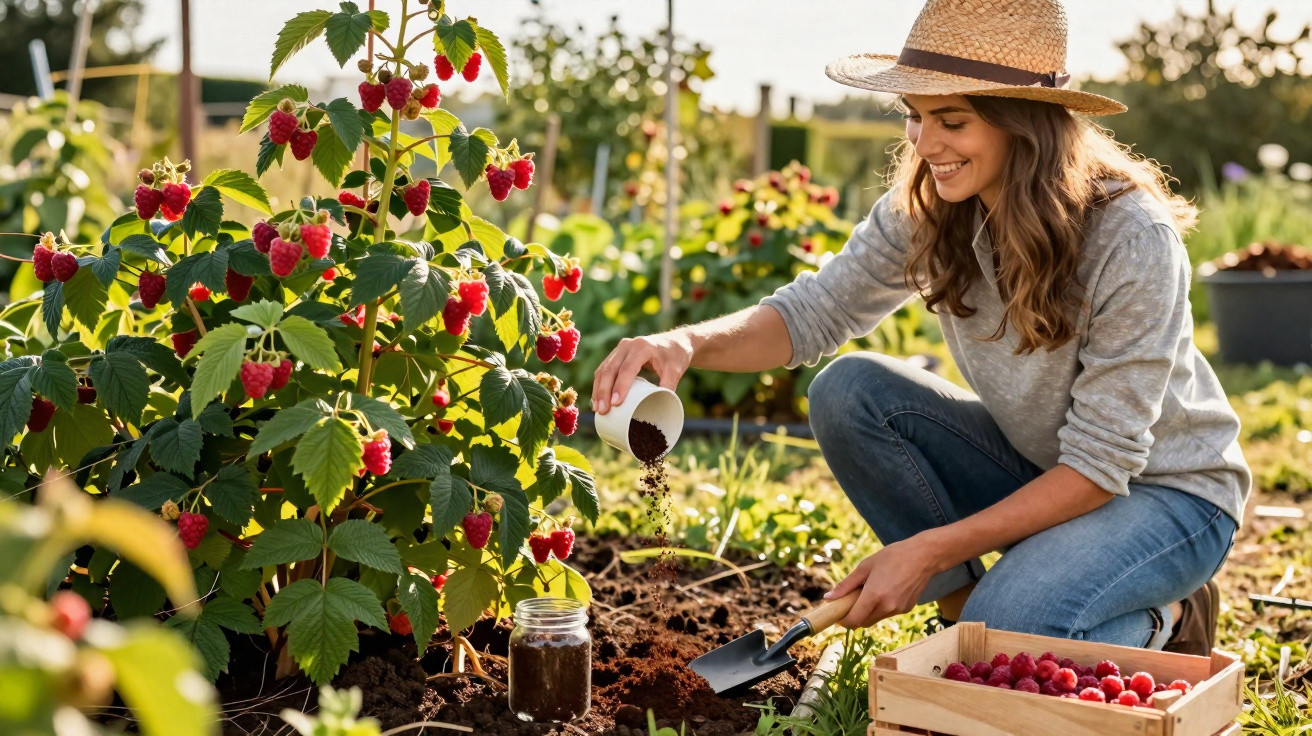
- Leave roots in place after harvesting whenever possible.
- Plant at least one “soil helper” crop: clover, vetch, beans, peas.
- Keep a small, always-running compost pile, even if it’s just a corner heap.
Why some gardens keep giving… and how yours can, too
When you really look at the gardens that stay productive for years with very little effort, they tend to share the same quiet mindset.
The gardener has stopped trying to control every square centimetre and started working with what the garden is already doing.
There’s more trust.
More patience.
Fewer dramatic clean-ups, and more small, regular actions that build on each other over time.
Self-seeding calendula returning to the same corner each spring, perennial herbs quietly reducing watering needs simply by… being there, and a raised bed or two set aside for experiments rather than high-pressure harvests. That balance of structure and freedom is what keeps the space thriving year after year.
You don’t need to take on every technique from day one.
You don’t need immaculate beds, complicated rotations, or expensive compost bins.
Begin with one square metre of soil that you promise not to overwork.
Cover it, feed it, and add variety.
Then watch what happens over a full year, not just one season.
That small trial patch can teach you more about your climate, your soil, and your own patience than a stack of gardening books. Once you see how much labour the soil takes on when it’s treated well, it becomes difficult to return to the old approach of “fight everything.”
Some people will always love the graft: the sharp spade, the turned beds, the perfect straight lines.
Others are starting to admit-quietly-that they’re tired.
The gardens that remain productive with minimal effort are often cared for by people who chose rest over performance, and observation over control.
They still get things wrong. Crops still fail. Slugs still arrive.
But the system they’ve created is more forgiving than punishing.
That’s the real luxury: not a problem-free garden, but one that keeps recovering-season after season-even when you’re busy, distracted, or simply not in the mood to fuss.
| Key point | Detail | Value for the reader |
|---|---|---|
| Keep soil covered | Use mulch, cover crops, or dense planting to avoid bare ground | Less watering, fewer weeds, more resilient plants |
| Feed the soil steadily | Regular small doses of compost and organic matter | Long-term fertility without constant fertilizers |
| Work with natural cycles | Rotate crops, welcome self-seeders, add perennials | Garden becomes more “automatic” and productive over years |
FAQ:
- How long does it take for a garden to become “low effort”?Usually 2–3 seasons of mulching, composting, and gentle care. The first year feels like setup, the second gets easier, the third often feels noticeably more stable.
- Can this work in a very small urban garden or balcony?Yes. Use containers with quality soil, add compost twice a year, and keep the surface covered with straw or living herbs to prevent it from drying out.
- Do I have to stop digging completely?No. You can still dig when planting trees or reshaping beds. The idea is to avoid deep, frequent tilling that constantly resets the soil life.
- What’s the simplest change to start with?Mulch every bit of bare soil you see. Straw, shredded leaves, grass clippings (dried first), even cardboard under paths all help immediately.
- Is chemical fertilizer bad for a low-effort garden?Occasional use won’t destroy everything, but relying on it alone skips the step of building living soil. Organic matter is what keeps the garden productive with less effort over the long term.
Comments
No comments yet. Be the first to comment!
Leave a Comment