
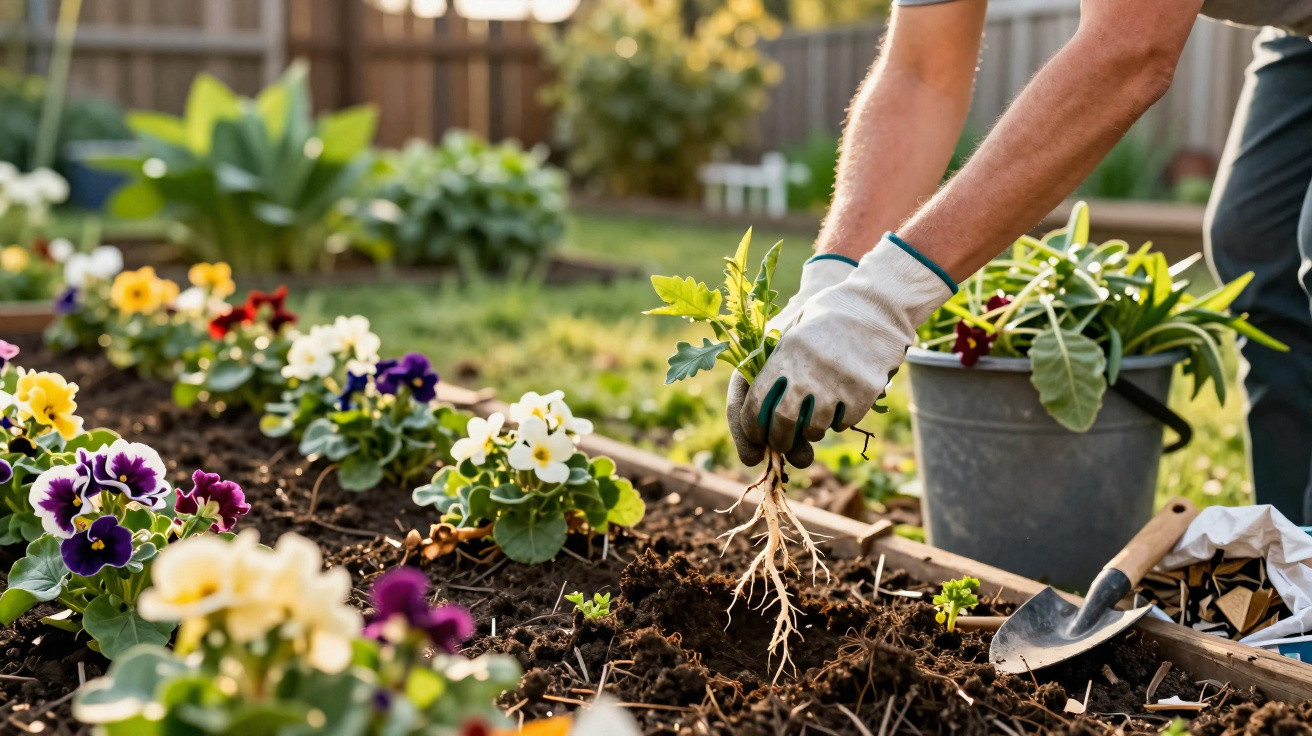
Five minutes - that was the promise you made to yourself about the flower bed last Sunday. You dropped to your knees, teased out those stubborn green interlopers, flicked them into a bucket, and stood up with that slightly smug feeling that comes from a job neatly done. Dark soil, crisp edges, plants with room to breathe again. Sorted.
Then, three days later, you stepped outside and your heart sank. The same weeds. In the same places. As if they’d been biding their time.
Eventually you stop blaming the rain, the windblown seeds, or your neighbour’s dandelions. You start to suspect the issue isn’t that weeds exist - it’s how you’re removing them.
And once that clicks, the whole thing shifts.
Why the same weeds keep coming back like a bad sequel
You crouch down, grab a small tuft of green, and give it a determined pull. The top comes away with that satisfying little snap. For a moment, it feels like you’ve won.
Then you spot it: a fine, pale thread still anchored in the soil.
That’s the root - quietly waiting for round two.
For most weeds, losing their leaves isn’t defeat. They only truly lose when the underground “battery” is taken away. If you remove only what’s visible, you’ve effectively given them a trim and encouraged a quicker return. No wonder it can feel like a fight you never finish.
Dandelions are a classic example. They look harmless enough - cheerful yellow, easy to grasp - yet a single plant can drive a taproot 25 cm or more into the ground. Pull from the top and it often snaps partway down; the remaining root simply carries on and sends up fresh growth.
Or take couch grass, which threads through beds using a web of creeping rhizomes. You tug out one strand and leave several more running sideways just beneath the surface. That’s why you clear an area, enjoy a week of relief, and then spot the same thin blades reappearing exactly where you’d sweated over it.
Gardeners often label these as “invasive weeds”. In many cases, the real story is simpler: the roots are just extremely persistent.
Seeds add another layer to the problem. Many everyday weeds produce thousands of seeds per plant, ready to take advantage of disturbed soil and a bit of light. When you hoe roughly or rake and rip at the surface, you’re not only tidying - you’re also waking a buried seed bank that may have been dormant for years.
So the pattern becomes: pull the tops, snap the roots, churn the soil, trigger germination. The weeds return - sometimes thicker than before. It’s tempting to respond by working harder and faster, digging more aggressively, but that’s often the wrong direction.
We don’t beat weeds by putting in more effort; we beat them by being more deliberate and disturbing the soil less.
The right way to remove weeds so they actually stay gone
Begin with one simple change in mindset: you’re aiming for root removal, not leaf removal. That small switch affects everything - how you position your hands, which tool you reach for, and how patient you’re willing to be.
For deep-rooted weeds such as dandelions or dock, push a narrow weeding knife, a hori-hori, or even an old kitchen knife down alongside the stem. Rock it gently to loosen the ground, then ease the root up in one steady movement. The key is not to yank quickly; let the soil give way first.
For spreading weeds with runners - couch grass or bindweed, for instance - use a “lift and trace” approach. Slide in a fork to raise a section of soil, then follow the pale roots with your fingers and lift them out like cables. The more of the system you remove intact, the fewer repeat appearances you’ll be dealing with.
A common turning point (and where many people get discouraged) is waiting until the beds look out of control before doing anything. By then, the roots are substantial and seed heads may already be forming - and yes, it feels overwhelming because it genuinely is.
Short, frequent sessions are both calmer and far more effective. Ten minutes wandering the garden with a bucket and a slim tool, pinching out young weeds before they flower, can achieve more than a three-hour slog once a month. And let’s be realistic: hardly anyone manages this every single day.
Soil condition matters too. When the ground is like concrete, everything becomes a struggle and roots snap more easily. A light watering first - or weeding the day after rain - helps roots slide out cleanly instead of breaking off.
“Weeds aren’t a sign you’re a bad gardener,” says one seasoned allotment holder I met, hands stained with soil. “They’re a sign the soil is alive. The trick is learning how to guide that life instead of fighting it blindly.”
- Pull slow, not hard
Using gentle leverage at the base lifts more root than quick, frustrated tugs. - Take the tops before they seed
If you can’t remove the whole root immediately, cut off flowers and seed heads to buy time. - Disturb the soil as little as possible
Light surface weeding and mulching keep buried seeds dormant instead of encouraging them to sprout.
When weed control stops feeling like a fight and starts making sense
There’s a quiet moment that arrives after you change your approach. You go out after a week of rain expecting a mess, and instead you find only a handful of small intruders - the sort you can remove with two fingers. The bed still looks like your bed, not theirs.
That change doesn’t come from discovering a miracle product. It comes from understanding what’s happening under the surface and adjusting your actions, not your expectations. You move from attacking leaves to disarming roots, from stirring up soil to keeping it settled.
Most of us know that deflating thought: “Maybe I’m just bad at this.” You’re not. The weeds aren’t judging you - they’re simply doing what weeds do. Once you work with those rules instead of against them, the garden starts to behave differently - and your patience does too.
You might still crouch down and sigh when you spot a fresh dandelion, but now you know it isn’t a never-ending war. It’s just another small, manageable conversation with the soil, tackled one root at a time.
| Key point | Detail | Value for the reader |
|---|---|---|
| Focus on roots, not leaves | Use slow leverage and deep tools to remove full root systems | Fewer weed comebacks, less time wasted repeating the same task |
| Weed early and regularly | Short, frequent sessions before flowering and seeding | Prevents seed spread and keeps the workload small and manageable |
| Disturb soil gently | Light weeding and mulching instead of aggressive digging | Reduces seed germination and keeps beds cleaner over the long term |
FAQ:
- Question 1 Why do weeds come back even after I pull them out by hand?
Often because part of the root or rhizome is left in the soil. The plant can regrow from those remaining fragments, especially if the root system is deep or spreading.- Question 2 Is it better to weed when the soil is wet or dry?
Slightly moist soil is ideal. Very dry ground causes roots to snap, and very wet soil compacts easily and can damage soil structure.- Question 3 Can I just cover weeds with mulch and ignore them?
Mulch helps a lot, but strong perennial weeds can push through. It works best after you’ve already removed as much root as possible, then covered the area.- Question 4 Do hoes work, or do they just cut weeds at the surface?
Hoes are effective for tiny, young weeds at the “thread” stage. For older, deep-rooted weeds, they mostly slice the tops and leave the root intact.- Question 5 Is using herbicide the only way to stop stubborn weeds?
Not at all. Careful root removal, mulching, dense planting, and consistent early weeding can significantly reduce weeds without chemical help.
Comments
No comments yet. Be the first to comment!
Leave a Comment