
Chapo: Each spring, plenty of amateur gardeners punish their knees while weeding.
With the right perennials planted in March, awkward problem beds can turn into a dense, flowering carpet.
Anyone who finds themselves, year after year, battling green mats with a bucket, gloves and aching knees often misses the real issue: the border isn’t the enemy - the gaps are. Bare soil is an open invitation to weed seeds. Used smartly, perennials can flip the script, and March is exactly when you can start shifting from endless weeding to a living plant carpet.
Why weeds keep returning - even after all that weeding
Hidden in the soil is an enormous store of seeds. Professionals often call it a “seed bank”. Every swing of the hoe and every deep dig brings fresh seeds up to the surface. Add light and moisture and they germinate fast - and a few weeks later the bed is green again.
Many gardeners instinctively pull out anything that doesn’t look like a chosen plant. That brings only short-lived relief. If you can’t tell whether you’re dealing with an annual or a perennial wild plant, it’s easy to pick the wrong approach and end up doing the job twice.
“The weed question is decided in the soil: open patches and deep digging fire up the seed bank - dense growth slows it down.”
Annual troublemakers: slice off quickly rather than digging deep
Annuals such as chickweed, purslane or fat-hen germinate, grow, flower and set seed within a single season. Catch them early and the task is straightforward. A sharp hoe is usually enough to sever them just above the soil surface. Because their roots are shallow, laborious digging isn’t necessary.
The key is not to cut too deeply. If you tear up the topsoil, you simply drag more seeds into the light. The result is predictable: another flush appears a few weeks later.
Stubborn root weeds: do it properly once instead of half-doing it repeatedly
Perennial weeds with strong roots are a different story - for example dandelion or cleavers. These plants can regrow from pieces of root. The practical fix is: choose a damp day, then use a weed puller or a narrow spade to go down to the root and lift out as much as you can.
And if you overlook young shoots of maple, lilac or other woody plants, the situation can quickly escalate: a tiny seedling turns into a small tree with a widely branching root system that becomes very hard to remove.
Living mulch: perennials as a natural brake on weeds
Rather than dropping to their knees after every shower, more and more home gardeners rely on “living mulch”. This means tough perennials that spread across the soil like a carpet. They cover the ground, deprive weed seeds of light and help the soil retain moisture.
In effect, these plants do the job of a mulch layer made from bark chippings - just more attractive, and often more effective over the long term. For it to work, they need to grow as true ground cover: either branching densely or knitting together via runners.
Brunnera: a spring star for part-shaded beds
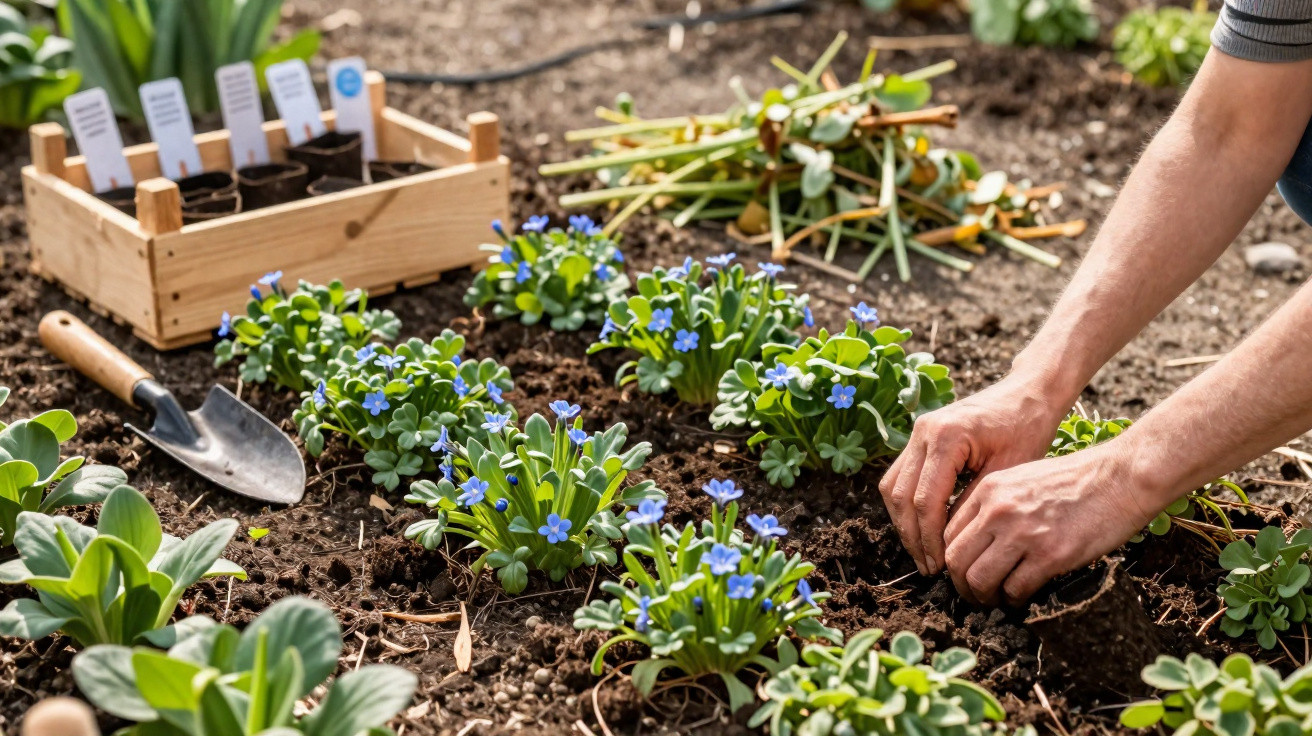
A favourite among many professionals is Brunnera macrophylla, commonly known as Caucasus forget-me-not. It forms heart-shaped leaves and delicate clouds of sky-blue flowers that resemble classic forget-me-nots.
- Position: partial shade to shade, under shrubs or on north-facing sides
- Soil: humus-rich, on the moist side, not too dry
- Flowering period: roughly mid-March to mid-May
- Habit: clump-forming, gradually creating closed carpets
If you plant several specimens close together, you’ll get a sealed blue carpet of flowers in spring that hides the soil completely. That gives weeds very little chance - and evaporation drops noticeably too.
Other suitable ground cover plants for almost weed-free beds
Depending on the site, other perennials may be a better fit. Here is a short overview of common choices:
| Plant | Position | Notable feature |
|---|---|---|
| Cranesbill (Geranium cultivars) | Sun to partial shade | Flowers generously, fills gaps in perennial borders |
| Creeping phlox | Sun, free-draining soil | Strongly coloured flowering carpet in spring |
| Hostas (Hosta, ground-covering cultivars) | Shade to partial shade | Dense foliage, ideal beneath woody plants |
| Waldsteinia | Shade, including drier areas | Evergreen, yellow flowers in spring |
| Purple bugle (Ajuga reptans cultivars) | Partial shade, moist soil | Spreads quickly, decorative leaves |
No ground cover performs perfectly in every spot. Light levels and soil type are what matter. Treating sunny, dry patches the same as shaded, humus-rich corners usually leads to disappointment. Checking plant labels at a garden centre or doing a quick look-up on site requirements is well worth the effort.
Why March is the best time to create a plant carpet
As soon as the soil has dried out in March and no longer smears underfoot, the ideal window opens. The perennials then have the whole season to root in and spread before summer heat arrives.
You can map out the move to living mulch in a few clear steps:
- Remove existing weeds thoroughly - do it properly once.
- Loosen only the top layer of soil lightly, without digging deep.
- Work in mature compost so the plants get off to a strong start.
- Plant perennials fairly close together so the foliage soon meets.
- Water during the first weeks if there is a prolonged dry spell.
That fourth point often decides whether it works or not. If you space plants too widely, you leave gaps - and those are exactly where the unwanted guests return.
“March means: weed decisively once, then plant densely - and in future you’ll only pull the odd straggler instead of whole carpets.”
Care in the first year: a little effort, a big payoff
In the first year after planting, new perennials benefit from some help. If individual wild plants still push through, remove them early and gently, before they can set seed. With every season in which the carpet thickens, the number of these nuisance plants drops.
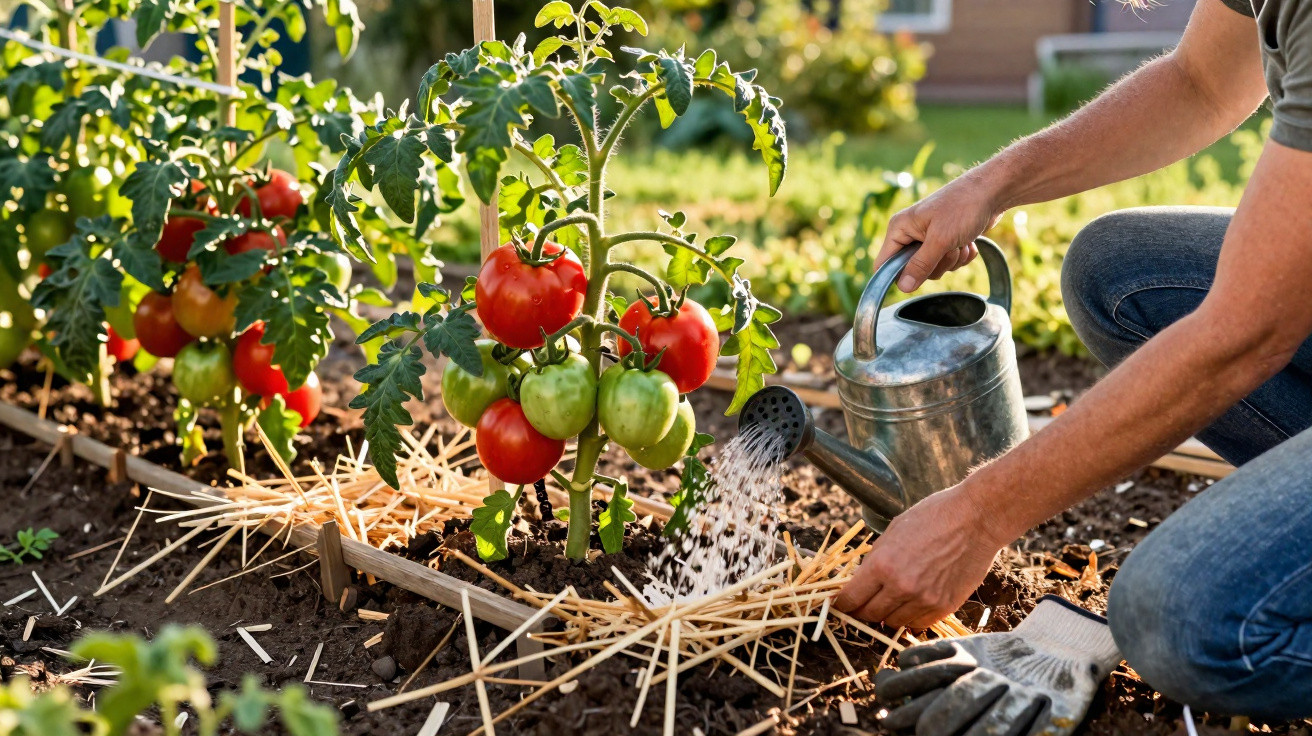
Perennials such as brunnera appreciate slightly moist conditions. During extended dry periods, a deep soak can keep the carpet vigorous. Quick splashes with a watering can that only wet the surface achieve little, because they don’t reach the root system.
What many people underestimate: beneficial insects, soil life and microclimate
A living plant carpet brings additional benefits. Rain doesn’t hammer directly onto bare ground; leaves intercept it first. That reduces erosion and surface sealing. Beneath the cover, the soil stays looser and richer in small organisms, which in turn help release nutrients.
Beneficial creatures also gain. Ground-covering perennials create shelter for ground beetles, spiders and other helpers that keep pests in check. Avoiding large, bare areas in spring therefore supports the garden ecosystem as a whole.
Typical mistakes - and how to avoid them easily
The same early stumbling blocks crop up in gardens again and again. It pays to keep the most common traps in mind:
- Planting too late: starting in June gives weeds a clear head start.
- Wrong position: sun-lovers languish in permanent shade and fail to close over the soil.
- Too few plants: wide spacing leaves gaps where wild plants germinate immediately.
- Constant digging: deep cultivation every year continually activates new seeds from below.
- Leaving it entirely alone: in year one, the carpet needs some oversight before it takes control confidently.
Keeping these points in view can save years of frustration in borders. The aim isn’t to eradicate every stray seedling for life. The aim is to occupy the space so thoroughly that only a few newcomers can get through at all.
How to integrate a plant carpet into existing beds
Many amateur gardeners worry that ground cover will crowd out other perennials. In practice, they can coexist well if you decide in advance which plants should take centre stage. Taller perennials such as coneflowers, asters or peonies can rise up through a low carpet.
A tried-and-tested method is to plant the structural, eye-catching perennials first. Then fill the open areas between them with ground-covering perennials. The result is a layered look - focal plants above, living mulch below.


Comments
No comments yet. Be the first to comment!
Leave a Comment