
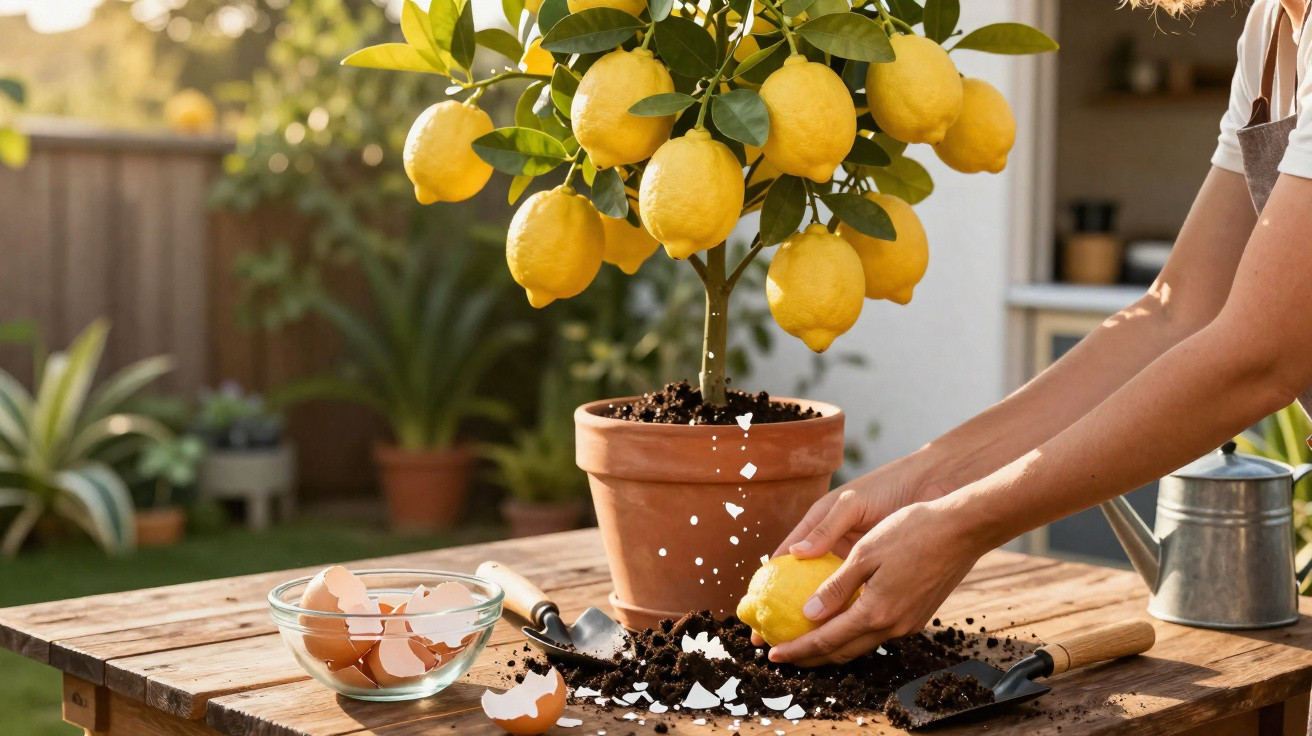
The ageing lemon tree at the far end of the garden had turned into a running family let-down. It had broad, shiny leaves and a full canopy of branches… yet only three solitary lemons hung there, as if to mock the effort. Each spring brought the same routine: someone would prod the soil, tip in a little fertiliser from an old bag, then shrug when the result barely shifted.
One Sunday, at a neighbourhood barbecue, the retired gardener next door said something that stopped everyone mid-serve, tongs poised in the air. “You know you’re all throwing away the best fertilizer in your kitchen sink,” she said, gesturing towards the plates.
What she explained afterwards caught everyone off guard.
The kitchen secret hiding in plain sight
Across Mediterranean gardening circles, the same low-key advice keeps coming up: eggshells can turbocharge lemon tree production. No pricey supplements and no specialist organic mixes-just the thin white shells you crack at breakfast and usually bin without thinking.
The prize nutrient is calcium. Lemon trees feed heavily, and older, worn-out soils are often short of what the tree needs to form strong cell walls and plump, juicy fruit. Eggshells break down gradually, effectively acting like a slow-release store of nutrients tucked into the soil around the tree.
It sounds almost laughably straightforward-and that’s exactly why it gets missed.
Browse gardening forums and you’ll find plenty of before-and-after anecdotes that read like small-scale miracles. One woman in southern Spain posted pictures of her miserable balcony lemon tree-lush foliage, but not a single fruit-and then, three months into a regular “shell routine”, shared an update: a cluster of about a dozen firm lemons on the branches, the sort of image you’d expect on a seed packet.
In Los Angeles, a small urban community garden began gathering eggshells from nearby cafés. After rinsing and drying them, they crushed the shells and scattered them around each citrus tree. When the next season came, volunteers didn’t just notice a higher lemon count; they also mentioned thicker rinds, fewer yellowing leaves, and less dropping of tiny developing fruits.
No lab equipment. No big spending. Just everyday kitchen waste put to work.
The underlying science is fairly straightforward. Eggshells are roughly 90–95% calcium carbonate-the same substance used in agricultural lime-but delivered in a thin, biodegradable package. As the shells decompose, they can gently influence soil texture and support the soil organisms that help the lemon tree’s roots.
When roots are thriving, they can exchange that calcium and trace minerals for energy, creating tougher cell walls and improving the tree’s ability to cope with stress. In practical terms, that can mean less leaf curl, fewer episodes of blossom drop, and more resources available for fruiting.
When you zoom in, many “secret tricks” are simply ordinary minerals doing slow, steady work under the surface.
How to use eggshells so your lemon tree actually notices
The method is easy, but doing it thoughtfully makes a difference. Begin by saving eggshells for a week or two. Give them a quick rinse to remove any clinging egg white, then leave them to dry on a tray or outdoors in the sun. Because the shells are porous, they dry fast and shouldn’t develop any odour.
Once they’re completely dry, crush them. Some gardeners use a mortar and pestle; others prefer a rolling pin and a tea towel. Smaller fragments break down sooner, so aim for something closer to coarse sand rather than large flakes. Scatter a generous handful around the base of the lemon tree, creating a ring within the root zone-rather than piling anything directly against the trunk.
Lightly work the shell pieces into the top layer of soil with your fingers or a small hand fork, and then water normally.
Where many people go wrong is expecting instant results. Eggshells don’t feed a tree overnight; they release nutrients over weeks and months. If the tree is in poor shape, it may still need a balanced citrus fertiliser or compost to regain strength. Think of eggshells as long-term support, not an emergency fix.
Another common error is adding shells in big pieces. Those neat half-shells left from a Sunday brunch will sit there for ages and mostly serve as decoration. Crushing them properly is what makes the difference.
Realistically, hardly anyone keeps this up daily. Adding crushed shells once a month-using what you’ve collected-is plenty to build a useful layer over time.
“People imagine citrus care is some mysterious art,” says French horticulturist Claire Benoît, who advises small orchards near Nice. “In reality, the soil is having a conversation with the roots. Eggshells are just one of the simplest ways to give that conversation better words.”
If you want to make it stick as a habit, a brief checklist on the fridge or in a gardening notebook can help:
- Collect and rinse eggshells during the week
- Dry fully to avoid odors and mold
- Crush into small pieces or coarse powder
- Spread in a ring under the lemon tree canopy
- Combine with compost or mulch for better results
Beyond the shell: a new way of looking at your lemon tree
When you start feeding a lemon tree with something that used to go straight in the rubbish, your perspective subtly changes. It stops being just a plant in a pot or a neglected corner of the garden; it becomes a living partner that answers back-slowly, but noticeably-to what you provide.
The first time you spot tighter bunches of blossoms, or feel the heft of a heavy, fragrant lemon in your palm, cracking an egg in the kitchen takes on a different feel. You realise the shell isn’t destined to disappear into a bin-it’s already earmarked for the soil, another quiet contribution waiting its turn.
Most of us recognise that moment when a plant that’s been underwhelming suddenly seems to “wake up”, revealing it was simply lacking one small thing. Perhaps this growing season, that missing piece is tucked into your breakfast routine. Or perhaps it’s sitting behind a café in a bucket of shells no one pays attention to. What changes if you start paying attention?
| Key point | Detail | Value for the reader |
|---|---|---|
| Eggshells as fertiliser | High in calcium carbonate, released slowly into the soil | Supports stronger lemon fruits and healthier foliage over time |
| Preparation method | Rinse, dry, crush finely, and spread in a ring around the root zone | Simple, low-cost routine that fits easily into weekly habits |
| Combined care | Use eggshells along with compost, watering, and good light | Maximizes fruit production without expensive products |
FAQ:
- Do eggshells work on potted lemon trees? Yes. Just crush them more finely and use smaller amounts, mixing lightly into the top layer so you don’t overload a compact pot with hard bits.
- How long before I see more lemons? You may notice stronger leaves and blossoms in 1–3 months, while real changes in fruit load usually appear over a full growing season.
- Can I use raw, unwashed shells? They’ll still decompose, but they can attract pests and smell. A quick rinse and dry keeps things clean and pleasant.
- Are eggshells enough on their own? No. They mainly bring calcium. Your lemon tree still needs regular watering, sun, and balanced nutrients from compost or citrus fertilizer.
- Will eggshells change my soil pH too much? Not in normal quantities. They act slowly and gently, especially in pots or small gardens, so the effect on pH is mild and usually beneficial for citrus.
Comments
No comments yet. Be the first to comment!
Leave a Comment