
When you look out on frozen cherry blossom on an April morning, you know the feeling: overnight, an entire summer daydream has collapsed. One year a single frosty night wipes out the flowers; another year a cloudburst splits the almost-ripe fruit. Add in the hassle of ladders, sprayers and pruning, and at some point your own cherry tree starts to feel more like a headache than a pleasure.
Then, all of a sudden, a nearly forgotten variety from the 19th century turns up - bred in Germany, tough as an old meadow-orchard veteran - and it makes you genuinely excited about cherries again.
The almost-forgotten variety that fills baskets
This variety is called ‘Géant d’Hedelfingen’ and it originally comes from a district of Stuttgart. It is a sweet cherry (Prunus avium) of the firm-fleshed type, selected around 1850. It spread widely in traditional meadow orchards, but later slipped out of favour in many home gardens.
In terms of growth, the tree is moderately vigorous and usually reaches around 4–6 metres in height and roughly 3–5 metres in spread. It forms a well-structured crown with strong scaffold branches and neatly drooping fruiting shoots. The overall habit is characteristically calm: it is not a “monster tree” that instantly throws everything into shade, yet it is also not short-lived like some modern extreme-bred cultivars.
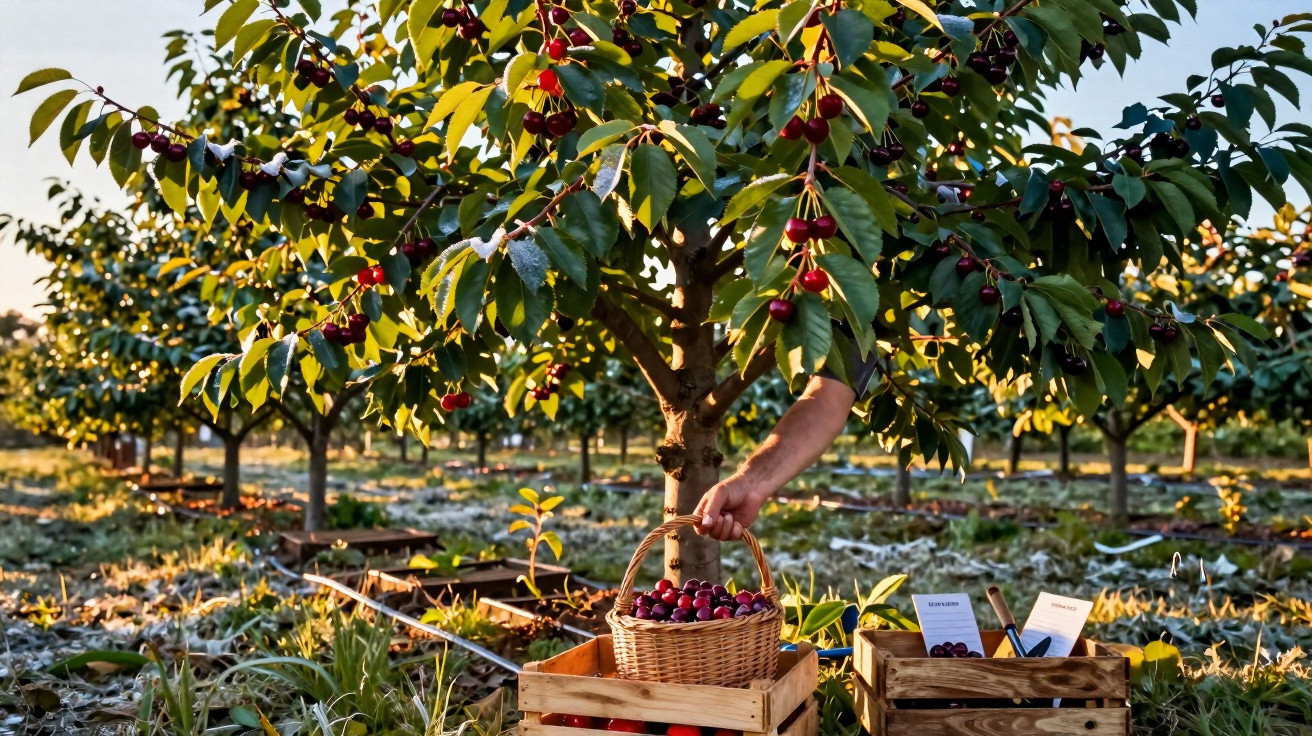
By mid-July at the latest, this cherry tree shows what it can do. The fruit turns deep red to almost black, is large, firm-fleshed, very juicy and distinctly sweet. It works equally well for eating straight from the tree or for compote, jam, cherry cake, or cherries preserved in jars. Many gardeners who know the variety describe it as a “classic family cherry tree” - heavy cropping, versatile and dependable.
“A single tree can make it feel as if you’ve planted a small cherry orchard in miniature.”
Why this cherry tree is so incredibly productive
The secret behind the high yields lies in a particular feature of its flowering habit. The tree forms so-called May bouquets: dense clusters of flower buds that keep fruiting from the same point again and again. These flowering clusters can remain productive for up to four years.
If you harvest carefully and don’t tear off these clusters - instead snipping the stalks or gently twisting the cherries off - you can enjoy abundant bunches on the very same branches for several seasons in a row.
- May bouquets stay productive for about four years
- the same branch can deliver repeated heavy crops
- significantly less pruning is needed
- ideal for anyone who doesn’t want to keep hauling ladders and saws around
That makes the tree feel almost self-running: plant it well once, give it routine care, harvest gently - and year after year you have a reliable supplier of fruit rather than something you constantly have to “tinker with”.
Late frost? This cherry tree simply flowers later
The second major advantage of this variety appears much earlier in the year. While many common cherry cultivars bloom very early, ‘Géant d’Hedelfingen’ waits longer. Depending on the region, flowering usually begins from late March into April. As a result, the tree avoids a large share of the harsh spring frosts that repeatedly cut other varieties back year after year.
On top of that, it has pronounced winter hardiness. The tree copes well with temperatures down to around −15 °C. In areas with sharper springs, at higher elevations, or in the cooler, wetter north, this makes it remarkably resilient.
“Late flowering, cold-resistant and long-lived - this cherry variety feels made for the changeable climate of our latitudes.”
Protection from torrential rain and heat extremes
Its strengths show up in summer too. Many gardeners know the problem: a day or two of heavy rain arrives shortly before harvest and some of the sweet cherries simply split. This old Hedelfingen variety has a noticeably tougher skin that is less likely to crack, even if it pours down right before picking.
The tree is also considered comparatively tolerant of typical cherry diseases and pests. Monilia (blossom and twig dieback) or leaf spot issues occur far less often in a severe form, and the variety can be managed well in wildlife-friendly, chemical-free gardens. For anyone aiming to garden with minimal spraying, that is a practical benefit.
The secret trump card in the orchard: a strong pollinator
Another often-overlooked advantage is that this cherry tree is an excellent pollinator for other varieties. It flowers heavily, its pollen is fertile, and insects readily visit the blossoms. If you plant other sweet cherries nearby, you can noticeably improve their cropping.
This variety pairs especially well with classic trees such as:
- ‘Burlat’ (very early sweet cherry)
- ‘Napoleon’ (old yellow firm-fleshed cherry)
- ‘Moreau’ (sweet dessert and cooking cherry)
- ‘Van’ (widely grown, aromatic sweet cherry)
With two or three different trees spaced around 10–15 metres apart, the likelihood of abundant fruit set rises again significantly. That turns a stand-alone tree from a soloist into a real team player in the home orchard.
How to plant the frost specialist for record harvests
The best planting window runs from November to March, as soon as the ground is frost-free. Many gardeners favour planting towards the end of winter, when the soil is slowly warming and a young tree can get going straight away.
Choose as sunny a position as possible; a warm south or south-west aspect is ideal. A little shelter from wind - for instance from a hedge or a house wall - helps as well. The key is deep, loose soil that holds moisture but does not become waterlogged.
| Site factor | Recommendation |
|---|---|
| Light | full sun, at least six hours daily |
| Soil | medium to heavy, humus-rich, well-draining |
| pH | near neutral (slightly acidic to mildly alkaline) |
| Wind | as sheltered as possible, avoid cold wind funnels |
For planting, a hole of about 60 × 60 centimetres is sufficient, dug deep enough to loosen the ground properly. Mix the excavated soil with well-rotted compost. After placing the tree, water it in thoroughly and then apply a layer of mulch. A sturdy stake will support the young tree during its first years.
Standard, half-standard or compact - what suits your garden?
In a large garden, the tree really shines as a standard. Grafted onto a vigorous rootstock such as wild cherry, it develops into a long-lived, impressive fruit tree - the classic look of traditional meadow orchards.
For smaller gardens, it is worth seeking out less vigorous rootstocks. These reduce growth so the final height remains more manageable, and harvesting is possible without a huge ladder. Many nurseries now sell this variety as half-standards or bush trees, and some stock is also suitable for training against supports.
A few thorough watering sessions during the first summers, plus an annual portion of compost in late winter, is usually enough to keep the tree healthy. Pruning needs stay reasonable: remove old and dead wood, thin the crown slightly, and take out shoots that are too crowded - that is generally all that is required.
Practical tips: how to get the absolute most from the tree
In day-to-day gardening, three points decide how heavy the crop will be:
- harvest gently so the May bouquets remain intact
- provide enough water in dry early summers
- have a second cherry tree nearby for pollination
Especially in the early years, it pays to water deeply during prolonged dry spells rather than adding small amounts constantly. This encourages roots to grow downwards, helping the tree cope better with periods of heat.
If you don’t want birds to be the main recipients of your harvest, put a coarse-mesh net over the crown no later than just before ripening, or protect individual branches. You will never stop blackbirds taking a share entirely, but with netting and good timing there will still be plenty left for the kitchen.
Why this old variety is a perfect fit for the times
Climate change is bringing more capricious springs, more extreme weather and more stress for many fruit varieties. ‘Géant d’Hedelfingen’ combines late flowering, toughness, high yields and straightforward care - exactly the qualities that suit modern gardens, where many people want fresh fruit but have little appetite for constant spraying and heavy pruning.
Anyone planning a cherry tree now should seriously consider this old German variety - especially if their garden has already suffered repeated frost-related cherry failures. With a little patience in the first years, it becomes a tree that can outlast generations and rewards you in July with brimming baskets.


Comments
No comments yet. Be the first to comment!
Leave a Comment