
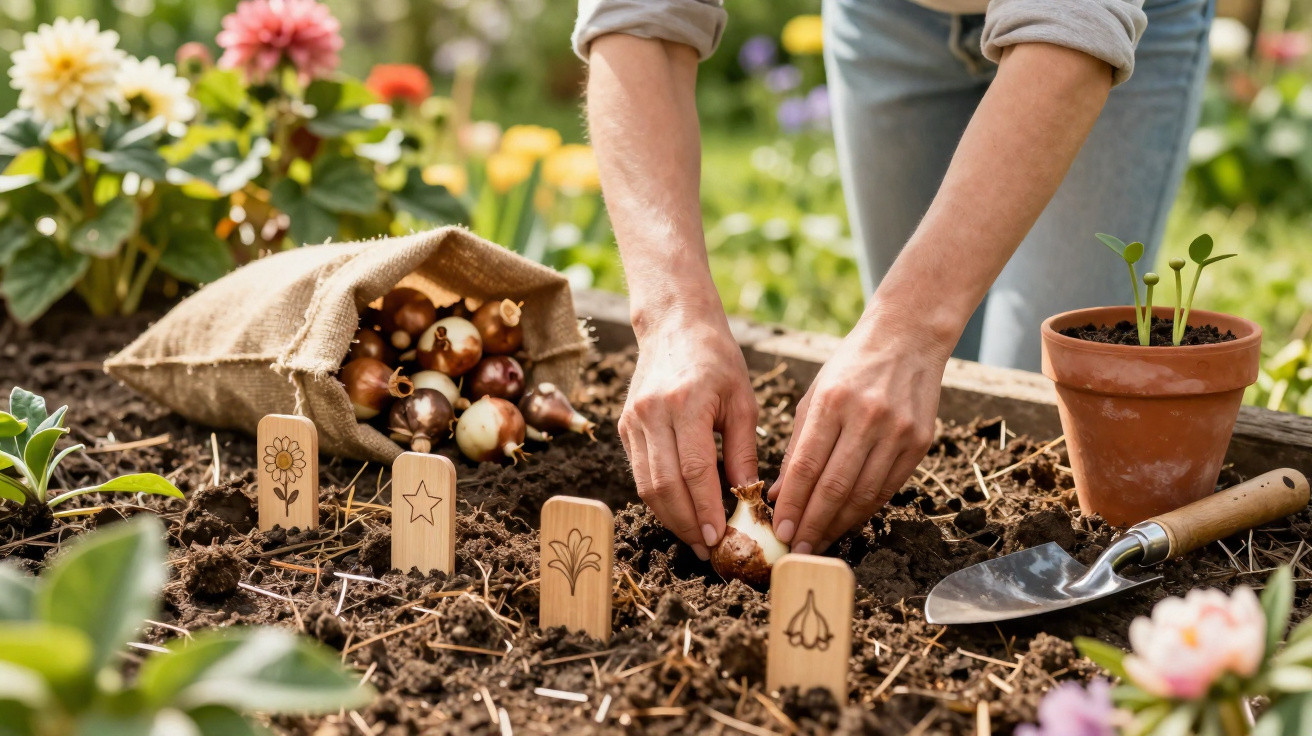
Between the end of daffodils and the start of roses, many gardens fall into a bleak gap – entirely avoidable, say garden professionals.
Anyone who plants the right bulbs and tubers in March can keep a border flowering continuously from June well into autumn. Miss this window and, in many gardens, you will be staring at bare patches until July. The key is four plant groups that complement one another in height, flowering time and position, neatly plugging the dreaded late-spring “colour gap”.
Why March determines your summer display
Spring tends to follow the same pattern each year: snowdrops first, then crocuses, tulips and daffodils – and then, suddenly, very little. Perennials still need time, roses are only just getting going, and many annual summer flowers are still tiny.
"If you only plant summer tubers in late April or May, flowering often shifts into midsummer – and the early garden stays empty."
March is the ideal in-between moment. The soil is thawing, the harshest frosts usually ease off, and plants can begin growing steadily. This is exactly the slot when summer tubers belong in the ground. Planted now, they can establish roots in time, push up early and start flowering from June – rather than not appearing until mid-July.
The four key plants for a gap-free flowering summer
Garden experts recommend combining four groups that cover different heights, flowering periods and garden situations:
- Dahlias for high-impact, colourful borders
- Begonias for shade and part shade
- Lilies for height, scent and structure
- Peonies as a long-term investment for the spring garden
Dahlias: a colour explosion from June to October
Dahlias are among the best-loved summer bloomers – with good reason. You can find everything from tiny pompons to huge, spherical flowers, in almost every colour except true blue. With a proper start, they can flower from early summer right through to the first proper frost.
If you want early blooms, it is not enough to simply throw the tubers into the border in April. A better approach is to get them going under cover in March:
- Place tubers in pots filled with loose, relatively low-nutrient compost
- Cover the tubers only lightly with compost
- Keep them bright but frost-free (for example, an unheated conservatory or a garage with a window)
- Keep just moist, avoiding waterlogging
Once there is no longer any risk of night frosts outdoors, move the pre-started plants into the border or into large containers. With this head start, many varieties flower as early as June, picking up right after the last tulips.
Begonias: the quiet queen of shady spots
While many summer flowers shine in full sun, north-facing balconies and planting beneath trees can look sparse. Begonias excel precisely in those places. They cope with little direct light and flower reliably all summer long.
For a strong March start:
- Set the tubers with the rounded side down and the slightly hollow side facing up in trays or pots
- Plant into loose, humus-rich compost and cover only thinly
- Keep bright, frost-free and evenly moist
Begonias tolerate gentle sun, but they are happiest in part shade or full shade. If you water regularly and prevent waterlogging during long wet spells, you will be rewarded on a balcony or terrace with an almost uninterrupted carpet of flowers.
Lilies: scented pillars in the border
Lilies add shape and structure to beds and borders. Their tall stems topped with striking blooms work like natural columns in the garden. Many varieties are strongly scented and are ideal by the edge of a patio or close to seating.
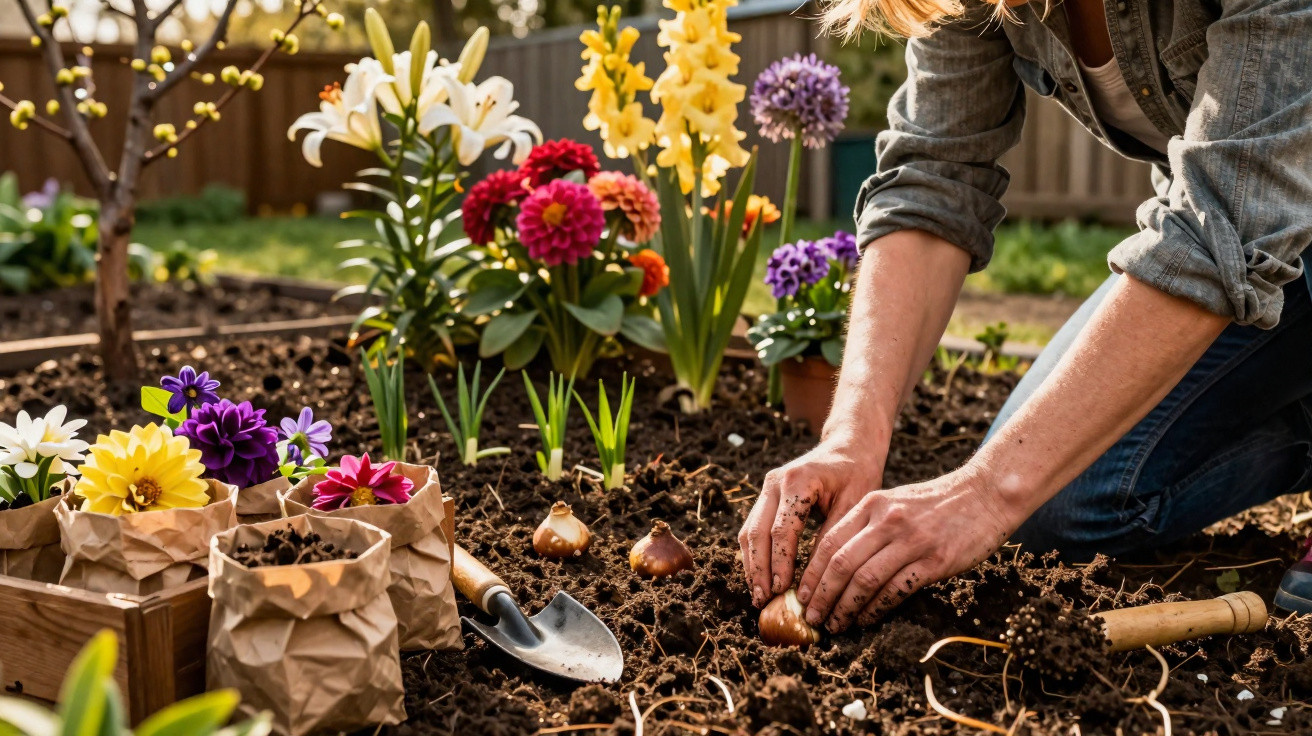
Plant the bulbs outdoors in March as soon as the soil can be worked:
- Planting depth: roughly two to three times the bulb’s height
- Position: sun to part shade
- Soil: loose, deep and, crucially, well-drained
Some varieties flower in late spring, while others peak in midsummer. If you combine types carefully, lilies will be in bloom somewhere in the garden for much longer, helping to avoid quiet spells between other perennials.
Peonies in March: a gift to next year’s garden
Peonies are not for the impatient, but they richly repay anyone who plans ahead. Once settled in the right place, they often stay put for decades and become more impressive year after year.
If you plant them in March, the main performance usually does not arrive straight away. It is normal for a newly planted clump to take two to three years before it really gets going. In return, peonies produce huge, often fragrant flowers that beautifully mark the shift from late spring into early summer.
What matters when planting:
- Do not plant too deeply – the “eyes” should sit only about 3–5 cm below the soil surface
- Choose a good-soil spot with as little competition as possible from shallow-rooted shrubs
- At least half a day of sun encourages better flowering
"If you plant peonies in March, you’re creating a faithful hoard of flowers for many years to come – even if this year’s show is still modest."
How to close the flowering gap between spring and summer
The secret is smart sequencing. The aim is a border where spring favourites, summer tubers and perennials take turns, without a clear break.
One possible layout for a sunny border:
- Front: compact dahlias and lower-growing begonias
- Middle: taller dahlias and medium-height lilies
- Back: tall lilies plus a few peonies as long-term structural plants
In between, you can sow annual summer flowers such as zinnias or cosmos, which add extra colour from midsummer onwards. Done this way, the bed looks lively from March to October, rather than collapsing after the spring fireworks.
Typical March mistakes – and how to avoid them
Many home gardeners plant enthusiastically but lose results through small missteps. Common issues include:
- Heavy, wet soil without drainage – tubers rot easily
- Bulbs and tubers planted too deep
- The wrong position: lilies in full shade, begonias in blazing midday sun
- Feeding too early and too heavily, before roots have formed
A simple rule of thumb: roots first, food second. At planting time, a little compost in the hole is enough. Use mineral fertiliser later, once growth is properly under way.
What terms like “tuber” and “bulb” mean in practice
In everyday conversation, the terms are often mixed up. It makes little difference to routine care, but a quick overview helps:
| Type | Example | Characteristic |
|---|---|---|
| Bulb | Lily | Built in layers, like a kitchen onion |
| Tuber | Dahlia, begonia | Compact storage organs, often irregularly shaped |
| Rootstock / rhizome | Some peony forms | Thickened root area with “eyes” |
For home gardeners, what ultimately matters is simple: store dry, prevent waterlogging when planting, and do not force them into icy-cold, wet soil.
More flowers, less work: the long-term effect
Starting in March with dahlias, begonias, lilies and peonies reduces the rush later on. Beds are filled, the basic structure is in place, and by May it is largely about fine-tuning with annuals or herbs.
Beyond appearance, there is an ecological benefit too. Continuous flowering supports bees, bumblebees and butterflies. Instead of a garden that offers nothing after the tulips, you create a “buffet” from spring to autumn – with nectar and pollen across several layers and heights.
If you are unsure, begin small: one window box of begonias in shade, a large pot of dahlias in sun, a few lily bulbs in the perennial border, and a peony on a sunny edge. These four planting jobs in March often make the difference between a garden that shines in early summer – and one that looks empty for weeks.




Comments
No comments yet. Be the first to comment!
Leave a Comment