
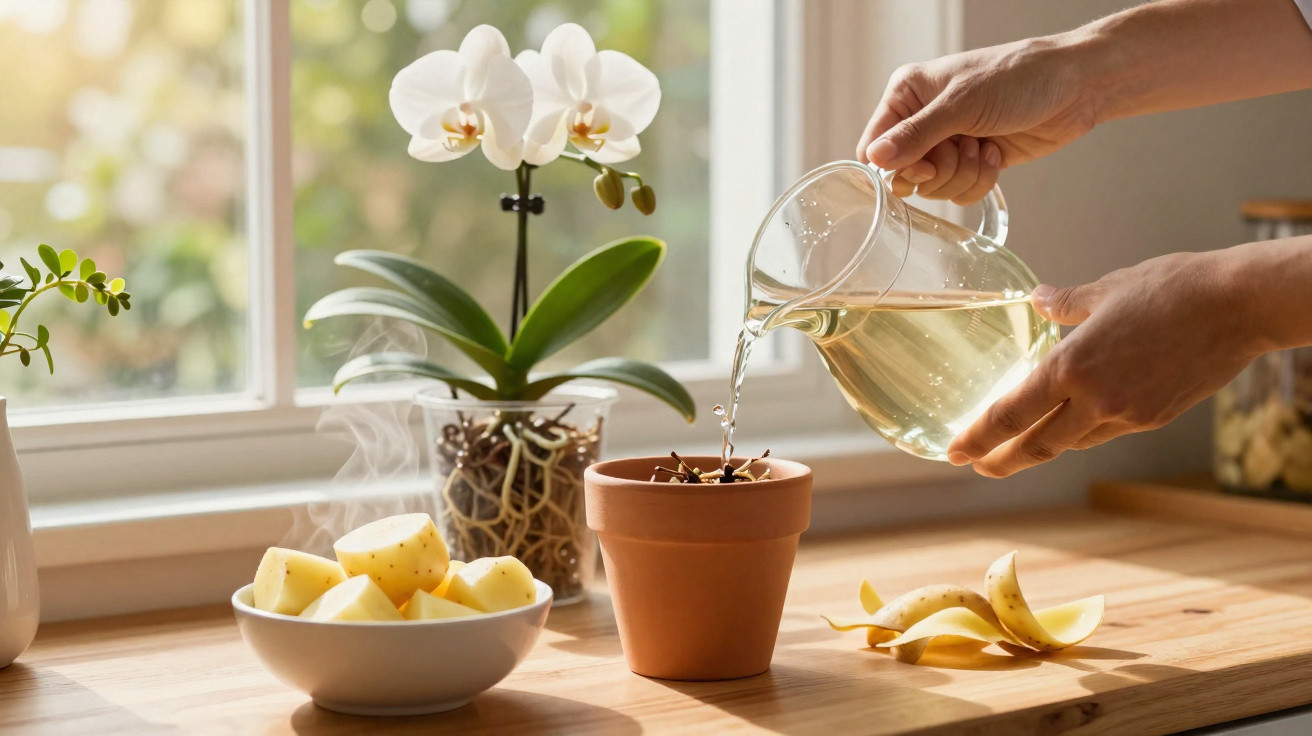
Your orchid is drooping in its pot, the flowers have gone - yet a simple kitchen trick can often help it bounce back.
Many hobby growers feel disheartened once the last bloom drops and assume the plant is finished. In reality, there is often plenty of life left in it. One ordinary staple from the kitchen can help to nudge those reserves: the potato. It may sound like an internet myth, but when you follow a few clear rules, it can be used sensibly.
Why a potato can help a weakened orchid
A potato is more than just a filling side dish. It contains minerals and carbohydrates that can give plants a short-term lift when they are under stress. For struggling orchids - especially common shop-bought Phalaenopsis varieties - that can be a small but noticeable boost.
"Potatoes provide potassium, phosphorus, starch and a little sugar - a gentle nutrient package that stimulates the roots without being as aggressive as some liquid fertilisers."
Potassium supports tissue strength in both leaves and roots. Phosphorus is involved in energy processes and plays a part in forming flowers. Starch acts like a modest reserve the plant can draw on during a weak spell.
When the roots become active again, the leaves often follow: they feel firmer, look less limp, and regain a richer green. After a few weeks, new root tips can appear - and later on, a fresh flower spike often follows.
Key precautions before you try it
The potato approach is most dependable with Phalaenopsis orchids - the familiar “moth orchids” sold in supermarkets and garden centres. These tend to tolerate experiments better than more delicate types such as Vanda or Dendrobium.
- Only treat healthy or slightly weakened plants
- Do not leave rotten, black or foul-smelling roots in the pot
- Do not leave large pieces of potato sitting in damp growing medium
- Never use strong fertiliser at the same time as potato water
Rotting potato remnants attract fungus gnats and can encourage fungal problems. So use it with restraint - potato is a support, not a miracle cure.
Option 1: Root soak in potato cooking water
This method suits very weak orchids, ideally alongside repotting.
What you need
- 2 medium potatoes (around 300–400 g)
- 1 litre of water
- a saucepan
- a bowl or dish for the root soak
How to prepare the water
- Place the unpeeled potatoes in 1 litre of cold water.
- Bring to the boil and cook for 15–20 minutes.
- Remove from the hob and allow the water to cool completely.
- Take out the potatoes and discard them or use them in the kitchen.
You will be left with a mild, lightly nutrient-rich liquid you can use as a root treatment.
How to use it on the root ball
- Carefully ease the orchid out of its pot.
- Gently remove old medium (bark, moss remnants) from the roots.
- Trim away black, mushy or hollow roots using clean, sharp tools.
- Place only the healthy, firm green or silvery roots into the cooled potato water.
- Leave to soak for 20 minutes.
- Then let the roots air-dry for 10–15 minutes.
- Pot the plant into fresh, airy orchid medium.
"This soak is intended as a treatment. About once every four to six weeks is enough - doing it more often is more likely to cause harm."
Option 2: Gentle watering solution made from potato peel
If you do not want to remove your orchid from its pot, use a mild watering solution. For this, use only the peel - not the whole potato.
You will need
- peel from 2 medium potatoes
- 1 litre of water
- a sieve or filter
Preparing the watering solution
- Wash the peel thoroughly so no soil or chemical residues remain.
- Put the peel in a pan with 1 litre of water.
- Simmer for around 10 minutes.
- Let it cool completely.
- Strain carefully through a sieve or cloth.
How to water correctly
- Mix 250 ml of the potato-peel liquid with 250 ml of plain water.
- Water as you normally would, without flooding the pot.
- Wait until excess water has drained from the base.
- Empty the saucer or decorative outer pot completely after a few minutes.
The same rule applies: no more than one treatment every four to six weeks. In between, water normally with tap water, depending on how dry the medium is.
Two more uses - only for very cautious hands
If you have leftovers after cooking, you can use them in a limited way. The guiding principle is: as little as possible, as rarely as necessary.
A tiny piece of cooked potato on top of the medium
Cook an unsalted potato in its skin and let it cool fully, then cut off a very small piece. Place it loosely on the surface of the orchid medium.
Keep a close eye on the plant: if you notice slime, an odour or mould, remove the piece immediately. If you are likely to forget what is sitting in the pot, it is better to skip this option.
Dried peel ground into a fine powder
Clean potato peel can be dried in the oven at about 60°C until it snaps crisply. It can then be ground into powder using a mortar or blender.
Use no more than 1 teaspoon of this powder per orchid pot - and only once per season. Leave it on the surface so no damp pockets form deeper in the medium where micro-organisms can run rampant.
Creating the conditions for fresh flowering
No potato trick can replace the basics. If you want an orchid to bloom again, the key is getting both placement and watering right.
| Factor | What the orchid needs |
|---|---|
| Light | A bright spot, but no direct midday sun; an east- or west-facing window with a curtain is ideal. |
| Temperature | About 18–24°C, with no cold draughts from windows or doors. |
| Watering | Only when the medium is almost dry; less often but thoroughly is better than constant little sips. |
| Air | Moderate humidity; roots need air in the pot - so choose an airy medium. |
| Fertiliser | A specialist orchid fertiliser, very weakly dosed, and not straight after a potato soak treatment. |
If you use potato water or potato peel, wait at least three to four weeks before returning to liquid fertiliser. Too many nutrients in a short time overwhelms the plant, and orchid roots react sensitively.
How to tell whether the treatment is working
The earliest signs of recovery usually show in the leaves: they become less wrinkled, stand more upright, and feel plumper to the touch. Aerial roots also reveal progress - new pale-green tips indicate fresh growth.
"Months can pass between the last flower and a new flower spike. Those who stay patient are often rewarded with an unexpectedly strong wave of blooms."
Later, the plant forms a new spike at the base or from the side of an older shoot. Once it is a few centimetres long, it can be worth adding gentle support and continuing to prioritise bright light that is not hot.
How useful are home remedies for houseplants?
Potato water, coffee grounds, banana peel - the internet is full of suggestions. Many have some truth to them because they contain nutrients. With potted plants, however, a common issue appears quickly: organic leftovers break down poorly in a confined space and can upset the balance in the growing medium.
That is why these tricks tend to work best when they are used sparingly and with a clear purpose. Potato water for orchids is exactly that kind of measure: an occasional treatment, built on a clean baseline of good light, air circulation and careful watering.
If you check root health regularly, use a quality orchid medium, and avoid throwing a new remedy at every minor issue, you give yourself the best chance of keeping plants thriving for years. In that context, the potato becomes simply the small extra nudge that can help a tired orchid feel ready to flower again.
Comments
No comments yet. Be the first to comment!
Leave a Comment