
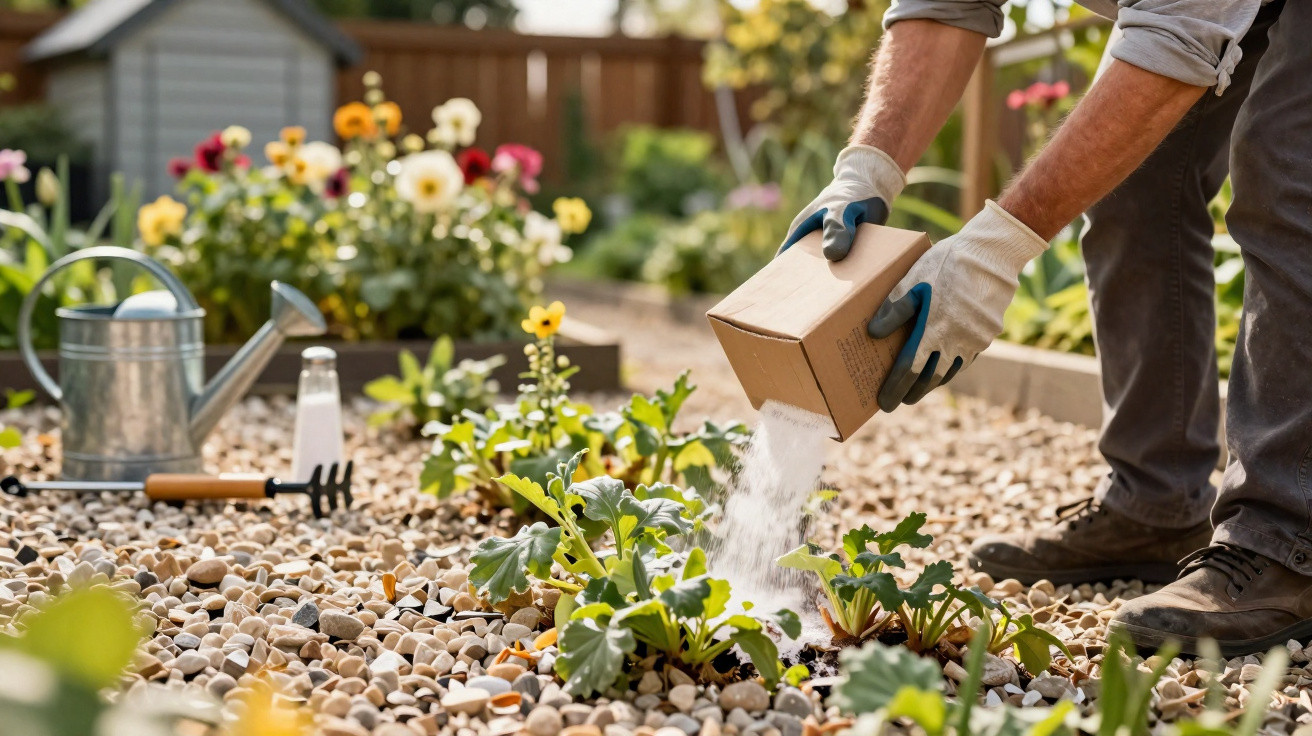
Weeds push up through gravel, your back aches from pulling them out, and you do not want to use harsh chemicals - yet there is a straightforward tip doing the rounds that comes straight from the laundry cupboard.
If you have a parking area, courtyard or garden path made from gravel or chippings, you will know the routine: no sooner has everything been cleared than fresh green tufts appear between the stones again. Conventional weedkillers are controversial, and household staples such as vinegar are increasingly criticised. On gardening forums, a completely different product is now getting attention: ordinary washing powder from the supermarket.
Why weeds thrive in gravel
Gravel surfaces can look barren and unwelcoming, but over time the gaps between the stones turn into an ideal miniature growing medium.
- Rainwater collects in the joints and voids.
- Dust and soil are blown in by the wind.
- Leaves, pollen and bird droppings break down into fine humus.
- Seeds from grasses and wild plants hitch a lift on shoes and car tyres.
Together, this creates a thin but surprisingly fertile layer. Even if a membrane sits beneath the gravel, roots often find small tears and openings. That is how dandelion, plantain, millet and similar plants can take over a supposedly “low-maintenance” path in no time.
“Gravel areas aren’t dead zones - unnoticed, they turn into a shallow bed with ideal starting conditions for wild plants.”
Why vinegar and salt are problematic
For a long time, vinegar and salt were treated as harmless insider tips for dealing with weeds. Many households still mix them in spray bottles and apply them generously over paths. The results are obvious: plants wilt quickly and the green disappears for a while.
However, this approach comes with several downsides:
- Soil strain: Salt builds up in the ground and can permanently damage soil structure.
- Risk to micro-organisms: Vinegar solutions do not only kill weeds; they also harm beneficial soil life.
- Run-off into drains: On hard surfaces, the mixture can quickly end up in a gully or wash into neighbouring beds.
- Legal grey area: In some countries, using vinegar on paths is treated much like applying an unapproved pesticide.
Especially where surfaces connect to groundwater, specialists view vinegar-and-salt mixes critically. As a result, many amateur gardeners are looking for options that work on the spot without affecting the wider environment.
Washing powder as a secret weapon - what’s behind it
In several British gardening communities, people are now sharing a simple method: instead of vinegar, they use washing powder, often paired with boiling water. The discussion has been sparked by accounts such as that of one user who could not get her gravel path under control even with standard weedkiller and asked for alternatives.
Others then explained that plain washing powder had produced noticeably better results on gravel surfaces. The reported effect sounds almost too good to be true: the greenery discolours quickly, dries out, and can be removed easily after a few days.
“Gardeners report that ordinary washing powder on gravel paths can work almost as strongly as chemical products - without damaging the stone surface.”
How washing powder affects plants
The claimed impact mainly relates to two groups of ingredients:
- Boron compounds: Some laundry detergents contain boron. Plants only need tiny traces; in higher concentrations they react badly - leaves turn brown, dry out, and the plant dies.
- Surfactants: These lift grease and dirt from fabrics, but they can also break down the delicate waxy coating on leaves. Without that protective layer, plants lose water faster and become more vulnerable to heat and drought stress.
Used alongside hot water, the idea is a double hit: heat damages cells and roots, while the washing powder strips protective layers and can increase the uptake of its ingredients.
Step by step: how amateur gardeners use washing powder on gravel
The method circulates in a few versions, but the basic approach is much the same. Users describe it like this:
- Pick a dry day: The area should not be wet so the powder can cling to the leaves first.
- Sprinkle lightly: Scatter washing powder directly onto the plants growing up through the gravel. Do not tip it over the whole surface.
- Pour on boiling water: Use a kettle or a heat-resistant watering can to carefully pour over the treated spots.
- Leave it to work: Wait a few days until the green turns yellow and dries out.
- Remove the remains: Sweep away the dead growth with a stiff broom or pull it out wearing gloves.
On larger areas, it can be easier to work in sections so the volume of boiling water stays manageable. The key point is to prevent water from running into bordering beds or onto the lawn.
Where it makes sense - and where it doesn’t
Experts who comment on the idea generally say washing powder as a weedkiller is only suitable for very clearly defined areas. Examples of places where people consider it:
- pure gravel and chipping paths with no adjoining beds
- driveways with paving or stone where no planting is planned
- parking bays and standing areas made from a mineral aggregate mix
It is not appropriate for areas that may be planted later, or that sit directly next to vegetable beds, herbs or grass. Rain can wash the mixture into nearby soil, weakening roots or putting long-term strain on the ground.
“If at all, washing powder belongs only on purely functional stone or gravel areas - never in the vegetable garden.”
Risks and side effects for the environment and materials
As tempting as the washing-powder approach may sound, it is not risk-free. Amateur gardeners should keep several issues in mind:
- Soil ecology: Surfactants and boron can harm soil organisms if they enter the ground in higher concentrations.
- Groundwater: On surfaces where water soaks away directly, it is unclear how repeated use might play out over the long term.
- Overdoing it: Heavy-handed application risks leaving an area where hardly anything grows for a long time - including spots where planting might later be wanted.
- Pets and children: Fresh powder could be licked up by dogs or ingested by children; after use, the area should be thoroughly rinsed or the powder fully washed in.
On the plus side, specialists note that washing powder, unlike very aggressive chemical treatments, does not usually attack stone surfaces. Based on experiences shared so far, sensitive natural stone and concrete slabs tend to remain undamaged.
What other options exist - from joint scrapers to gas burners
If you are sceptical about washing powder, there are several other ways to keep a gravel path reasonably weed-free. None is perfect, and many require time and effort, but they are gentler on soil and the environment.
- Mechanical methods: A joint scraper, weed brush or scraper can remove plants along with their roots. It is hard work, but it is precise.
- Hot water with no additives: Plain boiling water can significantly weaken many wild plants on its own.
- Hot steam or hot foam systems: The professional approach used by councils on pavements is now available in versions aimed at home users.
- Gas burners: These scorch the leaf growth, but fire safety needs serious attention - especially in dry conditions.
Over the long term, the only real help is keeping the organic layer in the gravel as thin as possible: remove leaves regularly, sweep away loose soil, and when rebuilding, use robust separation layers.
How consumers can use washing-powder tips responsibly
For many amateur gardeners, the washing-powder tip feels like a practical middle ground between back-breaking weeding and unwanted chemicals. If you want to try it, it is worth remembering that this is a cleaning product being used for something else - with all the uncertainty that brings.
A cautious approach could look like this:
- treat only small test areas
- use as little product as possible
- channel run-off deliberately so it does not flow into beds
- avoid regular, blanket application year after year
If a gravel path is heavily overrun, it may be worth rethinking the design. In some cases, a more solid, lower-maintenance surface - or deliberately planted joints - can end up looking better and demanding less work than a supposedly “clean” strip of gravel that needs new tricks every season.

Comments
No comments yet. Be the first to comment!
Leave a Comment