
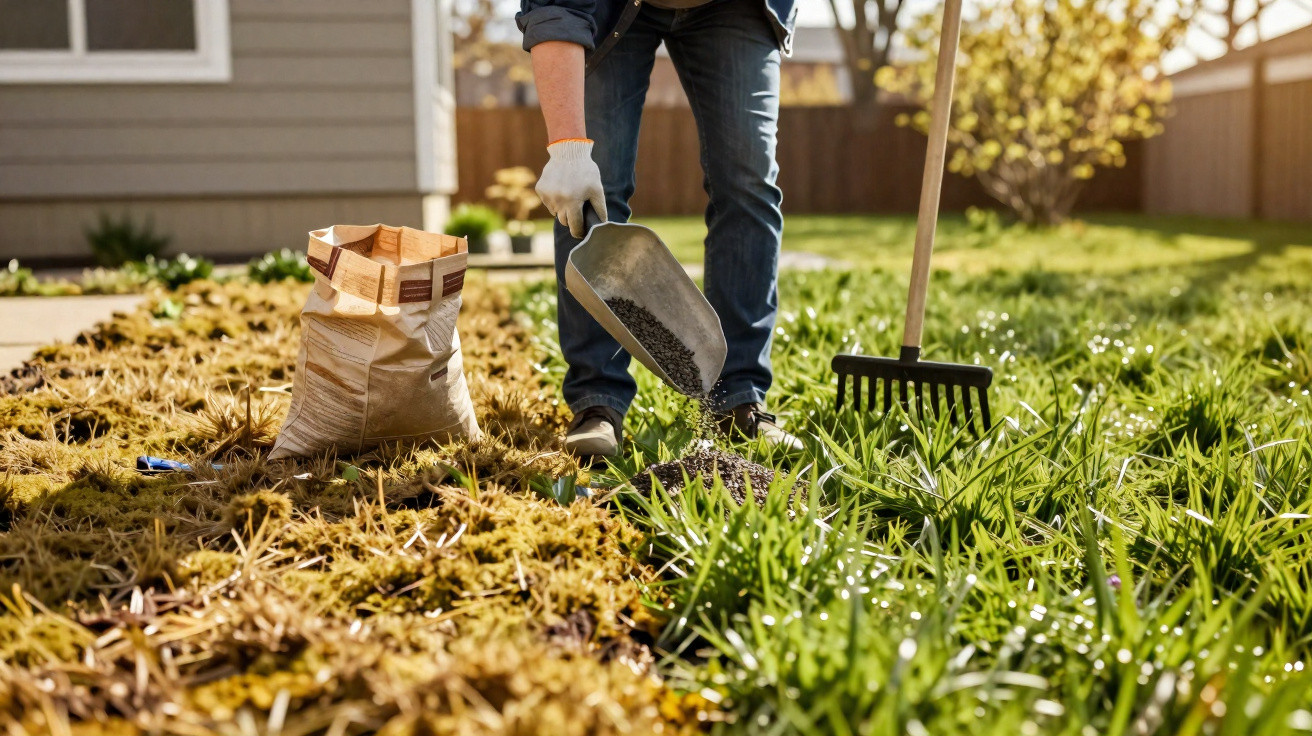
Plenty of amateur gardeners reach for the lawnmower or a strong fertiliser as soon as the days start to lengthen again. Professionals tend to do something else first: they give the lawn a targeted mineral boost. The result can be striking - especially if you hit the right window in March and use a particular powder treatment that helps shift moss and brings the grass back to a deep green.
Why lawns look so tired after winter
Winter takes its toll on any lawn. For weeks the ground stays wet, sunshine is scarce, and overnight frosts keep returning. Grass plants become stressed, growth largely stalls, and their stored reserves run down.
At the same time, a second issue develops: the soil becomes compacted. Rain, snow and the occasional footstep press the top layer down, meaning air and water struggle to reach the roots.
In these conditions, other plants cope better than turf - moss most of all. It spreads through gaps, creeps across weak patches and gradually pushes the grass sward back.
"Where moss takes hold, the lawn loses density, colour and strength - leaving yellowish, patchy carpets behind in spring."
This is exactly where a March treatment makes sense: the grass is starting to grow again and the roots are waking up, but moss competition is still intense. Acting now gives your lawn a clear head start for the season.
Why March is the perfect time
In early spring, temperatures rise slowly without the heat or drought that can put turf under pressure. The soil is usually slightly damp, which helps nutrients soak in. At the same time, moss is still fully active and responds clearly to treatments.
There is also a practical advantage: the lawn typically isn’t being used heavily yet - the children’s kickabouts and garden parties are still to come. That makes it easier to carry out a powder treatment, remove moss afterwards and fit in overseeding without too much disruption.
The secret ingredient: iron sulphate as a lawn tonic
Professionals in garden and landscape maintenance often rely on a mineral powder in early spring: iron sulphate. It has long been established in lawn care and effectively tackles two jobs at once.
Moss is weakened and disappears
Iron sulphate has a strong effect on moss and also on many lichens. After application, the moss quickly turns dark brown to black and dies off. At normal application rates, the grass itself is not harmed.
You’ll usually see the change within a few days - and in favourable weather sometimes even sooner. The previously soft green moss cushions collapse, dry out and become brittle. That creates ideal conditions to pull them out later with a scarifier or a sharp rake.
The lawn looks noticeably greener
Alongside moss control, the powder supplies an important nutrient: iron. Iron plays a key role in forming chlorophyll, the green pigment in leaves. When turf has enough of it, the colour becomes richer and more even.
"Many gardeners report: a dull, pale green area turns into a much deeper-looking carpet within a few days."
Another benefit is cost. Compared with specialist fertilisers or large-scale soil improvement work, iron sulphate is relatively inexpensive. For a medium-sized garden, the outlay is manageable, yet the visible impact is often significant.
How to apply iron sulphate correctly in March
To get the most from the treatment, you need a bit of planning - not a chemistry degree. What matters most is choosing the right moment and sticking to the correct dose.
Step-by-step instructions
- Wait until there is no hard frost forecast.
- Water the lawn lightly 1–2 days beforehand if the soil is dry.
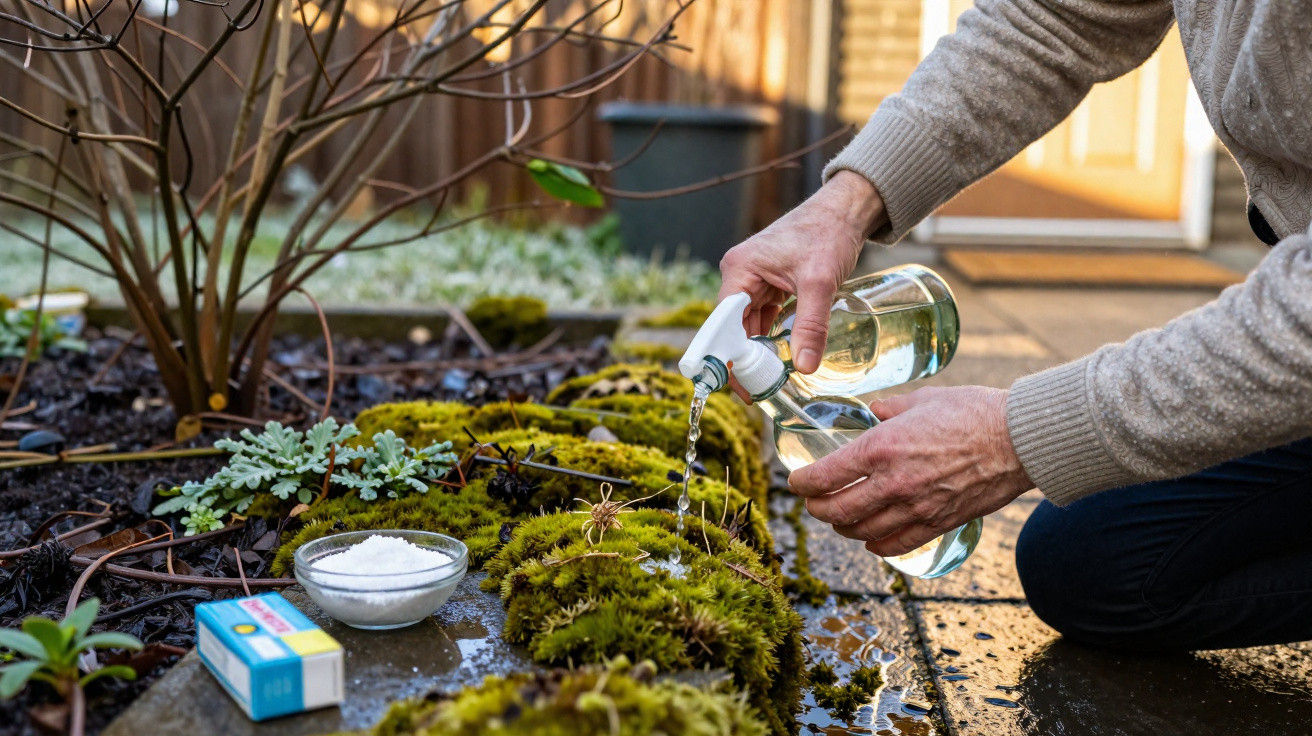
- Dissolve iron sulphate in water (often recommended: 20–30 g per litre).
- Apply evenly using a watering can with a rose or a sprayer.
- Avoid walking on the area straight afterwards so nothing is carried around.
Most manufacturers provide a precise per-square-metre guideline. Follow these instructions carefully to prevent scorching and to avoid unnecessary environmental impact.
What to watch out for during application
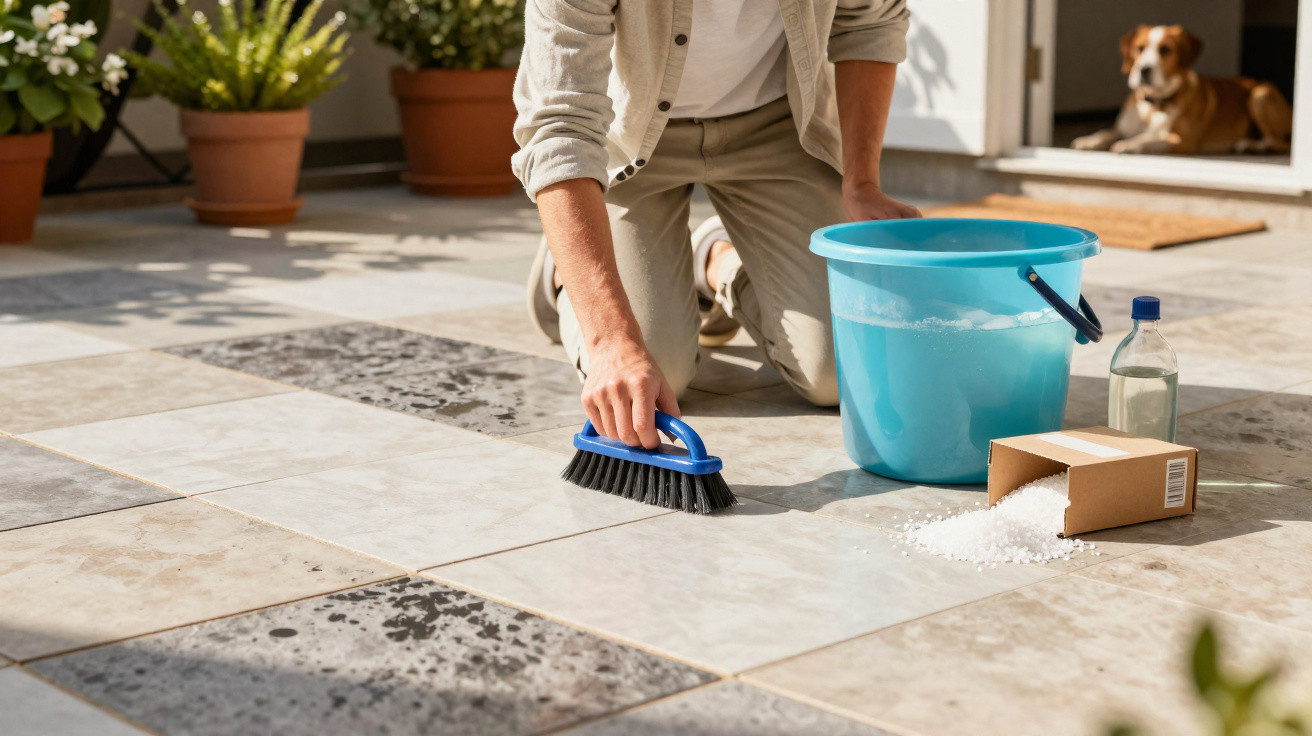
Iron sulphate is effective, but it can leave marks. If the solution splashes onto patio slabs, driveways or pool edging, it often causes rust-like staining that can be difficult to remove.
Practical precautions: - Wear old clothes, wellies and gloves. - Spray carefully along edges next to paving. - Rinse watering cans and sprayers thoroughly with water after use. - Don’t leave toys or garden furniture on the lawn.
"Plan the treatment for a dry day with no rain forecast for the next 24 hours - that way the active ingredient stays where it should."
What matters after the treatment
After around two weeks, the moss is usually completely dead and can sit in the lawn like a black, felted layer. This is when the second phase begins: cleaning the surface.
Scarifying and overseeding
Use a scarifier or a sturdy rake to remove the dead material thoroughly. This often reveals visible gaps. It may look alarming at first, but it’s a strong starting point for fresh growth.
Afterwards, it’s worth overseeding the bare areas. Choose a grass seed mix that matches how you use the lawn - for example, hard-wearing turf for children at play, or ornamental mixes for purely decorative areas.
To finish, an organic fertiliser can be a good option. It feeds the lawn over the coming weeks without pushing it too hard. The combination of moss removal, iron sulphate, overseeding and measured feeding can noticeably improve a lawn’s condition within a single season.
Common mistakes and how to avoid them
Some misconceptions about iron sulphate are surprisingly persistent. Three are particularly worth knowing:
- Using too high a dose: more powder doesn’t mean more benefit - it’s more likely to damage the grass.
- Treating in strong sunshine: midday heat increases the risk of leaf scorch.
- Skipping aftercare: killing moss alone isn’t enough; the lawn must be able to close the gaps afterwards.
If you keep these points in mind, you’ll have fewer long-term issues and won’t find yourself starting from scratch every spring.
When iron sulphate is not a good idea
On very chalky soils that already struggle with pH balance, frequent applications can be unhelpful. In those cases, a soil test is worthwhile so you can plan longer-term ways to improve structure - for example with sand, compost, or targeted lime applications at other times.
If you have small children or pets, make clear that the lawn should not be used for a few hours after treatment. Once everything has soaked in and dried, there is normally no further issue.
More practical tips for a deep-green spring lawn
A March powder treatment is only one part of a broader care routine. If you want to get the best from your lawn, keep a few simple habits in mind as well:
- First cut: don’t go too low; reduce height gradually in stages.
- Water regularly but thoroughly, rather than constantly “topping up” the surface.
- Remove leaves and dead plant debris thoroughly in spring.
- Don’t store heavy items on the lawn for long periods.
Combine these steps with a targeted iron sulphate application in March and your lawn gains a clear advantage. Moss has less opportunity, bare patches fill faster, and the surface looks far more cared-for in spring - without every weekend turning into back-breaking garden work.

Comments
No comments yet. Be the first to comment!
Leave a Comment