
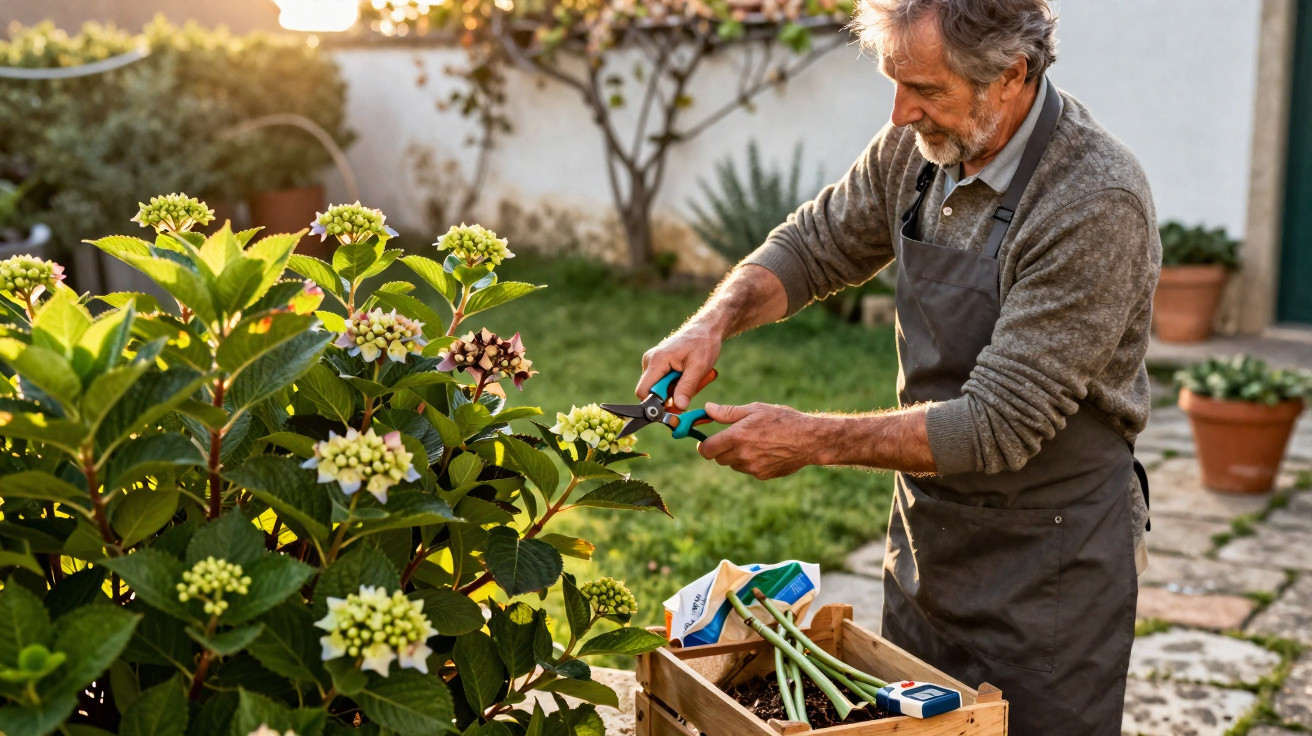
In summer you might be hoping for dense clouds of pink, blue or white hydrangea blooms, yet the border often delivers lots of leafy growth and only a handful of flowers. British gardening expert Monty Don says the culprit is rarely pricey feed. Instead, it’s a small, easily missed moment in March - and a way of cutting that many home gardeners simply don’t do.
Why March decides whether hydrangeas flower
The key point with bigleaf hydrangeas (Hydrangea macrophylla) - the familiar mophead and lacecap types so often grown by front paths - is that they set their flower buds the year before. Those buds sit on what gardeners call “old wood”, meaning stems that grew and matured last summer.
If you go at the plant in winter with shears or a saw and shorten those stems too hard, you remove the very sections meant to carry the next display. The payoff arrives months later: strong-looking shrubs, but only a few flower heads.
“The most important rule: many bigleaf hydrangeas flower on old wood - every wrong cut in late winter immediately costs blooms.”
Monty Don and other well-known garden experts make a clear distinction here:
- Cutting off faded flowers (deadheading): removing only the spent flower heads, without shortening the whole stem much.
- Pruning: shaping the plant, cutting stems back hard, and taking out older wood.
In day-to-day gardening, that difference is often lost. Many people cut too early and too strongly because they want to “tidy up”. In midwinter the buds are firm and unobtrusive, so they’re easy to miss - and easy to cut off. Around March, that changes: buds begin to swell, become easier to spot, and a sensitive window begins when every cut needs thought.
Monty Don’s simple rule of thumb for home gardeners
To make pruning timing clearer, Monty Don uses a small rule of thumb (commonly heard in English gardening) that boils down to this: if a shrub flowers before midsummer, you generally leave the old wood largely in place. For many bigleaf hydrangeas, that means treating the shears with caution in late winter and early spring.
Put more practically: if you expect flowers by June, March and April are for careful snips - not for attacking the shrub with hedge trimmers.
The “mini cut” in March: how Monty Don’s trick works
For bigleaf hydrangeas, Monty Don doesn’t recommend a drastic prune in March. Instead, he advises a light cosmetic tidy-up. The crucial detail is that you deal with last year’s flower heads and any dead tips, rather than cutting into the plant’s main framework.
Step-by-step guide to the March trick
- Choose the right moment: late March or very early April, once the hardest frosts have passed and the buds are starting to swell. The plant may still look bare, but you can clearly see fatter bud pairs along the stems.
- Get your tools ready: use sharp secateurs, as clean as possible (ideally disinfected) so diseases don’t enter through fresh cuts.
- Find the old flower heads: the brown, papery blooms from last year often stay on the plant all winter. They can partly protect the buds beneath from frost.
- Cut just above the bud pair: beneath each old bloom there is usually a strong, healthy pair of buds. Make the cut 2–3 mm above that pair. Leave the rest of the stem untouched.
- Remove frost-damaged tips: where the ends of shoots look blackened or mushy, shorten back again - only to just above a healthy bud pair.
Done this way, the dried flower heads disappear and the shrub instantly looks neater. At the same time, the vital flower buds remain exactly where they should. Through spring, those buds push on into strong new shoots that carry the much-wanted blooms in summer.
“The crucial difference: the cut stops at the bud pair - not deep inside the shrub.”
Home gardeners who have tried this approach often report the same outcomes: noticeably more flowers, a more balanced shape, and far less “green disappointment” in July and August.
Common mistakes when cutting hydrangeas
If hydrangeas have been treated the wrong way for years, it can be surprisingly easy not to notice - the plants survive, look healthy, and yet flower poorly. That’s why it helps to recognise the usual pitfalls.
- Cutting back too early in winter: hard pruning in January or February removes the natural frost protection provided by old flower heads and often, without realising, removes flower buds too.
- Hard pruning every year: many people treat bigleaf hydrangeas like summer-flowering shrubs that bloom on this year’s wood and cut all stems back evenly and severely. The plant then repeatedly produces lots of leaves, but never really gets going with flowers.
- Not distinguishing between hydrangea types: panicle hydrangeas (Hydrangea paniculata) and smooth hydrangeas (Hydrangea arborescens) flower on new wood, so they tolerate - and often benefit from - a harder cut. Applying that approach to bigleaf hydrangeas does real damage.
- Leaving dead stems in place: if you never thin out, you can end up with an impenetrable tangle of old wood that grows less vigorously and is more prone to fungal problems.
A quick check in March can reveal a lot: dead, hollow stems can be removed close to ground level without risking the flower buds on younger, healthy shoots.
Monty Don’s winter ritual: mulching for strong roots
Cutting correctly doesn’t automatically make a hydrangea the star of summer. Monty Don pairs the March tidy-up with a consistent winter mulching habit. Around January, he spreads a thick layer of organic material over the soil - including around hydrangeas.
He favours well-rotted compost, mushroom compost, or bark mulch. Along bed edges he often uses pine bark, which gently acidifies the soil - useful for many hydrangeas that prefer a slightly acidic pH and tend to flower more strongly in it.
| Material | Benefit for hydrangeas |
|---|---|
| Garden compost | Nutrient-rich, improves soil structure, supports soil life |
| Mushroom compost | Slow-release nutrients, open texture, helps build humus |
| Bark mulch / pine bark | Retains moisture, buffers temperature swings, slightly acidifying |
Monty Don suggests the layer should be at least about 5 cm, and ideally about double that. Better to mulch one part of the garden properly and thickly than to spread a token thin layer everywhere.
“A generous mulch acts like an insulation layer for roots - less evaporation, steadier temperatures, more nutrients.”
For hydrangeas, that has several knock-on effects: the soil doesn’t dry out as quickly in summer, the plants experience less stress and can put more energy into forming buds. At the same time, mulch protects the more sensitive root zone from hard winter frosts.
What UK gardeners can take from it
These tips from the British TV gardener translate well to UK gardens, but they still need to be matched to local conditions. In colder, more exposed areas the best cutting time tends to shift towards early April; in milder regions you can often start in mid-March. The buds are the guide: when they’re clearly swollen but not yet shooting, the timing is right.
If you’re unsure which hydrangea you have, observe it in summer: do the flowers appear on fresh, soft growth made that spring, or on sturdier stems that came from the previous year? Garden centres often label varieties with notes such as “flowers on new wood” or “on old wood”. That information is worth looking for, because it dictates the whole cutting approach.
Practical examples: what a hydrangea year looks like with the Monty Don routine
A workable annual rhythm for bigleaf hydrangeas can look like this:
- Autumn: don’t chop the plant back hard after flowering; leave most of the dried flower heads in place. They add structure through winter and offer a little frost protection.
- January/February: on frost-free days, apply a thick mulch around the base. Avoid major cuts to the shrub itself.
- March/April: Monty Don’s mini cut: remove old flower heads directly above the first healthy bud pair, shorten any dead tips lightly, and take out dead stems near the base.
- Summer: water well during hot spells, avoid waterlogging, and cut blooms with care - if taking flowers for the house, aim to take longer stems only from shoots that aren’t carrying all the buds.
Sticking to this routine often transforms the display: instead of scattered flower heads, you get a dense flush of blooms that almost blankets the shrubs.
Hydrangea know-how on the side: soil acidity, varieties and risks
For many people, hydrangeas are all about one question: blue or pink? The answer lies in soil pH (how acidic it is). In acidic soil with enough aluminium ions, certain varieties turn blue; in neutral to slightly alkaline soil they shift towards pink. Pine bark mulch, as recommended by Monty Don, can help nudge pH gently in a more acidic direction - but only alongside a variety capable of changing colour.
One detail that’s often missed: too much nitrogen feed promotes leafy growth above all else. So if you apply lawn feed or a nitrogen-heavy general fertiliser with the best intentions, you can end up with “lots of green, few flowers”. For free-flowering hydrangeas, a modest organic feed in spring is often enough, especially when combined with mulching.
The main risk comes from late frosts. If buds break very early after the March tidy-up and a cold night hits in late April, young shoots can be killed. In frost-prone spots, horticultural fleece or a simple hessian wrap can protect individual plants. Keeping an eye on the forecast and responding on critical nights can save an entire season’s bloom.
When you combine all of that with Monty Don’s small March ritual, you can create a summer display that feels more like an English garden magazine than a frustrating border experiment - without specialist fertilisers, but with sharp secateurs, a little mulch, and the right timing.



Comments
No comments yet. Be the first to comment!
Leave a Comment