
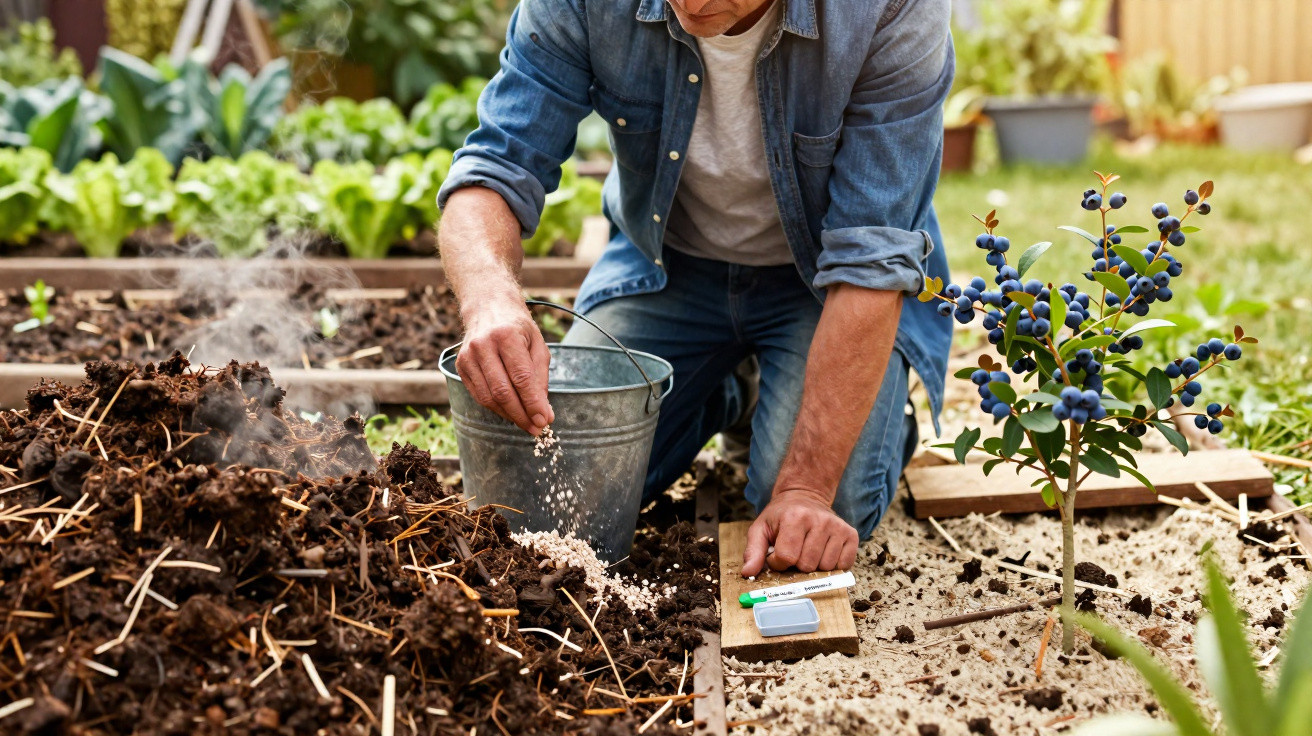
Plenty of stove and fireplace owners tip ash onto flower beds and vegetable plots in spring - and end up harming their plants far more than they realise.
For many amateur gardeners, wood ash feels like a free miracle product: natural, straight from your own stove, and supposedly packed with minerals. So it gets scattered over the beds without much thought. An experienced gardener would strongly temper that enthusiasm: ash can be useful, but only in a few very specific places. Used correctly it has benefits; used carelessly it can wreck soil structure and reduce your harvest.
Why wood ash quickly becomes a problem in soil
Wood ash is not a harmless “natural fertiliser” - it is a strongly alkaline material. Its pH typically sits between 10.5 and 12.8, meaning it is more basic than heavily diluted bleach. Even modest over-application changes soil chemistry in a way you can measure.
"In soil, wood ash acts like an alkali bomb: it pushes the pH up fast and can lock up nutrients."
So what does that mean in day-to-day gardening terms?
- The pH rises too far: many crops prefer slightly acidic to neutral soils. If the ground becomes too alkaline, plants quickly become stressed.
- Potatoes are more likely to suffer: overly lime-rich soils increase the risk of potato scab and chlorosis (yellowing leaves).
- Nutrients get tied up: iron and phosphorus in particular become less available, even when there is plenty present in the soil.
Heavy clay soils risk a “concrete effect”
Wood ash is especially risky on clayey and loam-heavy soils, which are common in many areas. In those conditions, the high alkalinity can worsen compaction that is already an issue.
Typical outcomes on these soils include:
- The surface silts up, forms tough crusts and dries out like cement.
- Water infiltrates less effectively and runs off the surface more readily.
- Fine roots receive less oxygen and rot more easily.
- Soil life retreats and microbial activity drops.
This is where many stove owners make their biggest mistake: a full bucket of ash is repeatedly dumped straight onto beds and lawns in the belief they are spreading “good fertiliser”. In reality, they degrade the soil structure year after year.
Ash as a slug barrier? A short-lived myth
Another well-known idea is to use wood ash as a “natural” defensive ring against slugs. A dry band around young plants can look effective at first.
But it rarely lasts:
- As soon as it rains or there is heavy dew, the ash clumps together.
- It sticks to slugs but loses its abrasive “sandpaper” effect.
- Many gardeners then keep topping it up - and unknowingly drive the soil pH higher and higher.
Against slugs, mechanical barriers, beer traps, runner ducks or consistently tidy bed care are far more sustainable options. Ash is only of limited use here, and only in small amounts.
First sensible place to use it: genuinely acidic, light soils
Despite the warnings, wood ash can be genuinely helpful when applied sparingly and in the right place. Its clearest benefit is correcting strongly acidic, sandy soils.
"On light, acidic soils, a small amount of wood ash can work wonders - provided you check the pH first."
Signs your soil is “calling out” for ash
A typical situation where ash can make sense looks like this:
- The soil is sandy and loose, and it dries out quickly.
- Moss cushions appear in lawns and beds.
- Tomatoes, carrots or beans stay stunted, with slightly yellowish foliage.
- Your area is not dominated by lime-rich geology (not a classic limestone or loess region).
Rather than guessing, a quick test is worth it: pH kits from garden centres usually cost under £10. A spoonful of soil and a small reagent vial - and within minutes you know whether your soil is acidic, neutral or alkaline.
- pH below 6: slightly to strongly acidic - carefully used wood ash may be beneficial.
- pH between 6 and 7: neutral - only use ash with great restraint.
- pH above 7: alkaline - it is better to avoid ash on beds altogether.
The correct amount - and the best time to apply it
If you want to raise pH on acidic ground, stick rigorously to a controlled dose. Specialists recommend:
- 80 to 100 grams of wood ash per square metre per year - roughly two loose handfuls.
- Apply in winter or very early spring.
- Scatter only onto fine-crumb soil that is not frozen.
- Work in lightly, or let rainfall wash it down.
Important: that amount is an annual allowance. If you add “just a bit more” after every stove night to the same bed, you will quickly exceed what plants and soil can tolerate.
Second sensible place to use it: on the compost heap
Far safer than spreading ash directly is to route it through the compost. Many kitchen and garden materials are naturally slightly acidic: coffee grounds, fruit scraps, leaves and grass clippings.
"In compost, wood ash works like a pH buffer: it softens acidity and adds minerals without directly scorching roots."
How to dose ash on compost
To stop your compost heap turning into a basic, slag-like mass, you need a light touch:
- For each roughly 10-centimetre layer of organic material, one small cup of ash is enough.
- Do not pile it in a thick lump; spread it as evenly and thinly as possible.
- Keep adding layers of woody material in between (shredded prunings, small twigs, straw).
This gives microorganisms a well-buffered environment. Over the months, calcium, potassium, magnesium and trace elements move into the finished compost. When you later spread that compost, the ash reaches the soil only in a heavily diluted form - ideal even for clay-heavy sites.
When wood ash must be strictly off-limits
Not all ash belongs in the garden. The fuel you burn determines whether the residue is usable or should go in the residual waste.
Risky sources: ash you should dispose of instead
- Wood from pallets, construction timber, chipboard or painted/varnished furniture.
- Glued woods, window frames and coated boards.
- Pellets and briquettes of unknown origin.
These materials may contain adhesives, heavy metals, dyes or fire retardants. Those substances end up concentrated in the ash - and straight into your vegetable bed if you spread it. Garden professionals advise using only ash from natural, untreated hardwoods or fruit woods.
And it is not just the fuel: some spots in the garden simply do not tolerate ash. Certain plants rely on acidic soil and react quickly if the pH rises:
- Hydrangeas (especially blue varieties)
- Rhododendrons
- Azaleas
- Camellias
- Blueberries
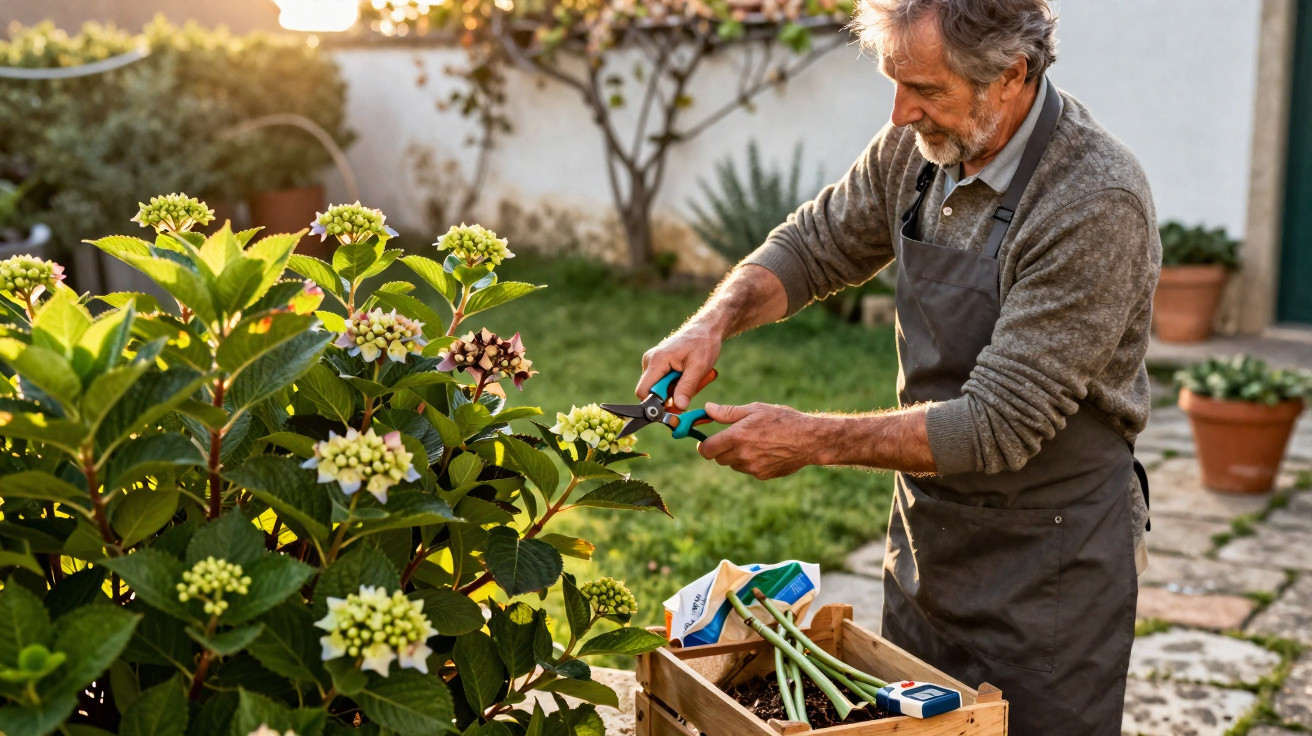
If you scatter ash in these beds, you may later wonder why the flowers discolour and growth becomes weak. A hydrangea bush that shifts from blue to a strong pink is a classic warning sign that the pH is climbing.
What nutrients ash really provides - and what it lacks
Wood ash does contain useful components, just not as lavishly as many people assume. As a rough guide, you can expect the following:
| Nutrient | Typical content | What it does in the garden |
|---|---|---|
| Potassium (K) | 2–5 % | Supports flowering, water balance and frost hardiness |
| Phosphorus (P) | 1–2 % | Encourages root growth and fruit set |
| Calcium (Ca) | sometimes very high | Raises pH and improves the structure of light soils |
| Magnesium (Mg) | trace amounts | Essential for leaf green (chlorophyll) |
What ash completely lacks is nitrogen - the driver of strong leafy growth. If you “fertilise” with ash alone, vegetables and perennials will be underfed. Compost, manure, organic fertilisers and green manures remain essential.
Practical tips for everyday life with a stove and a garden
If you heat with wood frequently, you can produce more ash than your garden can sensibly handle. A few simple rules make it manageable:
- Use only cooled, pale grey-white ash; sieve out black charcoal pieces first.
- Always use a metal ash bucket and let it cool with no chance of sparks.
- Store ash dry and sealed, for example in a metal container with a lid.
- Use only a portion in the garden; dispose of the rest in residual waste or pass it on to neighbours with sandy, acidic soils.
If you watch your beds closely, it becomes obvious whether ash is helping or harming: a crumbly structure, deep-green leaves and steady yields suggest the dose suits the site. Yellowing foliage, crusted surfaces and stalled growth point to overuse.
For many gardeners, a change of habit pays off: instead of automatically carrying every ash bucket into the vegetable patch, act with precision - small amounts on very acidic areas, with the remainder carefully added to compost. That way, a wood fire stays a pleasure without your beds paying the price in spring.
Comments
No comments yet. Be the first to comment!
Leave a Comment