
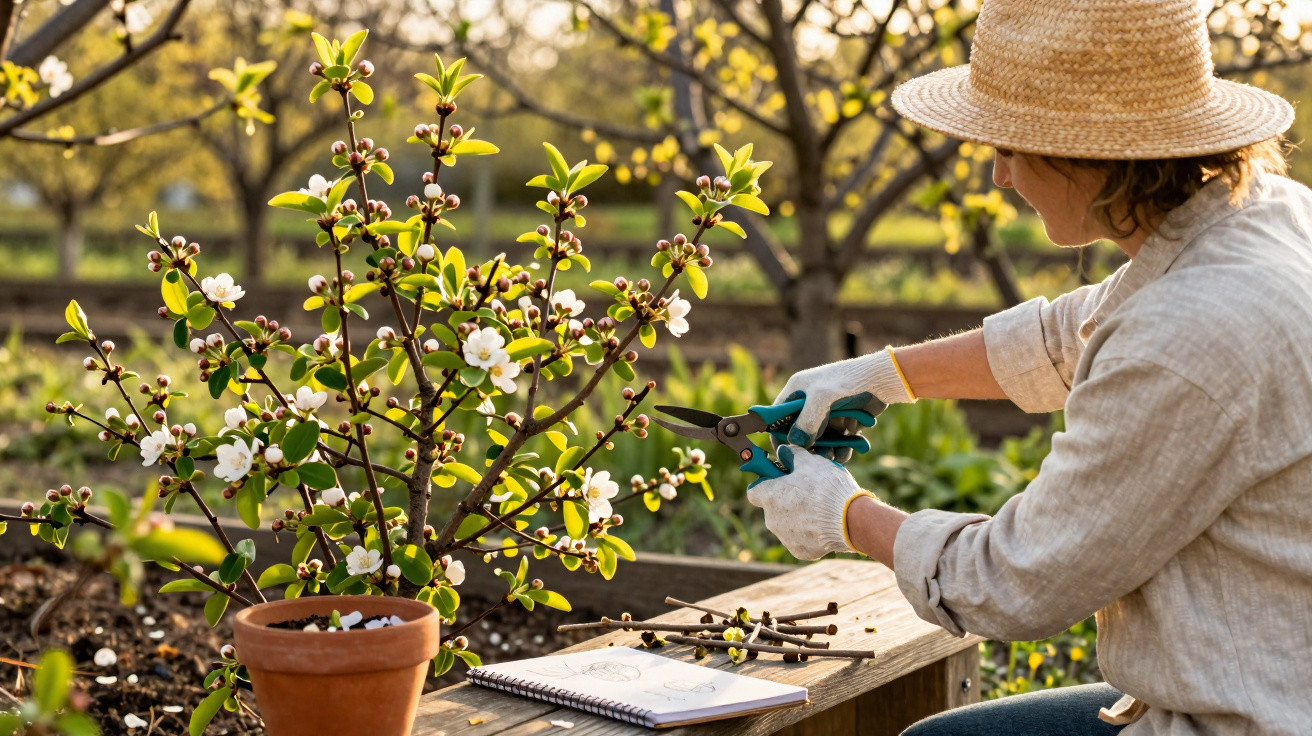
If you reach for the secateurs now, you’re setting the scene for a spectacular flush of flowers.
March is far busier in the garden than it first appears. Sap is rising, buds are swelling, and roots are working flat out. That makes this the ideal window to prune many trees, shrubs and perennials. If you know which plants are the key candidates - and how hard you can cut them back - you’ll be rewarded in summer with noticeably more flowers, denser growth and healthier plants.
Why March is a key month for pruning
In late winter and early spring, plants still carry little foliage, so crowns and branch structure are easy to inspect. At the same time, the harshest frosts have usually passed and growth is beginning to stir. Cuts also heal far better now than they do in mid-winter.
"In March you decide what your garden will look like in summer - pruning now shapes growth habit, flower power and the health of many plants."
Even so, one rule still applies: you can’t prune everything at once. Some species only tolerate cutbacks at specific times; others flower on old wood and respond badly to overzealous pruning.
Pleached trees and espaliers: shaping feature trees and screens
Pleached and espalier-trained trees such as limes, plane trees and cherry laurel are often used by patios, driveways or as living privacy screens. Up to the end of March is the best time to refine their shape.
Building young espaliers correctly
With young plants, the aim is to guide main branches - not simply remove them.
- Only cut out surplus shoots, poorly placed growth, or stems that cross and rub.
- Gently tie the remaining shoots to the framework using suitable ties.
- This gradually forms a dense, even, green panel.
If a pleached tree has already been trained for several years, a simple tidy-up is usually enough: shorten overly long growth and remove shoots that head inwards.
Block shape or classic training cut?
Many espalier trees can be clipped much like a hedge, including plane trees and evergreen cherry laurel varieties. They’re typically kept as a rectangular or softly rounded block. With species such as the classic lime, you can cut all young side shoots back to older wood - helping maintain a clear framework and encouraging fresh, vigorous regrowth.
Roses in March: cut back firmly for stronger flowering
Roses respond very clearly to pruning. If you cut too cautiously, you often end up with long, bare stems; a confident prune encourages robust new flowering shoots.
Bedding roses, shrub roses and standard (tree) roses
Now is the time to remove old, woody, brown stems. Cut the stronger young shoots back to just above an outward-facing bud. This creates an open structure, helps the plant dry quickly after rain, and makes fungal problems less likely.
Standard roses follow the same approach. Reduce the head (crown) decisively and take out older stems completely, so new shoots emerge from the crown rather than from the graft union on the trunk.
Directing climbing roses with purpose
Climbing roses need a different method:
- Choose three to four strong main canes and fix them horizontally or in a fan shape to supports.
- Shorten the side shoots along these main canes, leaving only a few buds.
- Remove old, dead or shrivelled stems right down at the base.
This approach produces lots of short laterals - and that’s where the flowers will form.
Lavender and heather: cut back in time before they turn woody
Without regular pruning, lavender tends to become woody at the base and split open. March is the moment for a meaningful cutback.
Don’t be too tentative with lavender
All lavenders - from classic lavender to varieties with ‘rabbit-ear’ bracts - can be cut back to roughly 15 cm above ground level. The crucial point is not to cut into very old, completely bare wood; always leave a small section with green shoots.
Know which heather you’re dealing with
Heather stays green all year, but it also needs pruning to keep it neat and compact.
| Heather type | Pruning time | How hard to cut back |
|---|---|---|
| Summer heather (Calluna) | March | to 8–12 cm above the ground, just above the bare wood |
| Winter heath (Erica) | Summer | shorten after flowering |
Cut summer heather in March, just below the faded tips. With winter heath, wait until it has finished flowering.
Hydrangeas: each type plays by its own rules
Hydrangeas are a staple in many gardens. Pruning can be a little tricky, because different groups behave very differently.
"If you cut the spent heads of mophead hydrangeas too low, you risk a poor flowering season - new buds are often sitting directly beneath the old blooms."
Mophead and lacecap hydrangeas
Mophead hydrangeas and lacecaps generally flower on last year’s wood, so they need a cautious approach:
- Remove faded flower heads just above the first strong pair of buds.
- Take out only a small portion of the oldest, thick stems at the base to rejuvenate the plant.
- Avoid hard pruning back to ground level - otherwise flowering often fails.
Panicle, snowball and oakleaf hydrangeas
Panicle hydrangeas flower on new wood, so they tolerate hard pruning - often down to around 40 cm above the ground. Well-known white ‘ball’ types such as "Annabelle" can be cut back even more severely, to about 10 cm, to produce sturdy, upright growth.
Oakleaf hydrangeas are usually handled less drastically. Often it’s enough to cut them back to 10 to 20 cm if you want them to grow as a grouped mass. If a plant is being used as a specimen in the centre of a border, be gentler: remove old flower heads, take out individual awkward stems at the base, and only lightly refine the outline.
Climbing hydrangeas follow a different timetable. They flower on wood made the previous year, so pruning with secateurs or a saw is best done after flowering. A hard cut in March would remove the entire season’s display.
Butterfly bush (Buddleja): a hard cut means more flowers
This popular shrub, famous for drawing in countless butterflies, responds especially well to a short, hard cutback in March. If left unpruned, it quickly becomes leggy and flowers less.
- Large varieties are cut to around 30 to 50 cm above the ground.
- Dwarf forms often only need cutting back to about 15 cm.
- Always cut just above a young bud or small new shoot.
From these short stubs, the plant will send up long, flower-filled stems in spring.
Climbing and ground-cover troublemakers: ivy and similar plants
Keeping ivy under control
Ivy grows almost year-round, only slowing a little from autumn through to spring. Early March is a good time to check it over:
- Cut away any loose growth that has pulled away from the surface.
- Remove shoots wandering into gutters, timber cladding or cracks and joints.
- Reduce sprawling runners at ground level - they can travel surprisingly far in a single season.
That keeps growth manageable and helps prevent damage to walls or woodwork.
Keeping St John’s wort compact
St John’s wort, often used as a low shrub or ground cover, can be cut back in March to around 20 cm. This encourages tight, bushy regrowth, helps close gaps between plants, and gives weeds fewer opportunities.
Mediterranean favourites: olive tree and oleander
Thinning an olive tree carefully
Olive trees are often grown in large pots or used as a specimen in a border. In March, give them a maintenance and shaping prune:
- Remove dead, frost-damaged or clearly diseased shoots completely.
- Take out branches growing into the centre so light and air can circulate.
- Then lightly trim the outer silhouette to suit.
Olives can cope with stronger cuts, but they may break into growth a little later afterwards. If you’re unsure, it’s safer to work towards the desired shape in a few smaller stages rather than one drastic prune.
Oleander: more pruning, more flowers - but handle with care (toxic)
Oleander likes sun and warmth, copes surprisingly well with dry spells, and can be cut back quite hard. In March, simply remove any frost damage on shoot tips and leaves. Cutting back by up to half the length of the stems is usually unproblematic; it encourages more branching and a richer display.
"With oleander, it’s best to protect yourself with gloves - the sap and leaves are considered toxic, especially for children and pets."
If your oleander is in a pot, after pruning it’s sensible to place it for a few days where children and animals can’t reach the leaves or any oozing sap.
How to prune cleanly and kindly to plants
How you cut matters just as much as when you cut. Blunt, dirty tools leave ragged wounds that heal slowly and can become entry points for disease.
- Use sharp secateurs and saws, and sharpen blades regularly.
- Clean off resin and dirt before you start, ideally disinfect briefly.
- Make cuts at a slight angle, just above a bud or side shoot.
- On thicker branches, make an undercut first, then saw from above to prevent tearing.
With sensitive plants - including some hydrangeas and roses - it pays to check the buds before you cut. Plump, green buds indicate live wood. Grey, shrivelled buds are more likely to be dead sections that can be removed completely.
What is better left alone in March
As tempting as a full spring clear-out can be, not every plant should be pruned now. Spring-flowering shrubs such as forsythia or ornamental cherries will lose their blossom if you cut them before they break bud. They’re best tidied immediately after flowering.
It can also be worth leaving some perennials standing for a few more weeks if they’ve been providing winter shelter for insects, especially if cold weather returns. A staggered approach - pruning part in March and part in April - is kinder to beneficial wildlife and spreads the workload.
If you stick to these basics, you’ll soon notice that March doesn’t have to be a frantic month - it’s the starting signal. With a handful of well-placed cuts, you can already influence whether the garden feels lush, orderly or a little wilder in the months ahead. That’s exactly what makes this short but decisive phase of the gardening year so satisfying.


Comments
No comments yet. Be the first to comment!
Leave a Comment