
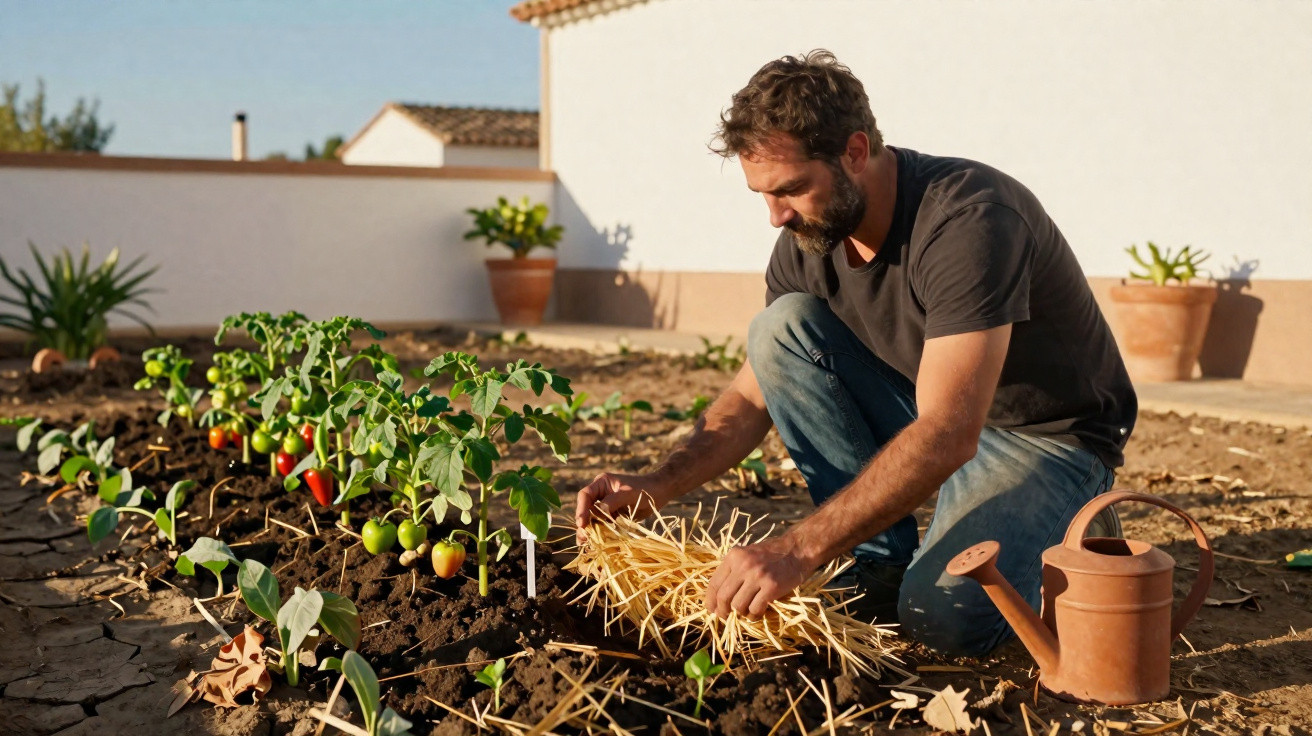
The day the heat finally dropped like a lid - the sort that makes the air feel like hot broth - I headed into the garden already picturing what I was about to find. In most years, by that point my mulch would have been down since May, neat and settled like a freshly made bed. This season I’d fallen behind on everything: work, washing, weeding, mulching. The straw bales sat by the shed until early June, propped there like wordless accusations.
I finally got it spread, later than I meant to, a bit sweaty and more than a bit irritated with myself, sure I’d already ruined the year.
Then July arrived.
And that “late” mulch did something I genuinely hadn’t seen coming.
Why my late mulch held up when the heat hit hardest
The first proper heatwave showed up with no mercy. By midday the paving stones were too hot for bare feet, the hydrangea leaves drooped as if they’d simply had enough, and the air above the beds wavered and shimmered. I prepared myself for the usual: the soil surface turning dusty, splitting open like a dried-out riverbed.
But it didn’t happen.
I crouched down, eased the straw aside, and tested the soil with my fingertips. Underneath, it was cool and dark, still faintly moist from a watering I’d done days before. It was like pulling back a curtain and finding a different season behind it.
About a week later, I walked past a neighbour’s garden. He’d mulched early - thick bark chips put down in April, straight over soil that still looked winter-heavy. At the time it had seemed immaculate. Now his mulch had baked into a hard, crusty layer. When he scraped some back to show me his tomato roots, the soil below was dry and almost powdery, as though it hadn’t been watered in a week.
In my mind, my own bed - mulched later - sat beside that picture and told another story. Under a thinner, fresher layer, the soil was busy with woodlice and worms. It was moist and crumbly. Nothing dramatic, just quietly doing its job. It wasn’t the sort of finish you’d post on Instagram, but the plants looked sturdier and stood more upright.
What mattered was the timing - and what the soil had been able to do before the mulch went on. By waiting, the ground had already warmed up, the ecosystem had properly woken, and the spring rain had had the chance to sink in and settle deep. I’d mulched over soil that was active and breathing, not over cold, compact, sleepy earth.
So the mulch wasn’t sealing in extra moisture above a chilly layer. Instead, it was protecting a system that had already found its balance from the worst of the sun. Mulching late, almost by mistake, ended up being less about the straw itself and more about working with the soil’s pace underneath.
How to time your mulch so your soil actually survives the heat
Now I pay less attention to dates and more to what the soil is telling me. I go outside, kneel down, and press my hand into the ground. If it still feels cold, sticky, and inert, I leave it alone. I’d rather see a few weeds starting to appear, a more crumbly feel, and a surface that doesn’t keep a glossy film of water after rain.
That’s when I mulch.
I put down a loose 5–8 cm layer once the soil has properly warmed and spring growth is clearly under way. It’s often a couple of weeks later than the gardening books recommend - but the plants don’t seem bothered. If anything, they push on more strongly.
The biggest change for me was realising I don’t need to mulch the entire garden in one heroic weekend. Honestly, hardly anyone keeps that up every single year.
These days I do it in sections: one bed today, another next week. I begin with the places that dry out first - raised beds, containers, and the sunny south-facing strips. That way, the areas most likely to suffer in a heatwave get covered early, even if the shaded corner by the fence has to wait a little longer.
If late frosts are common where you are, it can even make sense to hold off around tender plants and come back with mulch once the nights are kinder.
Sometimes the right time to mulch isn’t when you’re “supposed” to, but when your soil quietly tells you it’s ready.
- Look first, then act
Check the soil’s temperature, texture, and smell. Warm, earthy, and crumbly nearly always beats cold and sticky. - Mulch in stages, not all at once
Start with the driest, sunniest areas. Your August self will be grateful. - Keep mulch loose, not suffocating
A light, fluffy layer insulates well. A dense, compacted layer can hold moisture where you don’t want it. - Leave a small gap around stems
Mulch packed tight against crowns can encourage rot, particularly in humid climates. - Watch what happens during heat
In the middle of a heatwave, pull the mulch back with your hand and compare the soil to a bare patch. That simple check teaches more than any guide.
Rethinking “perfect timing” when the climate doesn’t play by the rules
The year I mulched late - and by the old rules, “wrong” - ended up being the year my soil handled extreme heat the best. That still catches me off guard. It also subtly changed how I read garden advice, watch the forecast, and treat the rules that once felt fixed.
We’re gardening in a climate that’s moving beneath us. Heatwaves arrive sooner, hang around longer, and no longer follow the gentle, textbook pattern they used to. In that reality, strict schedules go out of date quickly. Paying attention to what the soil and plants are doing right now can matter more than sticking to a specific week.
That may be the real takeaway from my late mulch. Not that everyone should delay mulching by three weeks, but that rhythm beats routine. In some springs you’ll be rushing to protect ground that’s drying too fast. In other years you’ll be trying to let heavy winter wet drain away before you even consider putting down straw or wood chips.
There’s a quiet satisfaction in gardening like that. You end up touching the soil more often. You notice small changes: a new worm, a deeper crack, the way water sinks in more slowly than last year. You start to adjust, rather than only react. Somewhere between “too early” and “too late”, you find your own sweet spot - and it shifts a little from season to season.
| Key point | Detail | Value for the reader |
|---|---|---|
| Timing mulch with soil, not the calendar | Wait until soil is warmed, active, and no longer waterlogged before mulching | Reduces risk of locking in cold, wet conditions and supports healthier roots |
| Using mulch to buffer heatwaves | Apply a loose 5–8 cm layer on the driest, sunniest beds first | Helps soil stay cooler and moist longer during extreme heat |
| Observing and adjusting each year | Check under mulch during hot spells and compare to bare soil | Builds practical, local knowledge of what works in your own garden |
FAQ:
- Question 1 Can putting mulch down too early actually damage my soil?
- Question 2 Which material works best if my summers are extremely hot?
- Question 3 How thick should mulch be so it reduces heat stress without smothering plants?
- Question 4 Is mulching still worthwhile if I can only cover part of the garden?
- Question 5 During a heatwave, how can I tell whether my late mulch is truly doing its job?
Comments
No comments yet. Be the first to comment!
Leave a Comment