
Warmth now lingers in cities in ways residents notice day to day. Even on a summer evening, the heat often refuses to lift, as streets and buildings continue radiating warmth well after the sun has gone down.
Some neighbourhoods feel noticeably cooler because trees shade pavements and front gardens. Elsewhere, limited canopy leaves people exposed, increasing discomfort. That unevenness influences health outcomes, electricity use, and the practicalities of daily routines.
Urban trees are one of the most straightforward tools for cooling built-up areas. They intercept sunlight, give off moisture, and can support cleaner air. But putting trees in the ground is only the beginning.
In dense urban settings, keeping young trees alive can be the hardest part. Research carried out in Dayton, Ohio, illustrates what is required to establish trees in the places where cooling is needed most.
Cities are going to get hotter
Cities store heat because surfaces such as concrete, asphalt, and brick soak up solar energy during daylight hours and then release it gradually overnight.
That process drives the urban heat island effect, leaving urban temperatures higher than in nearby rural locations.
Tree cover can counteract the effect by shading streets and lowering surface temperatures.
Research indicates that canopy can reduce average daily urban temperatures by about 3 degrees Celsius (5.4 degrees Fahrenheit). By reducing the need for air conditioning, trees can also cut electricity demand.
“It's going to keep getting hotter in the future,” said Erika Wright, first author of the study and a student at The Ohio State University.
“So we need to know if we should be trying to create environments that are more resilient to those changes.”
Legacy cities face risks
Dayton is an example of what researchers call a legacy city: a place that previously relied on a strong industrial economy but has since seen declines in population and income. Since the 1970s, Dayton has lost about half its population.
When budgets and capacity shrink, it becomes more difficult to look after green space. As a result, tree cover is extremely low in many neighbourhoods, with canopy levels in some places dropping to just five to eight percent.
With so little shade, residents face greater heat exposure and higher health risks, particularly older adults.
“People don't necessarily think of how their yard connects to the surrounding environment, but we all contribute to the urban forest by planting in our own space,” said Wright.
Planting trees in cities
Across Dayton, researchers planted 640 saplings at 20 different sites, including parks and one vacant lot.
The sites differed widely in how much of the surrounding land consisted of hard surfaces, ranging from 7 percent to 65 percent.
Eight native tree species were chosen, including red maple, northern catalpa, and white oak. To make comparisons across conditions possible, every site received the same mix of species.
Testing watering methods
Water availability is crucial to whether newly planted trees make it through their first season. The team compared four watering approaches. One set of saplings relied on rainfall alone. Another received 19 litres (5 gallons) every two weeks.
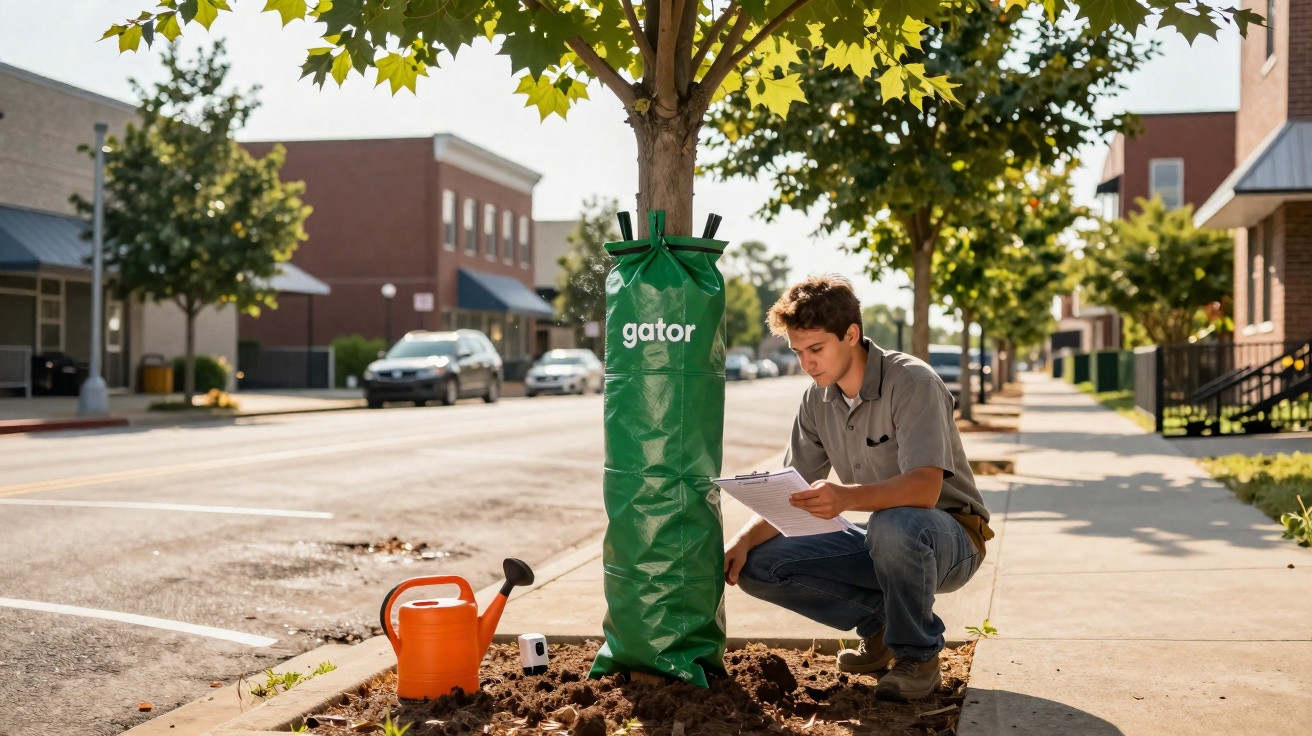
A third group was given the same 19 litres (5 gallons) once a month. The last approach used gator bags, which hold about 75 litres (20 gallons) and drip-feed water gradually.
These options mirror the practical decisions local authorities face. Frequent watering means ongoing labour and expense, while slow-release systems require more investment upfront.
Half of the trees survived
By the close of the growing season, survival was only about 48 percent. In addition, some trees were missing altogether, suggesting they may have been removed or damaged.
Survival outcomes depended heavily on the species. Red maple performed strongly, with 91 percent survival. Black gum fared poorly, with only 10 percent survival. White oak survival was also low.
The health of trees at the moment they were planted also influenced results. Some species appeared in weak condition from the outset, pointing to nursery quality as an important factor.
Gator bags performed best
For most species, gator bags produced the strongest outcomes. Because they release water slowly, moisture can soak deeper into the soil, helping trees cope more effectively when conditions are dry.
The downside is cost: each bag costs about 30 dollars. When used for hundreds of trees, the price rises quickly. Some bags were also damaged by equipment or people, making implementation more difficult.
Heat affects species differently
Tree species do not all react to heat in the same way. In areas with higher pavement levels, some species struggled markedly, and black gum survival fell sharply at the hottest sites.
Other species tolerated heat more successfully. Northern catalpa did well across all locations. Red maple and honey locust also proved resilient, continuing to grow healthily even where conditions were warmer.
Human impact on trees
Climate and soil stress were not the only hazards. People also affected survival rates. At one park, 30 of the 32 saplings disappeared-either snapped or removed entirely by park users.
“Even after the trees were pretty well established, we saw losses, which was surprising,” said Wright.
This points to the importance of local understanding and support. Trees planted in shared spaces rely on community care and protection.
Diversity remains important
It might seem sensible to focus planting solely on the most robust species. Yet depending on a narrow set of trees increases vulnerability, because pests or diseases can spread rapidly through uniform plantings.
A more effective strategy is to balance resilience and diversity. Tougher species can be used early to create shade and establish canopy, and then more sensitive species can be introduced later. That approach helps develop a healthier, more stable urban forest.
Key lessons for city trees
For city planners, the study provides practical direction. First, species choice should reflect site conditions, because not every tree is suited to every location. Second, early-stage care matters: watering and routine maintenance in the first years raise the chances of long-term survival.
Plans should also account for damage. Simple measures to protect young trees from mowing equipment and everyday public activity can make a difference. Involving local residents can improve stewardship and reduce losses.
“When a city invests in reforestation of a park, you have to plant more trees than you want to last long term because there will be some percentage that dies off,” said co-author Mary Gardiner.
“But even small differences in management can mean huge variations in survivorship.”
Planting without follow-up wastes money and effort. A young tree that dies quickly delivers no cooling or air-quality benefits, while one that survives can shade streets for decades.
That is why aftercare is a central part of urban forestry. Even modest spending on maintenance can substantially improve long-term results.
Resilient cities in a warming climate
In this study, about half the planted trees survived. While that figure may sound low, it demonstrates what can be achieved under harsh urban conditions, where heat, poor soils, and limited water are common.
With improved preparation and support, survival rates could be raised. Cities can prioritise hardier species, use more targeted watering, and build community involvement.
“Looking for cost-effective strategies for cities to be resilient in the face of a warming climate is an important tactic,” said Gardiner. “Conservation like this leads to a great payoff in the long term.”
Urban forests develop over many years, and the decisions taken now will influence how city life feels well into the future.

Comments
No comments yet. Be the first to comment!
Leave a Comment