
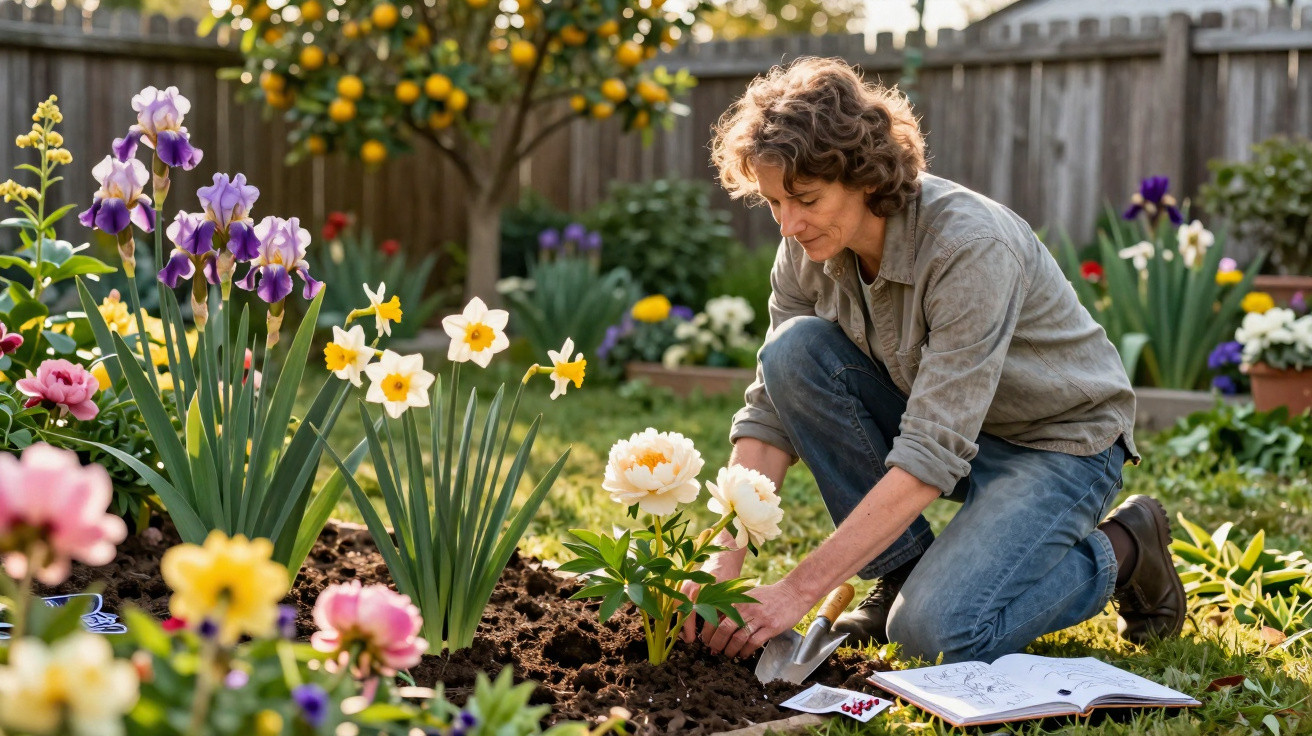
By late winter, many gardens look bleak. Borders sit bare, the soil feels cold, and nothing seems to be happening. Yet if you plant wisely at this quiet point in the year, you can set up a garden that returns and flowers again and again-without having to start from scratch each season.
Why perennials are the garden’s hidden treasure
Most people rush to the garden centre in spring and load up with bright seasonal bedding. It delivers instant impact, but only for a short while. After a few months it’s finished, and by autumn it often ends up on the compost heap-then the whole routine begins again next year.
Perennials play a completely different game. Their top growth dies back over winter, but their roots, rhizomes or tubers stay in the ground and push out fresh growth the following year. Over time, this creates a reliable framework in the border that becomes fuller and more established.
"If you choose perennials, you’re not investing in one summer, but in decades of gardening happiness."
Some varieties can stay in the same spot for half a lifetime, as long as soil and light conditions suit them. These long-haul plants are exactly what makes a garden both low-maintenance and still genuinely striking.
The long-term star in the border: peonies with staying power
Right at the top of the endurance list are peonies. They can seem slow to get going at first, but they improve year after year. In free-draining, nutrient-rich soil and a sunny position, they can remain for 50 years or more without needing to be lifted or moved.
Getting the basics right at planting time matters most:
- Position: at least half a day of sun; avoid planting right in front of walls that trap and radiate heat
- Soil: deep, humus-rich, and not prone to waterlogging
- Planting depth: buds only 2–3 cm below the surface
Plant peonies too deep and you may wait for years with little or no flowering. Set correctly, they reward you in May and June with large, often scented blooms that can make a garden feel like a painted scene.
Early in the year: daffodils as faithful returners
Daffodils are among the most generous spring flowers you can grow. They emerge from bulbs that steadily multiply underground. What begins as just a handful of bulbs can, over the years, develop into a glowing carpet of yellow or white.
A few straightforward rules make them almost foolproof:
- Planting time: autumn, while the soil is still frost-free
- Planting depth: roughly three times the bulb’s height
- Arrangement: plant in groups of 5–7 bulbs, not in straight lines
- Leave the foliage: only cut back once it turns yellow on its own
If you let the leaves die down naturally, the bulbs can store energy for the next season. That’s how a small clump gradually turns into a real spring feature-without replanting every year.
Structure and height: garden iris as a tough backbone
Garden iris (Iris germanica) brings more than colour; it adds shape and presence. With sword-like leaves and tall flower stems reaching up to around 90 centimetres, it creates strong vertical accents in the border.
Its durability comes from the rhizome: a thickened, horizontally growing stem sitting close to the soil surface. This is where the plant stores water and nutrients, helping it cope with dry spells.
For strong plants, follow these principles:
- Rhizome half visible: don’t bury it completely; it can sit slightly exposed
- Sunny position: the more light it receives, the better it flowers
- Lean soil: too much fertiliser produces lush leaves but fewer flowers
"Peonies bring emotion, daffodils deliver the early start, and garden iris provides structure-together they create a border that feels more reliable every year."
The lasting dream border: the strong perennial trio
If you want a genuinely long-lived, almost low-effort border, combine these three: daffodils, garden iris and peonies. Each one plays a different role through the season.
| Plant | Flowering period | Main role in the border |
|---|---|---|
| daffodils | February to April | early burst of colour after winter |
| garden iris | May to June | height, structure, bold colour |
| peonies | May to June | large, showy blooms, focal point |
Planted well, this trio can cover several months of spring and early summer with colour. After that, other perennials such as coneflower, autumn anemone or autumn aster can take over-and they can be slotted in between without any trouble.
Flowers that self-seed
Things get even more interesting when you add a few “self-starters” alongside long-lived perennials. Some annual flowers reliably return because they drop seed and germinate again the next spring.
These include, among others:
- cornflowers (Centaurea)
- cosmos
- love-in-a-mist (Nigella)
- sunflowers
If you allow at least some flowers to mature, the seed falls onto the soil and sprouts on its own the following year. Some seed settles into the ground; some becomes food for birds and insects-a useful side benefit.
"If you don’t deadhead every faded flower, you’re often rewarded with surprise splashes of colour in new places."
How to plan a border that almost runs itself
The key is combining long-lived perennials, spring bulbs and self-seeding annuals. A simple underlying layout helps the border feel intentional rather than messy.
- Create the framework: place peonies and garden iris in loose groups.
- Build in the spring kick-off: plant daffodil bulbs between the perennials.
- Scatter self-seeders: sow cornflowers, cosmos and nigella lightly.
- Fill gaps: later in the year, add coneflower, cranesbill (hardy geranium) or lady’s mantle.
As the years pass, the picture shifts: perennials expand, and annuals pop up in different spots. If you intervene gently-thinning here, moving a plant there-you keep a natural, lively look without redesigning the border every season.
Common mistakes that cost you flowers
A lot of garden disappointment can be avoided if you know the usual pitfalls:
- Planting peonies too deep: the buds must sit close to the surface.
- Overfeeding: too much nitrogen produces leaves rather than blooms.
- Cutting back faded perennials too hard: it’s often better to leave dead growth as winter protection.
- Impatience: some perennials take two to three years before they really perform.
Steer clear of these issues and the workload tends to drop. Instead of replanting every spring, you can focus on a handful of targeted jobs: cutting back, mulching, and dividing plants now and then.
Why long-lasting borders also make sense for the climate and your wallet
Perennials and self-seeding flowers don’t just save time-they save money too. A peony planted once doesn’t need replacing for decades. Daffodil bulbs multiply on their own. After a few years, many plants can be divided, replanted elsewhere, or swapped with neighbours.
There’s an environmental upside as well: fewer plastic pots from the garden centre, less peat-based compost, and less transport overall. Permanent planting also offers insects, birds and small wildlife a steadier supply of food and shelter over many years.
A border built from perennials, bulbs and self-seeders works quietly in the background. The most important activity happens below ground: roots branch out, bulbs split, and seeds wait in the soil for the right moment. If you work with these processes, a single weekend of planting can become a long-term promise of flowers.


Comments
No comments yet. Be the first to comment!
Leave a Comment