
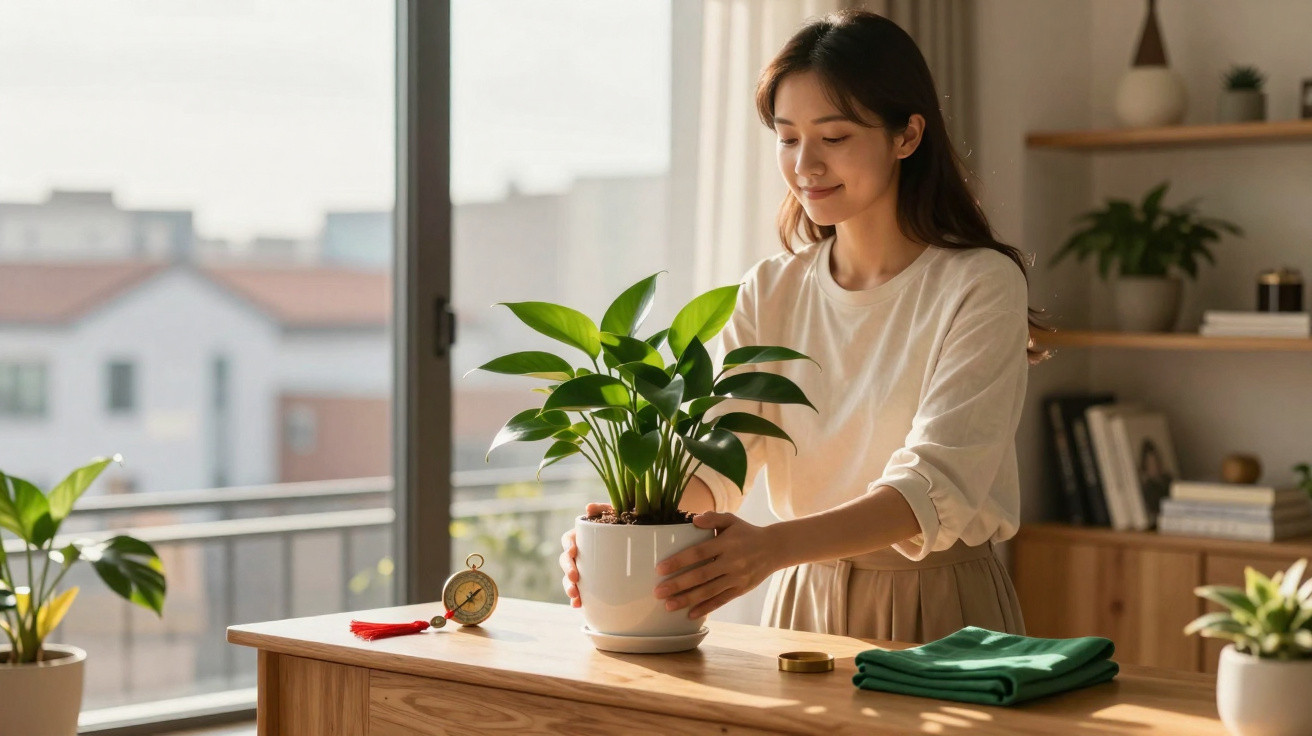
Among the best-known plants in Feng Shui, the jade plant is one of the most strongly associated with prosperity. Its rounded leaves resemble small coins, which is why it has come to represent financial growth, abundance and good luck in various Eastern traditions. It is worth noting, however, that these links belong to Feng Shui belief and are not supported by scientific evidence.
Why is the jade plant considered a symbol of prosperity?
In Feng Shui, thriving plants are seen as signs of growth, vitality and renewed energy. Because the jade plant has thick, glossy, rounded leaves, it has become one of the leading symbols of abundance and is widely used to decorate homes, offices and commercial premises.
Within this philosophy, keeping the plant in good condition is considered just as important as where you place it. Dried leaves, damaged stems or a cracked pot are thought to indicate stagnant energy, whereas a strong, healthy plant would suggest progress and fresh opportunities.
Where should you place the jade plant according to Feng Shui?
For those who follow this tradition, the chosen spot affects the plant’s symbolic meaning. One of the most commonly recommended locations is the south-east sector of the home, which Feng Shui associates with wealth and prosperity.
It is also common to set the plant near the front door, where it would symbolise welcoming positive energy and opportunities-provided it does not obstruct the doorway and is not left in a dim area.
- South-east corner of the home
- Near the front door
- Office or workspace
- Spaces with plenty of bright, indirect light
- Close to well-lit windows
- Tidy, airy living rooms
What care helps keep the plant healthy?
Regardless of Feng Shui beliefs, the jade plant is a succulent that is straightforward to grow. It does best in bright conditions, in well-draining soil, and with moderate watering-allowing the compost to dry out between waterings.
It is also essential to use pots with drainage holes to prevent water building up around the roots, which is one of the main causes of rot in this species. With these basics in place, the plant can thrive for many years and retain its ornamental look.
- Grow it in a spot with good light
- Avoid overwatering
- Use a free-draining growing medium
- Choose pots with drainage holes
- Remove dry leaves as they appear
- Feed periodically during the growing season
Is it worth growing a jade plant?
Even if you do not follow Feng Shui, the jade plant is popular for its low-effort care and attractive appearance. For practitioners of this philosophy, it also stands for prosperity, growth and good opportunities, as long as it is kept healthy and placed in line with tradition.
Whatever symbolic meaning you attach to the species, its practical advantages include minimal maintenance and strong suitability for growing in pots.
Comments
No comments yet. Be the first to comment!
Leave a Comment