
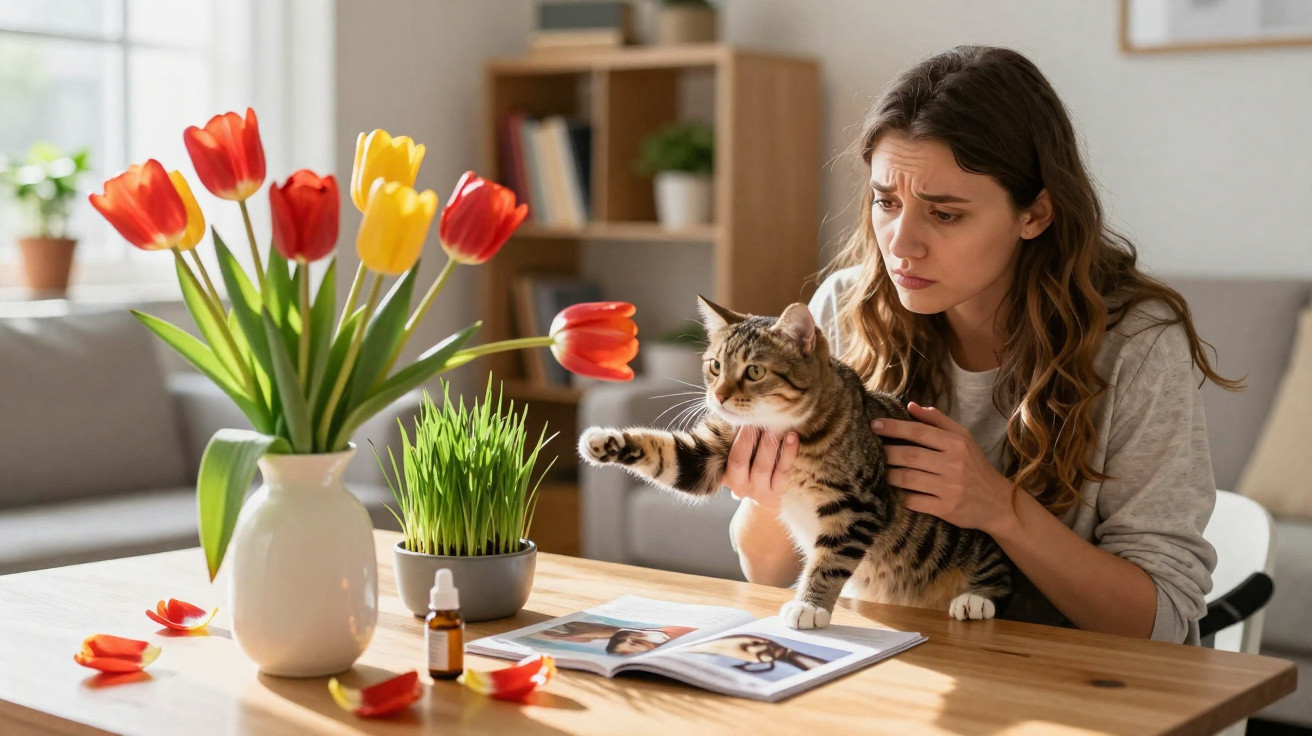
Many owners plant tulips in the garden each spring or bring a fresh bunch into the living room. What far fewer people realise is that this popular bulb flower contains a toxic substance for cats. The reassuring part: poisoning is usually mild - but it is still worth understanding the risks so you do not take chances.
Why tulips are poisonous to cats
Tulips are bulb plants that produce specific defensive compounds. Three common species you may come across at home or in the garden are:
- Tulipa gesneriana - the classic garden tulip in many colours
- Tulipa clusiana - a more delicate species, often seen in Mediterranean-style gardens
- Tulipa agenensis - more often found in the wild, for example around the Mediterranean
All of these species contain so-called tulipalins. These are natural substances the plant uses to protect itself against fungi and bacteria. In cats, that same protective mechanism can cause problems.
"Tulipalins irritate a cat’s mucous membranes and gastrointestinal tract and can - depending on the amount ingested - lead to clear signs of poisoning."
The highest concentration of toxins is found in the bulb. The leaves and flowers contain less, but they are still not safe. If a cat chews a tulip leaf, that can be enough to trigger the first symptoms.
How cats end up chewing tulips
Most cats do not eat large quantities of tulip material. Even so, there are a few common scenarios in which they may still ingest part of the plant:
- nibbling a bouquet on the table out of curiosity
- digging up newly planted bulbs in a flowerbed and licking them
- eating houseplants because there is no suitable catnip or grass alternative available
- playing with dangling leaves or flowers and accidentally swallowing small pieces
Indoor cats in particular, with few other safe things to chew, often try anything green - and that is where the risk begins.
Typical symptoms of tulip poisoning in cats
How severe the signs are depends on the amount eaten and how sensitive the individual cat is. Owners most commonly report the following.
Digestive problems after contact with tulips
- Nausea - the cat seems unsettled, smacks its lips, and licks its lips frequently
- Vomiting - sometimes several times in quick succession
- Diarrhoea - watery, occasionally with mucus
The irritant primarily attacks the stomach and intestines. The body tries to get rid of the toxin as quickly as possible - which is why vomiting and diarrhoea often appear together.
Irritation of the mouth and oesophagus
- heavy drooling - noticeably more saliva than usual
- difficulty swallowing - food is dropped, the cat turns its head away
- pawing/licking at the mouth - trying to remove residue from around the mouth
Many cats stop eating on their own because their mouth and throat feel uncomfortable. In some cases, a cat may appear briefly lethargic simply because it feels unwell.
"If a cat suddenly drools a lot more, retches, or vomits directly after contact with tulips, a vet should be contacted - ideally with details of which plant was involved."
How dangerous the toxin really is
Fortunately, most cases are moderate. Cats rarely consume large amounts of tulip material. Typically it is a few bites from a leaf, or a small amount of bulb picked up while digging.
Severe, life-threatening cases are uncommon and tend to occur when a large quantity of bulb has been eaten, or when the cat is very small, elderly, or already unwell. Even so, mild symptoms can be extremely unpleasant, and with frequent vomiting the circulation can suffer quickly.
What vets do for tulip poisoning
If you see your cat chewing tulips - or you strongly suspect it - it is best not to “wait it out”. A quick call to your veterinary practice or an out-of-hours emergency vet service will clarify what to do next.
The earlier your cat is assessed, the more targeted the support can be. Common measures include:
- antiemetics - medicines that stop vomiting
- antidiarrhoeals - treatments for ongoing diarrhoea
- fluid therapy - drips to support circulation and protect the kidneys
- stomach protection - products that soothe irritated mucous membranes
There is no classic “antidote injection” for tulips. Treatment focuses on easing the symptoms and preventing complications such as dehydration. With prompt care, most cats recover within one to two days.
First aid at home - what owners can do
Before you reach the vet, a few simple steps are helpful:
- remove any remaining tulips immediately or place them completely out of reach
- gently check the mouth and wipe away plant residue with a damp cloth
- do not give milk, oil, or home remedies - these can further upset the stomach and intestines
- keep any plant pieces and, if possible, the bouquet packaging, and take them with you to the practice
The key is to keep your cat calm and warm, and not to force it to eat or drink. Forcing can trigger further vomiting.
Making tulips cat-safe: how to prevent problems
If you live with both cats and tulips, it pays to plan carefully. A few straightforward measures can greatly reduce the risk.
Choose the right location and limit access
- place indoor tulips on high shelves, sideboards, or wall-mounted shelving
- avoid putting vases directly beside cat trees or on window sills used as jumping-off points
- in the garden, section off beds with bulb plants using a low fence or edging
- cover freshly planted bulbs with wire mesh until the soil has settled
Offer cat-friendly alternatives
Cats often chew plants because they are looking for a grass substitute. Providing a safe option can divert attention away from tulips and other risky flowers.
- cat grass - ready-grown trays from pet shops or home-sown
- catnip - offers enrichment and safe leaves to nibble
- Cyperus (umbrella plant) - many cats love the long blades
"If fresh cat grass is always available, tulips and other cut flowers become far less tempting for many cats."
When a vet visit is essential
Some owners hope mild signs will “just pass”. In certain situations, it is not worth taking that risk:
- your cat is clearly lethargic or hardly responsive
- vomiting happens repeatedly over a short period
- diarrhoea lasts longer than half a day or contains blood
- your cat stops eating and drinking altogether
- you are certain a piece of tulip bulb was eaten
In these cases, an examination is advisable even at night or over the weekend. Older cats, or cats with kidney disease, are more sensitive to fluid loss and toxins.
Keep other poisonous plants in mind
Tulips are only one example of plants best kept out of a cat’s reach. Many common houseplants and garden favourites also contain problematic substances, including:
- poinsettia
- cyclamen
- lilies
- dieffenbachia
- yew and box in the garden
If you buy new plants regularly, it is sensible to check in advance whether they are safe for cats. Making a short list of “safe” and “high-risk” species once can save a great deal of stress later.
What “poisonous” means for plants and cats
The word toxic can sound like immediate danger to life. With tulips, the effects range from mild irritation to serious problems. The outcome depends on several factors:
- the amount of plant material swallowed
- which part was eaten (leaf, flower, bulb)
- the cat’s weight and overall health
- how quickly a vet intervenes
That is why one cat may only drool briefly after a single bite of leaf, while another develops severe gastrointestinal upset. As a rule of thumb: take any confirmed ingestion of tulip material seriously and monitor your cat closely.
If you plan your tulips around your cat’s needs and do not hesitate to seek veterinary advice in an emergency, you can enjoy colourful spring flowers without putting your house cat’s health at risk.





Comments
No comments yet. Be the first to comment!
Leave a Comment