
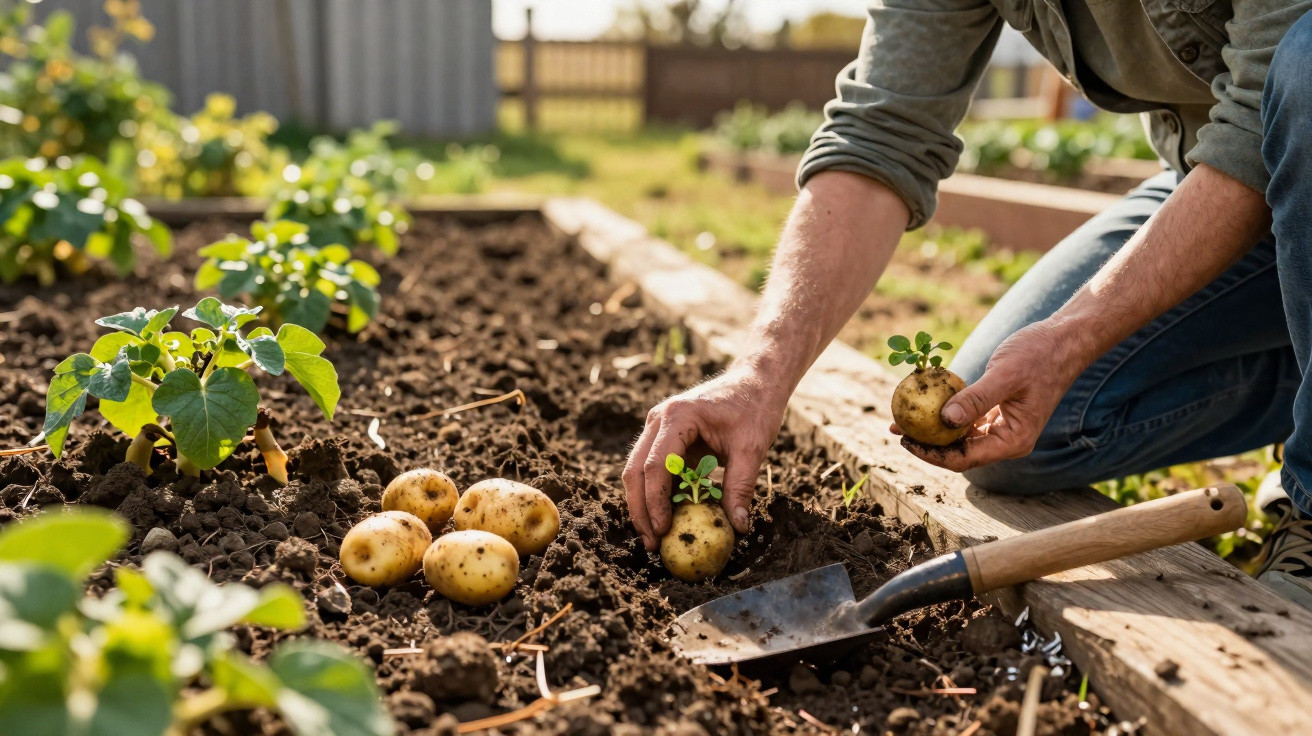
Countless “perfect” dates for harvesting dream potatoes do the rounds on seed packets, in gardening forums and via the neighbours. In reality, many crops disappoint because people plant too early into icy soil, or leave it so late that only meagre tubers form. One professional gardener’s advice is simple: stop fixating on fixed dates and pay closer attention to clear signals from the soil and the weather.
When potatoes can go into the ground
The real green light comes from the soil rather than the calendar. Potatoes hate cold feet, so what matters is soil temperature, not the air.
"The ideal time to plant is when the soil at a depth of 10 centimetres is consistently around 7 to 10 degrees and there’s no longer a risk of severe frost."
Professionals check this with an inexpensive soil thermometer from a garden centre. If you do not have one, there is a very human alternative: sit directly on the bare ground.
- If you can sit for a few minutes without feeling cold, the ground is usually ready.
- If you feel the chill in your back and legs within seconds, the soil needs more time.
Depending on the region, the planting window shifts noticeably:
- Mild coastal regions and warmer areas in the west/south-west: often from late March.
- Central Germany and many traditional vegetable gardens: typically from mid-April.
- Cool upland areas and harsher regions: often not until early to mid-May.
As a rule, it is better to plant a week later than too early into freezing soil. Cold ground slows sprouting, weakens the plants and makes it far easier for diseases to take hold.
How to prepare the soil for a big harvest
Potatoes only set tubers well in soil that is loose, deep and well aerated. Wet, compacted ground results in misshapen tubers and rot.
A simple hand test for soil quality
Take a handful of soil and squeeze it firmly:
- If it forms a hard, sticky ball, you are dealing with heavy, clay-rich soil.
- If the lump falls apart immediately, the soil is more sandy and loose.
- If the ball breaks into coarse pieces, you have good garden soil.
Gardeners ideally improve heavy soils in autumn. A professional recommendation is to:
- Spread 3 to 4 centimetres of mature compost over the bed.
- Mix in a little sand to increase aeration.
- Leave it in rough clods so frost and rain can do the rest.
One key point for crop rotation: potatoes should only be grown on the same patch once every four years. This helps keep soil fatigue and common potato diseases much lower.
Choosing the right seed potatoes
Many people grab eating potatoes from the supermarket on impulse. A professional avoids this altogether because these tubers are often treated to prevent sprouting or may carry diseases that are not immediately obvious.
"For a reliable harvest, certified seed potatoes are worth it – they’re inspected, healthy and deliver consistent yields."
As a rough rule of thumb, 1.5 kilograms of seed potatoes can produce 10 to 20 kilograms of harvest, depending on variety, weather and care.
Chitting: how to bring the harvest forward
If you want to lift potatoes earlier, start chitting the seed potatoes 4 to 6 weeks before planting. It is surprisingly straightforward:
- Place tubers in empty egg cartons with the “eyes” facing upwards.
- Keep them somewhere bright, cool and frost-free, such as a north-facing windowsill.
- Wait until firm, short sprouts of 1 to 2 centimetres appear.
Long, pale, glassy sprouts are not ideal because they snap easily. Short, thick, dark sprouts are a sign of strong starter plants and faster establishment in the bed.
Planting day: step by step
On planting day, choose a spot in full sun that dries quickly after rain. Potatoes do not tolerate waterlogging.
Spacing and planting depth
| Parameter | Recommendation |
|---|---|
| Spacing within the row | 30–35 cm |
| Row spacing | 60–75 cm |
| Planting depth | 10–12 cm |
Use a spade or a ridger to open a furrow. Set the seed potatoes in with the sprouts facing upwards, cover carefully and firm the soil lightly. Take care not to snap the sprouts.
Why earthing up can double the harvest
Once the foliage is about 20 centimetres tall, it is time for the most important maintenance job: earthing up. Use a hoe to pull soil up from the sides towards the plants, creating a small ridge.
"Earthed-up potatoes form more tubers along the underground stem and stay dark, which keeps them edible."
Repeat the process a second time a few weeks later. This keeps tubers shaded, reduces how quickly the soil dries out and makes weeds less of a problem. Even in a large container or a grow bag on a balcony, you can build small ridges in the same way.
Starting earlier and more safely with a few tricks
If you garden in a cooler location, you can give the soil a helping hand. One simple method is covering the bed with black plastic or a dark horticultural fleece. It captures warmth from the sun and raises soil temperature by an average of two to three degrees. That allows many hobby gardeners to move planting forward by one to two weeks without increasing the risk of rot.
At the same time, young plants can be protected on frost-prone nights with fleece or upturned buckets for short periods. If a cold snap still arrives, it usually does little harm to cut the foliage back slightly - the tubers will reshoot from below.
Common mistakes that reduce yield
A professional vegetable grower sees similar pitfalls year after year:
- Planting too close together: plants compete for light and nutrients, leaving small tubers.
- Soil that stays wet: especially on heavy ground, rot and fungal problems become likely.
- No crop rotation: growing potatoes in the same place every year encourages disease build-up.
- Harvesting too early or too late: lifting too soon gives tiny tubers; leaving crops far past their best increases rot and reduces storage quality.
If you check plants regularly, you will notice in time if the foliage is heavily affected by fungal disease. In that case, it can be worth cutting the haulm off and lifting the tubers one to two weeks later, before they are damaged as well.
How variety choice and storage affect success
Alongside timing and soil, variety plays a major role in flavour, texture and how well potatoes store. Early potatoes stand out for their delicate skins and fine aroma, but they only keep for a short time in a cellar. Late varieties usually yield more and can be stored well into winter, but they need a longer, stable growing period.
For storage, choose a cool, dark, slightly humid place. If tubers are kept too warm they sprout quickly; too much light causes green patches and solanine - and then they no longer belong in the kitchen. Wooden crates or well-ventilated boxes help stop rot spreading quickly.
Anyone who trials different varieties will learn over the years which potatoes cope best with their own climate and soil. With a good feel for the ground, clear temperature signals and careful preparation before planting, a heavy harvest crate at the end of summer is well within reach.

Comments
No comments yet. Be the first to comment!
Leave a Comment