
If you have spotted the price of tomatoes in the shops in spring, you may well have wondered whether growing your own is starting to make more sense again. A British gardening professional has now shared a method where a single tomato is enough to raise a whole tray of young plants - without buying expensive seed packets and using items you are likely to have at home already.
Why this tomato trick is especially appealing right now
Tomatoes are a staple in German kitchens. Whether in salads, pasta sauces or simply on a sandwich, they end up in the basket almost every day. At the same time, food prices have risen noticeably. If you have a balcony, a patio, or even just a sunny windowsill, a little patience can help you grow at least some of your summer tomatoes yourself.
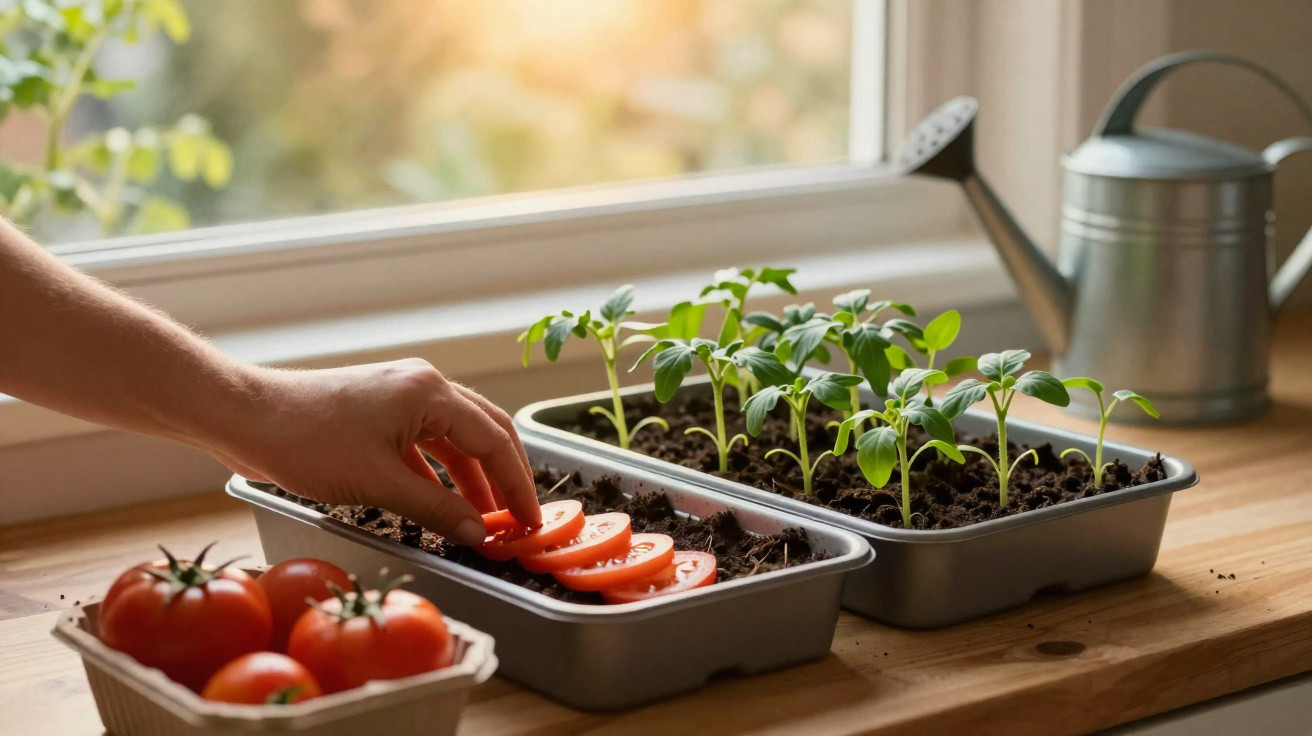
That is exactly where the supermarket-tomato trick comes in. Instead of purchasing seeds, you use the pips that are naturally inside the fruit. The clever part is that the seeds stay in the slice, so there is no fiddly scooping and separating. From a single tomato you can create a dense “carpet” of seedlings, which you later separate and grow on.
"With very little effort, an everyday item from the chilled aisle becomes a small tomato plantation for the summer."
The tomato-slice trick: how it works step by step
What you will need
- 1 ripe tomato from the supermarket (ideally a flavourful variety)
- 1 empty plastic punnet from fruit or vegetables with holes in the base
- Seed compost or fine potting compost
- Watering can or spray bottle
- A bright spot on a windowsill or in a greenhouse
What to do
In a viral video, gardening expert Simon Akeroyd demonstrates just how straightforward this approach is. He does not begin with loose seeds - he starts with a shop-bought tomato.
- Get the container ready: Fill the plastic punnet (for example, one from grapes or berries) with seed compost. Press the compost down lightly and moisten it; it should be damp but not dripping wet.
- Slice the tomato: Cut the tomato into four to five slices as evenly as possible. Each slice holds dozens of seeds.
- Lay out the slices: Place the tomato slices flat on the surface of the compost, leaving a little space between them.
- Cover lightly: Sprinkle a thin layer of compost over the slices - just enough to cover the flesh.
- Moisten: Use a spray bottle or a very fine rose on a watering can to water gently so the slices are not washed out of place.
Then put the punnet somewhere warm and bright - a sunny windowsill is perfectly adequate. Within around one to two weeks, a thick mat of small green tomato seedlings usually pushes up through the compost.
"The clever part: you use both the packaging and the fruit in full - turning waste into a propagation station."
What to do after germination
As soon as the seedlings develop their first “true” leaves - not just the two narrow seed leaves - the most important job begins: pricking out. If you leave everything crowded together, you are likely to end up with weak plants that are more prone to disease and later produce fewer tomatoes.
Choose the strongest plants
- Pick out the most robust, upright seedlings.
- Always hold a seedling by a leaf, never the stem - stems snap easily.
- Use a pencil or spoon to lift the compost slightly and gently free the root ball.
- Pot each seedling into a small pot of fresh compost and water it in well.
The remaining seedlings can go onto the compost heap. It can feel harsh, but it saves space and effort and prevents too many plants competing and holding each other back.
The right timing and care in German-speaking countries
In the UK, the professional starts this trick in spring. The same idea works well for Germany, Austria and Switzerland. What matters most is that there is no longer any risk of frost when the plants finally move outdoors.
| Region | Recommended indoor start time |
|---|---|
| Southern Germany, low-lying regions in Austria and Switzerland | End of February to mid-March |
| Upland areas, northern Germany | Early to late March |
| Cooler locations, the Alps, high valleys | March to early April |
Keep the young plants indoors, in a conservatory or in a greenhouse until after the last night frosts. Before planting out, it is worth doing a week of “hardening off”: place the pots outside in partial shade during the day and bring them back in during the evening. This helps the plants adjust to wind, temperature swings and stronger sunlight.
How to help the plants produce plenty of fruit later
- Position: At least six hours of sun per day, with shelter from strong wind.
- Watering: Keep moisture even and avoid waterlogging. Water less often, but thoroughly.
- Feeding: Once flowering begins, feed regularly with a tomato fertiliser or vegetable feed.
- Support: Use a cane or other support so stems do not bend under the weight of the fruit.
- Pinching out side shoots: For cordon tomatoes, remove shoots in the leaf axils so the plant’s energy goes into the fruit.
"If you provide light, warmth, water and nutrients in good balance, you will usually be rewarded with an impressive harvest."
What to bear in mind with supermarket tomatoes
Technically, the method almost always works, because a tomato contains many viable seeds. Even so, a few factors can noticeably affect the outcome:
- Variety: Supermarket tomatoes often come from high-yield breeding lines. Plants grown from them can vary and may not be identical to the original fruit. For home growers this is usually fine - and the flavour differences can be interesting.
- Fruit treatments: In some countries, waxy coatings or other treatments are used. In Europe the seeds still generally germinate, but poor germination may be linked to this.
- Disease: Produce from commercial growing is often healthy, but a small risk of seed-borne disease remains; for hobby growing it is usually manageable.
If you want to be extra cautious, try the trick with an organic tomato or a particularly flavourful variety from the premium section. That can improve your chances of raising tastier plants.
Why the effort is worthwhile for balconies and gardens
The most obvious benefit is the potential saving. A pack of good-quality tomatoes can easily cost several pounds. If the experiment works, a handful of plants can supply fruit for weeks for salads, sandwiches and sauces.
Taste is another advantage: tomatoes picked ripe from your own pot or bed have not been sitting for days in chilled storage. Many hobby gardeners report more intense flavour and better texture. Sustainability also plays a part. Reusing plastic punnets means less rubbish and fewer resources used.
This approach can also be a great small experiment for families with children. They get to watch how a slice gradually becomes a plant that later produces edible fruit. It also lowers the barrier to getting started with growing - even without a garden, using only a windowsill.
Extra tips for even better results with tomatoes in spring
If you are starting tomato propagation anyway, it is easy to take it a step further. Many people combine the slice method with traditional sowing in small pots, adding specific varieties such as colourful cherry tomatoes or beef tomatoes. That way you end up with a lively mix of experimental supermarket offspring and deliberately chosen varieties.
It is also worth thinking about your growing position. South-facing balconies can become extremely hot in midsummer. In that situation, a little shade at midday helps prevent leaves and fruit scorching. If you only have a north-facing window, a simple grow light can help. Tomatoes react strongly to low light - they become tall and thin and later set fewer flowers.
Air circulation is another point that is often overlooked. With plants packed closely together in containers or in a greenhouse, humid air can quickly build up. That encourages fungal diseases such as blight. Keeping proper spacing, pinching out side shoots regularly and ventilating from time to time reduces the risk significantly - including for plants grown from a supermarket tomato.
If you commit to the experiment, you often find the hardest part is making the first cut through the tomato. Once the punnet is filled with compost and slices, nature does much of the work - and, with a bit of luck, you will be leaning over your own tomato jungle in summer, ready to pick for the plate.
Comments
No comments yet. Be the first to comment!
Leave a Comment