
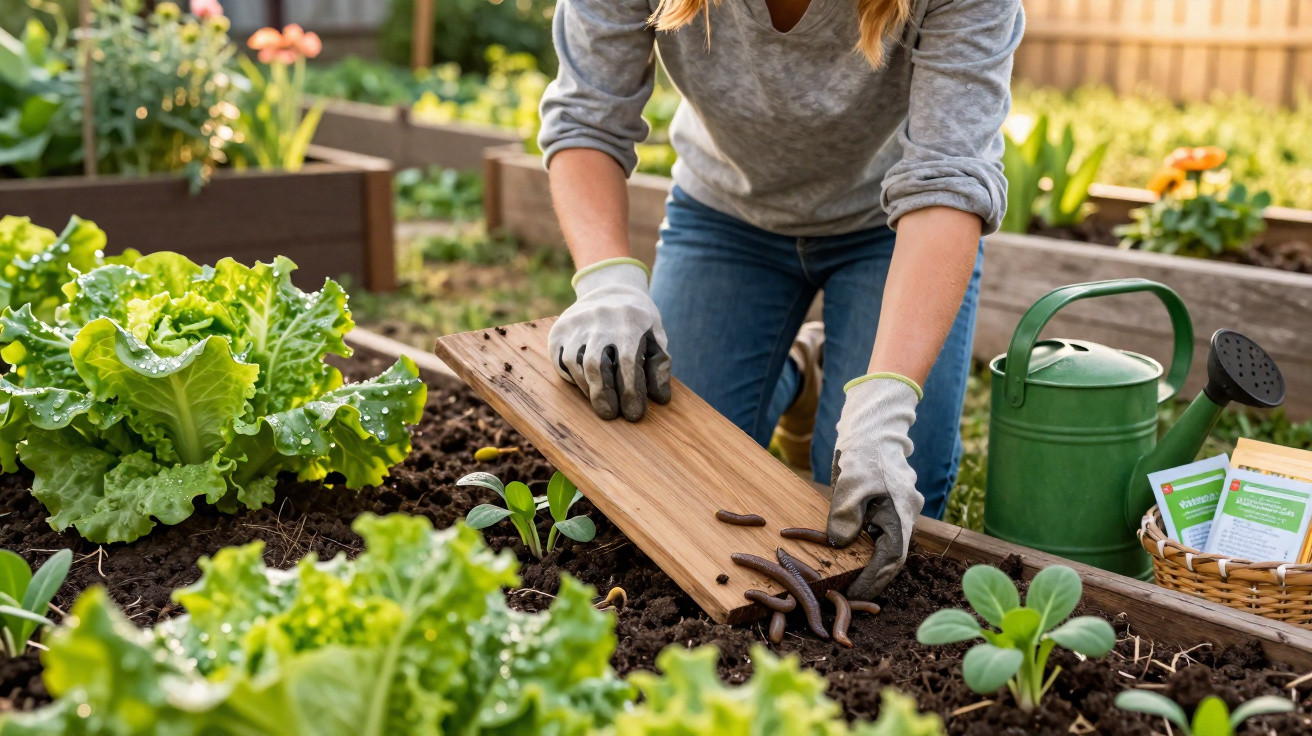
More and more amateur gardeners are looking for ways to protect their beds from slugs without immediately reaching for chemical controls. One surprisingly straightforward idea is currently doing the rounds: a plain, untreated wooden board can be enough to drastically reduce these hungry garden pests in the vegetable garden - at no cost and without any pollutants.
Why slugs find wood so irresistible
Slugs are highly vulnerable creatures. Without a protective shell, they continually lose water through their skin and mucus layer. That is why they seek out darkness, damp conditions and hiding places close to the ground. This is exactly where the wooden board trick comes in.
A piece of untreated timber creates a small microclimate that draws slugs in:
- The wood absorbs moisture from the soil and the air.
- Under the board it stays cooler and shaded for longer.
- The surface is rough, so the animals can grip and hold on easily.
At night, slugs roam through beds, chewing on young seedlings, then at daybreak they look for a secure place to retreat. By putting boards out in advance, you provide precisely that shelter - but with a purpose.
"The slugs gather voluntarily under the wooden board; the gardener only has to pick them up."
In this way, the animals’ natural survival instinct becomes the very thing that traps them.
Which wood works - and which doesn’t
The material you choose makes a real difference. Not every board does the job equally well.
Well suited
- Old shuttering boards from a DIY shop
- Untreated shelving boards made from spruce or pine
- Offcuts of floorboards or battens with no varnish
- Rough OSB offcuts, provided they are not coated
Best avoided
- Painted, varnished or stained boards
- Coated furniture boards (e.g. glossy chipboard)
- Boards with plastic or metal facings
Treated wood absorbs very little moisture, stays dry inside, and offers slugs far less appealing conditions. Untreated timber, on the other hand, is porous, holds water, and forms the damp refuge you are aiming for.
Step by step: how the board trap works
Using it in a bed is simple, but a few details can make the difference between success and disappointment.
- Choose the spot: Place the board right at the edge of the bed, beside lettuce, beans, spinach, brassicas or young herbs. These plants are considered slug magnets.
- Moisten the ground: Water the area where the board will sit thoroughly. This creates a particularly attractive damp zone.
- Lay the board down: Put it flat on the soil with no gap. The closer it sits to the ground, the better it holds the moisture underneath.
- Wait overnight: Slugs move around at night and crawl under the board in the morning.
- Check in the morning: Early in the day, before the sun gets high, lift the board and collect the slugs.
If you have several beds, or you have suffered heavy slug damage in the past, it makes sense to place multiple boards - effectively a belt of slug traps around the most favoured crops.
Chemical-free against slugs - and what you gain
Common slug pellets have been criticised for years. Products containing certain active ingredients may not only affect the target pests, but can also harm hedgehogs, birds or amphibians if they eat poisoned slugs. Even preparations marketed as “organic” repeatedly come under discussion, because in larger quantities they can throw the ecosystem out of balance.
A wooden board works in a completely different way:
- No active ingredient in the soil
- No risk to children and pets
- No residues on your vegetables
- Minimal cost, as leftover timber is often enough
"The board trap doesn’t replace a whole protection strategy, but it is a strong building block for chemical-free gardening."
How you ultimately remove the slugs is up to each gardener. Some relocate them far away to a wild corner; others feed them to chickens or ducks. What matters is not dumping them right beside the bed - otherwise they return faster than you would like.
Boards as a measuring tool in the garden
This method does more than catch slugs: it also reveals a lot about your own plot. By laying several boards, you quickly see where the hidden slug hot spots are.
Common patterns include:
- Many animals near dense hedges or compost areas
- High concentrations in dips where water sits
- Particularly heavy pressure in heavily mulched beds with lots of organic matter
Once you know these problem zones, you can respond: improve drainage, thin very thick mulch layers for a time, or deliberately plant varieties that slugs tend to ignore, such as certain herbs.
How to combine the board method sensibly
Gardeners who want to reduce slug problems over the long term do not rely on traps alone - they look at the whole garden set-up. Several pieces of the puzzle work together here.
Encourage natural predators
Among the most useful allies are hedgehogs, toads, runner ducks, lizards and certain beetle species. They need shelter, water sources and as little disturbance as possible. Leaf piles, stone piles, small ponds and chemical-free beds create these refuges. If you collect slugs regularly at night, you also provide predators with an easy-to-access buffet.
Barriers and planting tactics
Some surfaces are unpleasant for slugs because they scrape against the underside and mucus layer. Around vulnerable crops, some gardeners use, for example:
- Coarse gravel or sharp-edged grit
- Wood or sheep’s wool pellets
- Metal collars or dedicated slug fences
At the same time, it is worth reviewing your planting choices. Some ornamental and vegetable varieties are less likely to be nibbled. Tougher lettuce varieties, many Mediterranean herbs, or strongly growing perennials can take pressure off sensitive crops by spreading out the available feeding area within the bed.
Where the limits and risks lie
As clever as the wooden plank trick is, it rarely solves a severe slug problem on its own. In wet years or on very heavy soils, numbers can be so high that extra measures are needed. If you leave it too long between collections, you also risk attracting not only slugs but other creatures under the board, such as woodlice or spiders. That is not usually a serious issue, but it can be a surprise for the squeamish.
There is another point: some species are hardly attracted by boards, or they already prefer different hideaways, such as tall grass, dense ground cover or loose stone piles. If you rely only on the wooden board, you may miss the real causes.
Practical example: what a seasonal plan might look like
To integrate the method effectively, a rough schedule through the gardening year can help:
| Period | Board-based action |
|---|---|
| Early spring | Put out the first boards beside planned lettuce and bean beds; check what is already present. |
| Planting time | Position traps right next to newly planted young plants; inspect daily. |
| Summer | Move boards to shaded, damp spots where slugs retreat. |
| Autumn | Reduce checks; use boards as an indicator of overwintering locations. |
If you get into this routine, you soon know your slug population extremely well. They will not disappear entirely, but they cause far less damage - and the vegetables in your beds have a noticeably better chance of growing large and crisp.

Comments
No comments yet. Be the first to comment!
Leave a Comment