
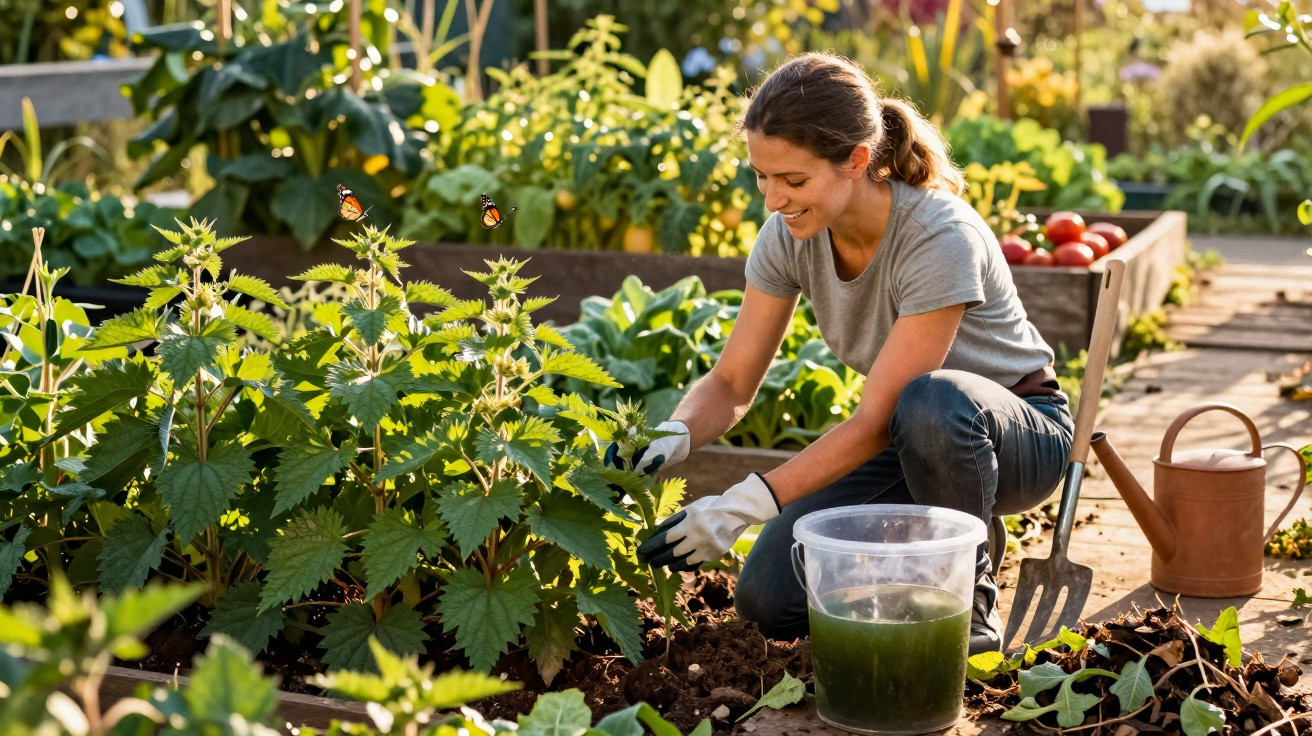
Many hobby gardeners pull out stinging nettles on instinct the moment they appear in a bed. It’s easy to see why, if you’re thinking of burning hands or children covered in red welts. But if you ban nettles completely, you can end up harming your soil, your vegetables - and even the garden’s biodiversity.
Why stinging nettles are underestimated in the vegetable garden
Stinging nettles are often dismissed as “weeds” that need removing as quickly as possible. They look unruly, they seem messy, and they sting if you brush against them - for many people, that alone is enough to reach for the hoe. In reality, their presence usually points to one thing: your soil is fertile and full of life.
That’s exactly what makes the plant so useful. Nettles store large amounts of minerals and trace elements in their leaves and roots. Rather than throwing them away, gardeners can put those nutrients to work deliberately.
"If you plan nettles wisely, you save on fertiliser, strengthen your plants and automatically support wildlife in the garden."
A natural boost for vegetables: nettle liquid feed as fertiliser
The best-known use in the garden is nettle liquid feed, often referred to as “nettle brew”. It acts like a highly concentrated natural fertiliser and a mild pest deterrent rolled into one.
What’s inside a stinging nettle
The leaves contain high levels of:
- Nitrogen - drives strong leafy growth
- Potassium - supports cell structure and fruit development
- Calcium - helps build sturdy plant tissue
- Magnesium - essential for photosynthesis
- Iron - encourages deep-green leaves without deficiency symptoms
When these components ferment in water, they create a feed that often has a stronger effect than many shop-bought products.
Making nettle liquid feed - a practical method
For a straightforward nettle liquid feed, you only need three things: leaves, water and a container.
- Roughly chop about 1 kilogram of fresh stinging nettles (ideally wearing gloves).
- Put them in a bucket or bin and pour over roughly 10 litres of rainwater.
- Cover the container loosely so gases can escape.
- Leave for 7 to 10 days, stirring daily. When it stops foaming vigorously, it’s ready.
- Before watering, dilute at a ratio of 1:10 with water.
You can then water tomatoes, cabbages, squash, berry bushes or roses with it. Plants typically respond with vigorous growth and tougher foliage. In a much more diluted form, you can also spray it; used this way it can mildly discourage aphids and spider mites.
"With a single bucket of nettle liquid feed, you can fertilise many square metres of vegetable garden - with no chemicals at all."
Gold for the compost heap: how nettles heat things up
What many people don’t realise: stinging nettles are also a brilliant addition to compost. They speed up breakdown, help warm the heap, and increase the nutrient content of the finished compost.
Why compost benefits from nettles
Nettles provide particularly large amounts of nitrogen. For compost microorganisms, nitrogen is like fuel. They work faster, the heap temperature rises, and kitchen and garden waste turns into fine compost more quickly.
If you regularly add chopped nettles in thin layers to the compost heap, you can achieve:
- faster rotting of leaves and prunings
- a better balance between carbon-rich material (for example twigs and dry leaves) and nitrogen-rich layers
- a more nutrient-dense, dark, crumbly compost
Worried about “stingy” compost? There’s no need. Once nettles rot down, they completely lose their stinging hairs. The finished compost is entirely harmless - and extremely valuable.
A hidden underground network: what nettles do beneath the surface
Above ground you only see dense greenery that can be stubborn at times. Below ground, stinging nettles quietly support the whole garden. Their root system loosens the soil and, together with microorganisms, forms a living network.
| Area | Effect of stinging nettles |
|---|---|
| Soil structure | Fine roots create pores, improve aeration and help rainwater soak in. |
| Nutrient cycle | Absorbs minerals, stores them in the leaves, which later return to the soil as fertiliser. |
| Soil life | Provides food and habitat for bacteria, fungi and earthworms, supporting humus formation. |
If you don’t yank nettles out aggressively, but leave them in selected spots or simply cut them back above ground, you keep this soil network intact. The ground stays looser, holds water better and dries out less quickly - a benefit that’s easy to underestimate during hot summers.
Stinging nettles as habitat for butterflies and beneficial insects
Many well-known butterfly species deliberately lay their eggs on stinging nettles. Their caterpillars depend on the plant. If nettles disappear, the butterflies often vanish too.
This includes striking species such as the peacock butterfly, the small tortoiseshell and the red admiral. Their caterpillars feed exclusively on nettle leaves. Without this food plant, they struggle to develop.
Small patches of nettles also serve as shelter and a nursery for many other insects. Those insects, in turn, attract birds that feed on them and help keep garden pests under control.
"A nettle corner in the garden works like a tiny nature reserve - right next to the vegetable beds."
Edible, healthy, free: using stinging nettles in the kitchen
Once you get past the mental hurdle, you quickly discover that young nettle shoots make excellent wild greens. Prepared properly, the flavour is loosely similar to spinach, but with a richer, greener character.
Popular ways to use them
- Soup: like a classic spinach soup, only more aromatic
- Pesto: blended with olive oil, nuts and cheese into a bold green paste
- Tea or infusion: pour hot water over dried or fresh leaves
- Mixed greens: combine with chard, spinach or lamb’s lettuce
The leaves provide plenty of minerals and vitamins, including vitamins A, C and K, as well as iron. Many people drink nettle tea to feel more energised after winter or to give themselves a lift when they’re tired.
Important: always harvest with gloves, use only young, tender shoots, and avoid collecting plants right next to busy roads.
How to use stinging nettles in the garden in a controlled way
Of course, you don’t want stinging nettles taking over every bed. With a bit of planning, you can benefit from them without letting them become a nuisance.
Choose the right spot
Good locations include, for example:
- a slightly wilder corner behind the shed
- a strip along the fence
- a dedicated small area at the back of the garden
- a large planter or a builder’s mixing tray
If you want to stop the roots spreading, you can install a root barrier - or simply grow nettles in a large container from the start.
Stay in control with shears and a scythe
Regular cutting back helps prevent nettles from setting seed and spreading unchecked. The clever part is that the clippings can be used straight away - for liquid feed, mulch or compost.
A few simple rules make it easier to keep the balance:
- Don’t mow down all patches at once, so insects still have places to shelter.
- In the vegetable garden, leave only occasional plants in border areas.
- Remove runners that try to creep into more sensitive beds.
Practical tips from everyday gardening
Many gardeners intentionally set up a small “nettle station”: an area where they allow the plant to grow, harvest it regularly, and turn it into fertiliser or ingredients for the kitchen. That keeps things manageable, while the rest of the garden stays largely clear.
If you have children, you can mark out the patch and explain why those plants are allowed to stay. It can become a simple nature project at the same time: watching caterpillars, identifying butterflies, and understanding how garden cycles work.
During dry spells it’s also worth taking a second look at nettles. If they remain reasonably vigorous while other plants wilt, it can indicate spots with better water availability and higher nutrient levels in the soil. Those areas are often ideal for more demanding crops such as tomatoes or squash.
Why pulling them out is often a mistake
If you remove every stinging nettle without compromise, you’re throwing away a free, local resource. Nettles provide fertiliser, improve compost, strengthen soil life, support butterflies and other beneficial creatures - and can even end up on your plate.
So rather than hacking everything down on your next circuit of the garden, it’s worth looking again: which nettles truly get in the way - and which could be moved or left elsewhere to work quietly towards a healthier, more vibrant garden ecosystem?

Comments
No comments yet. Be the first to comment!
Leave a Comment