
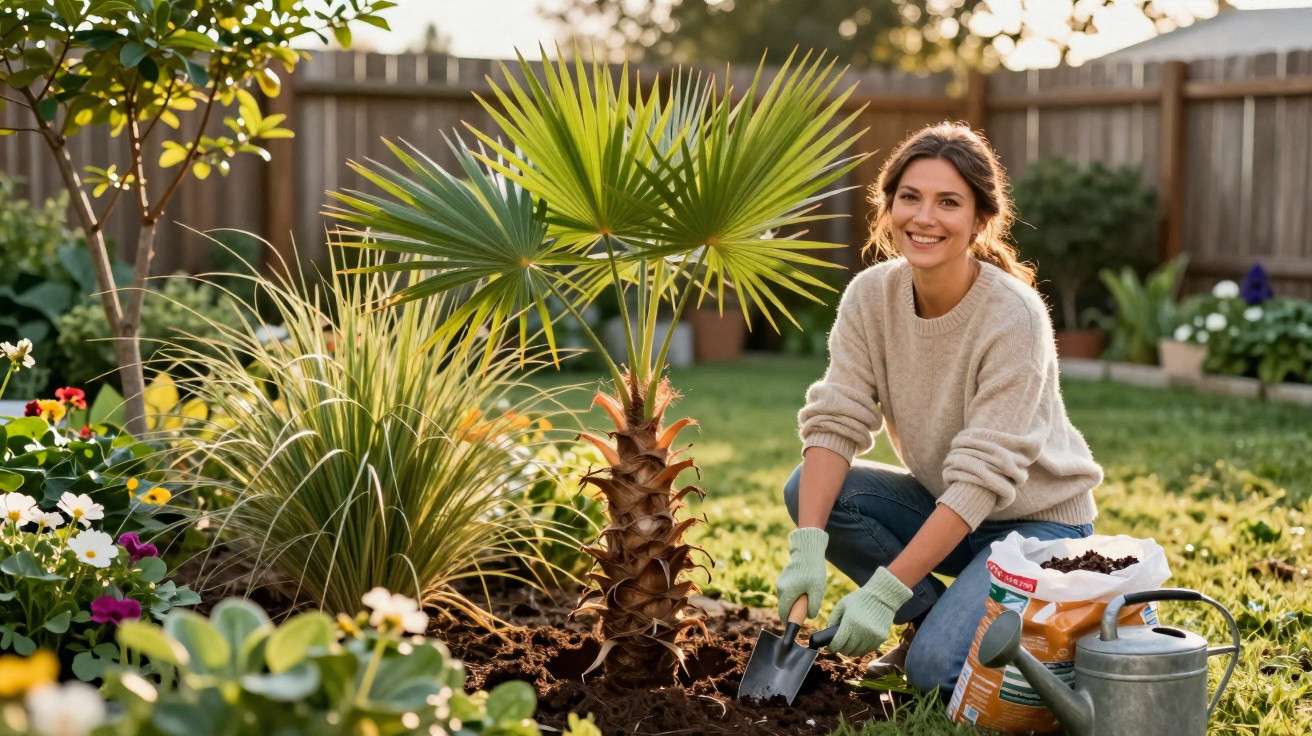
While plenty of amateur gardeners start thinking about autumn in August, there’s a surprisingly simple opportunity still on the table: with one well-chosen plant, you can turn an ordinary garden into a long-lasting, exotic-looking backdrop - without needing to worry about frost.
The standout among hardy palms
Why this palm is so popular in Central European gardens
Trachycarpus fortunei - better known as the windmill palm - is widely regarded as one of the toughest palms you can grow. It copes with cold down to around –18 °C, which means it gets through Central European winters far more reliably than most other exotic plants. With its slim trunk and large, fan-shaped fronds, it brings an instant holiday feel to any outdoor space.
“This windmill palm delivers tropical flair, yet it’s surprisingly tough - even in a hard frost.”
If you want to break up the look of your garden, give a lawn clearer structure, or add more personality to a patio, this palm works as a genuine design feature. It doesn’t only shine in summer: it stays green all year and keeps providing shape. That year-round impact is exactly what makes it so appealing to many homeowners.
Hardy, undemanding and easy to use in many settings
The windmill palm has several strengths at once: it tolerates relatively dry soils, it isn’t excessively thirsty, and it grows at a fairly steady, slow pace. That combination makes it ideal for anyone who doesn’t want constant pruning and watering. At the same time, it stays ornamental even when lawns and beds are struggling with drought in mid-summer.
- hardy down to about –18 °C
- relatively low water requirements
- suitable for the garden, front garden and large pots on the patio
- green all year and adds structure
- rarely prone to pests and diseases
Because it grows upright, it doesn’t take up much width, but it does add noticeable height in a border. That makes it suitable even for narrow terraced-house gardens or small city gardens where every square metre matters.
The right position: part shade is fine, wind is the enemy
Light, shelter and impact: where the palm performs best
A windmill palm is happiest in a spot that’s sunny to partially shaded. What matters most is shelter: ideally the planting position should be protected from wind. Cold, persistent winter winds can stress even hardy plants and may leave the fan leaves looking ragged.
Good choices include:
- a south- or west-facing position near a house wall that stores warmth
- a sheltered courtyard or patio
- the transition from patio to garden, lightly screened by hedges or walls
- a strong focal point at the end of a path, where it naturally draws the eye
Whether used as a specimen on the lawn, a vertical accent in a perennial border, or a green divider to define areas, careful placement lets the palm lift the look of the entire garden.
Smart combinations with other plants
Trachycarpus fortunei becomes particularly striking when you pair it with other species. If you like a Mediterranean-leaning look, choose partners that also cope well with dryness:
- lavender and sage for fragrance and flower colour
- ornamental grasses such as fountain grass or feather grass for movement in the breeze
- agaves and houseleeks in gravel areas for an almost desert-like mood
- rosemary, thyme and oregano as aromatic ground cover
In more minimal, “Asian”-influenced gardens, the windmill palm sits well alongside white gravel, stepping stones and a few carefully shaped shrubs. Planting two or three palms along a drive can also create a bold, almost boulevard-style effect.
Best planting time: late summer to mid-autumn
Why late summer is the insider option
For planting a windmill palm, the best window is from late August to around mid-October. At that time of year, the soil is still warm, which strongly supports root growth. Rainfall often increases too, helping newly planted specimens establish more easily.
“If you plant the windmill palm in good time before winter, you give it a crucial head start - it goes into the cold season stronger.”
Planting very late - for example in November - is much riskier. The roots have little chance to settle before the first harder frost, and the likelihood of damage in the first winter rises noticeably.
How to plant it successfully, step by step
The soil needs to be free-draining, because the windmill palm does not tolerate waterlogging in winter. Heavy clay can be opened up with sand and a little grit. A mix of garden soil, coarse sand and well-rotted compost has proved reliable.
- Dig the planting hole - at least 60 × 60 cm, and deep enough for the root ball to sit comfortably.
- Loosen the base with a garden fork; if needed, add a drainage layer of gravel.
- Water the root ball briefly, then gently tease out the outer roots a little.
- Position the plant so the transition from trunk to roots (the root collar) sits just above soil level.
- Backfill with the prepared soil mix, firm lightly, then water thoroughly to settle the soil and remove air pockets.
- Finish by mulching around the trunk with bark mulch or other organic material.
In very windy locations, a support stake can be useful until the roots are firmly anchored. Stability matters; otherwise, new roots can rub and break in the soil.
Everyday care: little effort, big impact
Watering, mulching and protection
After planting, the windmill palm appreciates regular watering for the first few months. The soil should stay slightly moist, but never wet. Once the root ball has properly knitted into the surrounding ground, its needs drop sharply; in most gardens, targeted watering during longer dry spells is then sufficient.
A mulch layer around the trunk does several jobs at once: it keeps moisture in the soil for longer, suppresses weeds, and protects the roots from severe frost in winter. In areas with very cold winters, it can also be worth adding light winter protection at ground level, such as leaves and fir branches.
Keeping the palm healthy and well-shaped
Compared with many ornamental shrubs, Trachycarpus fortunei requires very little pruning. Dry, brown fronds can be removed with secateurs once they are completely dead. Many gardeners deliberately leave the lower section for a while, because old leaf bases give the trunk its distinctive texture.
In exceptionally low temperatures or in exposed sites, horticultural fleece can help protect the crown for short periods. Pest problems are uncommon in large numbers. A quick check now and then into the central spear area and under the fronds helps you spot issues early.
How the windmill palm changes the feel of a garden
Playing with light, shade and viewpoints
The large fan leaves cast a soft, filtered shade. Beneath the crown, you get a zone that suits low perennials or herbs. In the evening, well-placed lighting can look especially dramatic: a ground spotlight angled slightly towards the trunk and crown can turn the palm into a true centrepiece.
If you layer different elements - for example gravel areas, taller grasses and the palm’s pyramid-like silhouette - you quickly create more interesting sightlines. Even a small terraced-house garden can feel noticeably more spacious.
From lawn to a low-maintenance retreat
Many homeowners are reducing lawn areas due to costs and increasingly dry summers. The windmill palm fits that shift perfectly. It provides structure where there used to be nothing but closely mown green, and it integrates well into low-care, mulched planting schemes.
Add a few ornamental grasses, drought-tolerant perennials and a couple of stone features, and you can achieve a lasting, attractive garden look without much effort. A once flat, monotonous area becomes a lively but low-maintenance place to unwind.
Practical extra details for anyone ready to go for a palm
Growth, size and growing in pots
The windmill palm grows at a moderate pace. In good conditions, it typically gains 10 to 25 centimetres in height per year. Mature plants can reach several metres in the ground, while container-grown specimens stay much more compact.
| Feature | Details |
|---|---|
| Final height in the garden | 3–6 metres, depending on position and climate |
| Position | sunny to partially shaded, sheltered from wind |
| Soil | well-drained, moderately fertile |
| Frost tolerance | down to about –18 °C |
| Use | specimen planting, group planting, large container |
In a pot, the windmill palm needs a bit more care through winter. The root ball freezes more quickly, so an insulating base or a wrap of bubble wrap and hessian is worthwhile. Water only very sparingly on frost-free days.
Risks, advantages and sensible additions
The biggest risk is waterlogging and very heavy soil. If you tend to water generously, make good drainage non-negotiable. Another issue is strong wind, which can damage fronds and loosen the trunk. With a sheltered planting spot, these problems can largely be avoided.
On the plus side, you get an exceptionally long-lived plant, low ongoing maintenance costs, and a powerful visual effect. The windmill palm suits modern, clean-lined architectural gardens just as well as more traditional family homes with mixed borders. Combined with ornamental grasses, flowering perennials and a few stone elements, it almost automatically creates a look reminiscent of southern regions - without the garden owner constantly needing to water and prune.
If you want to remodel an outdoor space gradually, you can start with a single, well-placed windmill palm. Often, within a year, it becomes obvious just how strongly one woody plant can shift the overall impression - from an everyday corner to a personal retreat with a noticeable hint of exotic style.


Comments
No comments yet. Be the first to comment!
Leave a Comment