
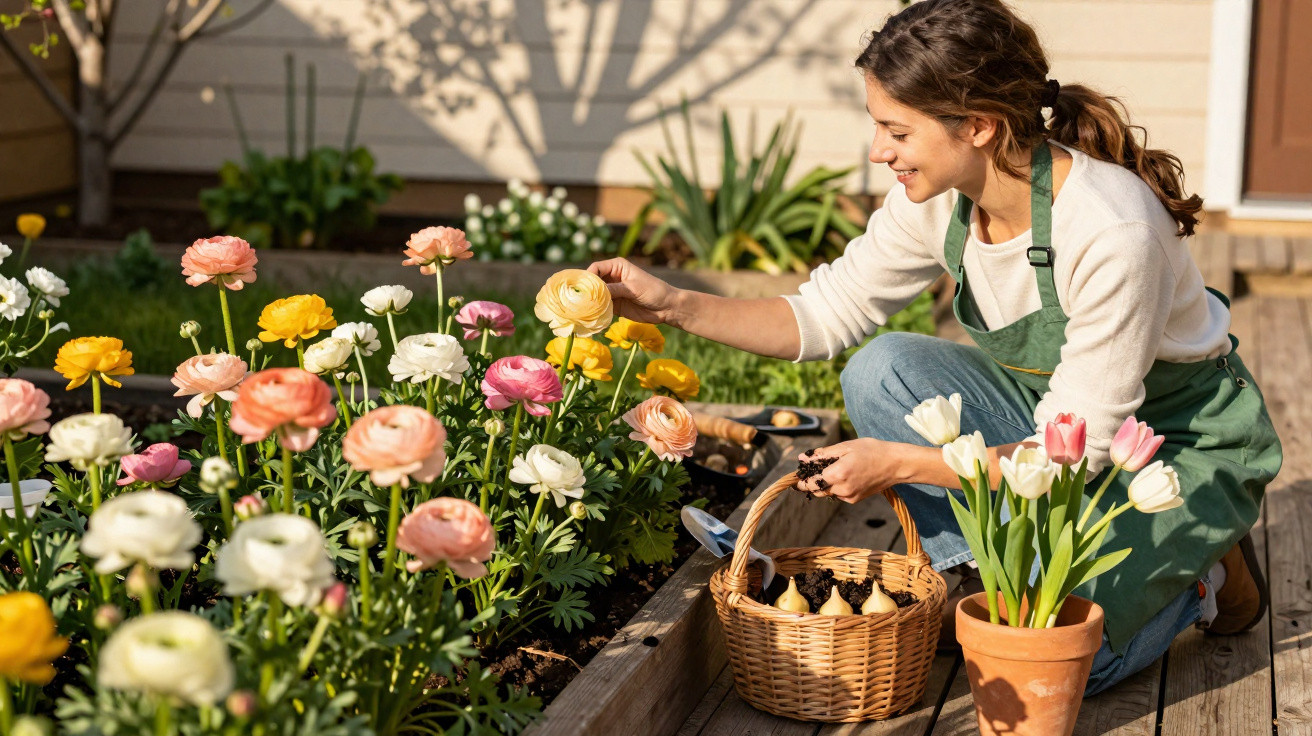
A glance across German terraced-house gardens and allotment plots in spring still reveals tulips everywhere. But behind the scenes, attitudes are shifting: more and more keen gardeners are choosing a different bulb plant that flowers for longer, looks fuller and can be used in far more ways - the Asian ranunculus.
Why so many gardeners have had enough of tulips
Tulips can look spectacular - no arguing with that. The problem is that the show often lasts barely a week or two. After that, a heavy downpour or a brief spell of warmth is enough for the petals to collapse onto the soil. What’s left are bare stems and the nagging thought of whether the effort was worth it.
There’s another frustration, too: plenty of tulip varieties return the following year weaker than before - or fail to come back at all. If you want the same burst of colour every spring, you usually end up buying more bulbs each season. Over time, that gets expensive and becomes tiresome.
"The Asian ranunculus produces dense, peony-like balls of flowers - and keeps going much longer in late spring than most tulips."
That is exactly where ranunculus shines. It starts flowering later, but then carries on for weeks - often from late May right through into June. That neatly fills the gap when tulips are already finished and the main summer display hasn’t properly begun.
Ranunculus asiaticus: the classic garden flower with a wow factor
Its botanical name is Ranunculus asiaticus; in shops it is most commonly sold as “Asian ranunculus” or “garden ranunculus”. The blooms look like small, perfectly rounded pom‑poms. Many gardeners liken them to miniature peonies - just on much shorter, more compact stems.
The colour range is vast: pure white, soft pastels, and bold shades such as hot pink, orange or deep red. Planted in groups, they create a polished, almost florist-style look - the sort you’d expect from a flower shop.
- Form: densely double, spherical blooms
- Height: usually 25 to 40 cm
- Colours: white, cream, pink, yellow, orange, red, burgundy
- Uses: borders, pots, balconies, cut flowers
If you prefer a more nature-friendly approach to gardening, ranunculus can be integrated into an eco-minded planting scheme with no trouble. They grow well with compost as the main nutrient source and don’t need heavy programmes of mineral fertilisers.
How to plant ranunculus properly: the ideal window
In garden centres, the planting pieces are hard to miss. They’re called “claws” and look a bit like small, dried octopuses. Those odd little shapes are what later produce the rounded flower heads - but timing matters.
Across most of German-speaking Europe, ranunculus is planted from early March to mid-April. By then the soil has begun to warm up, yet it is still cool enough for the plants to establish strong roots.
Step-by-step planting guide
- Soak the claws in lukewarm water for 12 hours.
- Prepare planting holes about 5 cm deep.
- Place the claws in with the “fingers” pointing downwards.
- Cover with soil and firm gently.
- Leave around 15 cm between plants.
In very mild areas, some gardeners plant as early as autumn. That can bring on flowering particularly early. However, it requires a location with mild winters and, above all, well-drained soil so the tubers don’t rot in wet conditions.
The right position: sunny, but not scorching
Ranunculus likes bright conditions. A spot in full sun or light partial shade is usually best. What can cause trouble, though, is intense midday heat - for example on a south-facing balcony with stone slabs that heat up quickly.
The soil should be loose, humus-rich and free-draining. The tubers cope badly with waterlogging, especially in pots and window boxes. If you’re planting in containers, add a drainage layer at the bottom - expanded clay, gravel or coarse sand - so excess water can run away easily.
"Ranunculus thrives in an airy, free-draining compost - heavy, wet soil is its biggest enemy."
A practical bonus: many garden beds that later hold geraniums, petunias or dahlias in summer are also ideal for ranunculus in spring. You can use the same soil, simply loosen it thoroughly again and mix in a little well-rotted compost.
Spring care: little effort, big impact
During the growing period, ranunculus prefers steady moisture - but not soggy conditions. As soon as the top layer of soil dries out, it’s time to water; a moderate amount is enough.
Adding a thin mulch of organic material to beds or pots helps reduce watering. Dried grass clippings, shredded bark or fine wood chips slow evaporation and also support healthy soil life.
Because the main flowering period falls in late spring, ranunculus is less likely to be caught in the most extreme summer heat. That generally makes it more resilient than many early spring bloomers that suddenly face an unexpected heat spike.
Perfect for the vase: ranunculus as cut flowers
One of the biggest advantages is how well ranunculus performs as a cut flower. If you cut the stems as soon as the buds start to open slightly, you get sturdy, dense arrangements that often look good for well over a week.
At the same time, cutting encourages the plant to produce more buds. If you harvest regularly for the vase, you’re usually rewarded with a longer, more generous flowering spell in the border.
For attractive bouquets, ranunculus is often paired with:
- early bloomers such as anemones or daffodils (without slime contact in the same vase)
- delicate ornamental grasses from the garden
- eucalyptus or bay branches from container plants
- simple spring twigs from ornamental shrubs
What happens after flowering
As flowering tails off, the leaves gradually turn yellow. It doesn’t look quite as smart, but it matters for the plant: it is storing reserves back into the tubers.
In milder areas, many gardeners simply leave the claws in the ground. With good drainage, they often sprout again the next year. In colder regions, it can be worth lifting the tubers once the foliage has died back, drying them, and storing them somewhere airy and frost-free.
Ranunculus, tulips and more: how to combine them well
There’s no need to banish tulips completely. It becomes interesting when you plant them alongside ranunculus to extend the overall season of colour. A common planting rhythm for a spring bed looks like this, for example:
| Phase | Plants | Visual effect |
|---|---|---|
| March to April | crocuses, early daffodils, tulips | bright splashes of colour as the first sign of spring |
| Late April to May | late tulips, anemones | a refined transition with elegant shapes |
| May to June | Asian ranunculus | dense pom‑pom spheres, almost like miniature peonies |
If you garden on a balcony, you can recreate the same succession in larger window boxes or pots. The key is using sufficiently large containers and quality compost that holds both structure and nutrients over several months.
Risks, tips and a practical perspective
There are still a few pitfalls to watch for. In very wet springs, rot can become a risk if the growing medium is too dense. In that case, it helps to increase the proportion of sand or fine gravel. Voles may also go for the tubers, much as they do with tulips - in vulnerable gardens, wire planting baskets can provide protection.
For families with young children or pets, one point is important: like many ornamental plants, ranunculus is mildly poisonous. Plant parts should not be eaten, and it’s best to wash your hands after gardening.
The good news: insects benefit most from single-flowered forms, but even double ranunculus adds valuable structure to beds, making it easier to weave in other perennials and early-flowering wild plants. The result is a lively mix that looks stylish while still making ecological sense.
So if you’re redesigning your spring borders, you don’t have to stop at the classic tulip. With Asian ranunculus, you can extend spring’s impact by weeks - with blooms that don’t lose their big moment at the first thunderstorm.



Comments
No comments yet. Be the first to comment!
Leave a Comment