
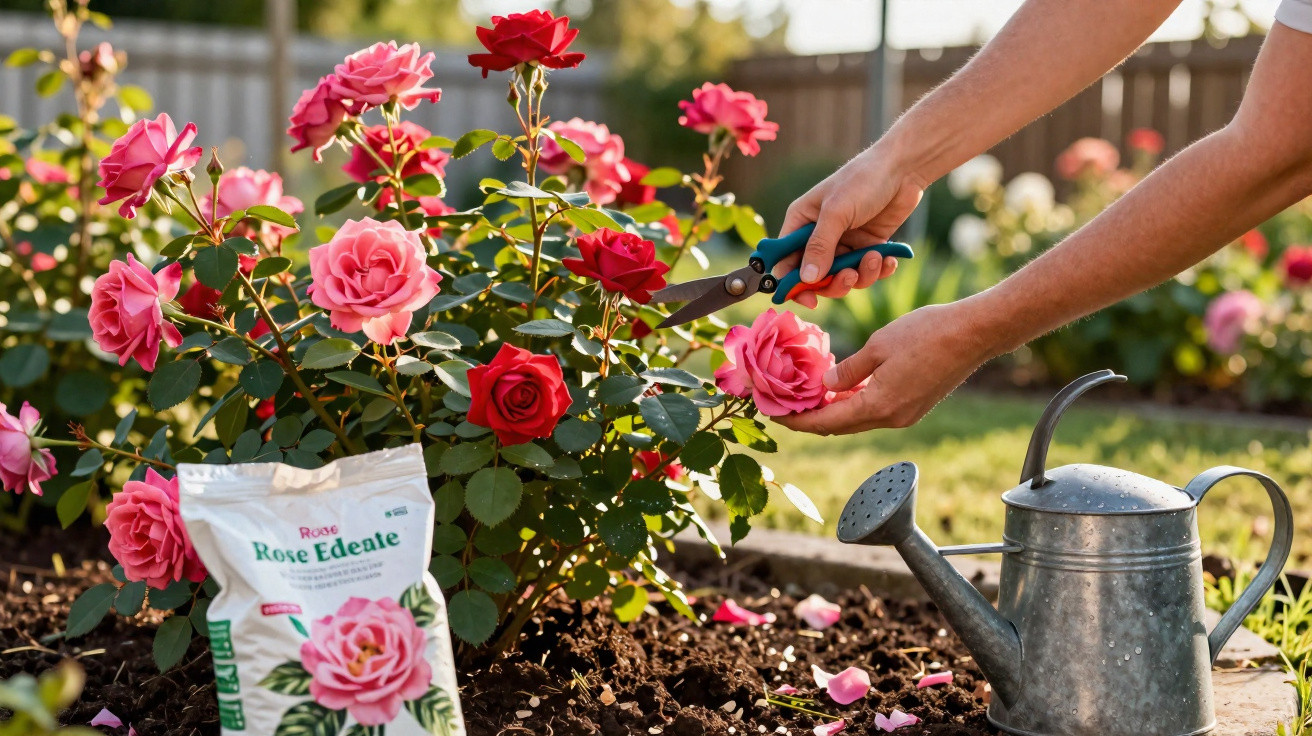
Keeping a rose bush in continual bloom comes down to three essentials that must work together: enough sunlight, correct pruning and regular feeding. Repeat-flowering roses perform best when they get at least six hours of direct sun each day, deep watering without waterlogging, and frequent removal of spent blooms to encourage fresh buds.
What is the first secret to getting a rose bush to flower?
Light is the starting point. Roses need direct sunshine to generate enough energy to build robust foliage, produce new shoots and form flowers. Gardening guides commonly recommend a minimum of six hours of sun a day for good flowering; in heavily shaded spots, the plant may still grow, but it usually produces far fewer blooms and becomes more prone to disease.
For that reason, before changing fertiliser or pruning hard, take a close look at where the rose is planted. If it only gets bright indirect light or just a couple of hours of sun, the issue may be the location rather than the plant itself.
How does pruning help produce more flowers?
An annual prune refreshes the rose bush and prompts vigorous new growth, and those new shoots carry a large share of the season’s flowers. Specialists note that roses should be pruned in spring to stimulate fresh growth and support a succession of blooms through the season.
As well as the main prune, deadheading matters for modern, repeat-flowering roses. Removing faded flowers encourages further flushes and also keeps the shrub looking tidier.
What is the ideal combination of pruning, feeding and watering?
The best results come from linking the three: start with a timely tidy-up prune, feed during the active growth period, and finish the routine with deep watering. The Royal Horticultural Society advises feeding roses fortnightly from mid-spring to late summer, using a general-purpose fertiliser up to bud formation, then switching to a potassium-rich feed to promote more flowers.
In day-to-day terms, a straightforward routine looks like this:
- prune out dead, weak, crossing or diseased stems;
- deadhead faded blooms throughout the flowering period;
- feed regularly in spring and summer;
- water deeply, avoiding excessive wetting of the leaves;
- keep an organic mulch in place to help the soil retain moisture.
How do you water a rose bush without harming the flowers?
Roses like consistent moisture, but they do not tolerate waterlogged soil. Light, frequent watering encourages shallow roots; deep watering, on the other hand, helps the plant cope with heat and flower more reliably.
Correct watering should soak the soil around the plant rather than only dampening the surface. Whenever possible, avoid wetting leaves and flowers late in the day, as moisture sitting on foliage encourages fungal diseases.
Which mistakes stop a rose bush from flowering?
The most common problems are too much shade, weak or incorrect pruning, poor nutrition, excess nitrogen, and poorly managed watering. Too much nitrogen, for example, can make a rose bush very leafy and green while producing few buds.
It is also worth watching for these signs:
- lots of long shoots and very few flowers suggest too little sun or insufficient pruning;
- yellowing leaves can point to nutrient deficiency, overwatering or poor soil;
- buds that fail to open may be linked to pests, cold conditions, rain or low vigour;
- small flowers can indicate underfeeding or roots competing for water;
- leaf spotting reduces the plant’s energy and limits further flowering.
How can you fix a rose bush that has stopped flowering?
To bring a rose bush back, return to the fundamentals: ensure direct sun, remove dead material, deadhead spent blooms, and improve the soil with compost or a suitable feed. Balanced fertilisers such as 10-10-10 or 12-12-12 are often mentioned as general options for roses; apply them around the plant, without letting the product touch the base directly.
The secret to a continuously flowering rose bush is consistency. One heavy prune or a single large dose of fertiliser will not solve everything. Roses flower best when they receive sun, water, nutrition and regular tidying throughout the season, building the energy needed to open new buds again and again.


Comments
No comments yet. Be the first to comment!
Leave a Comment