
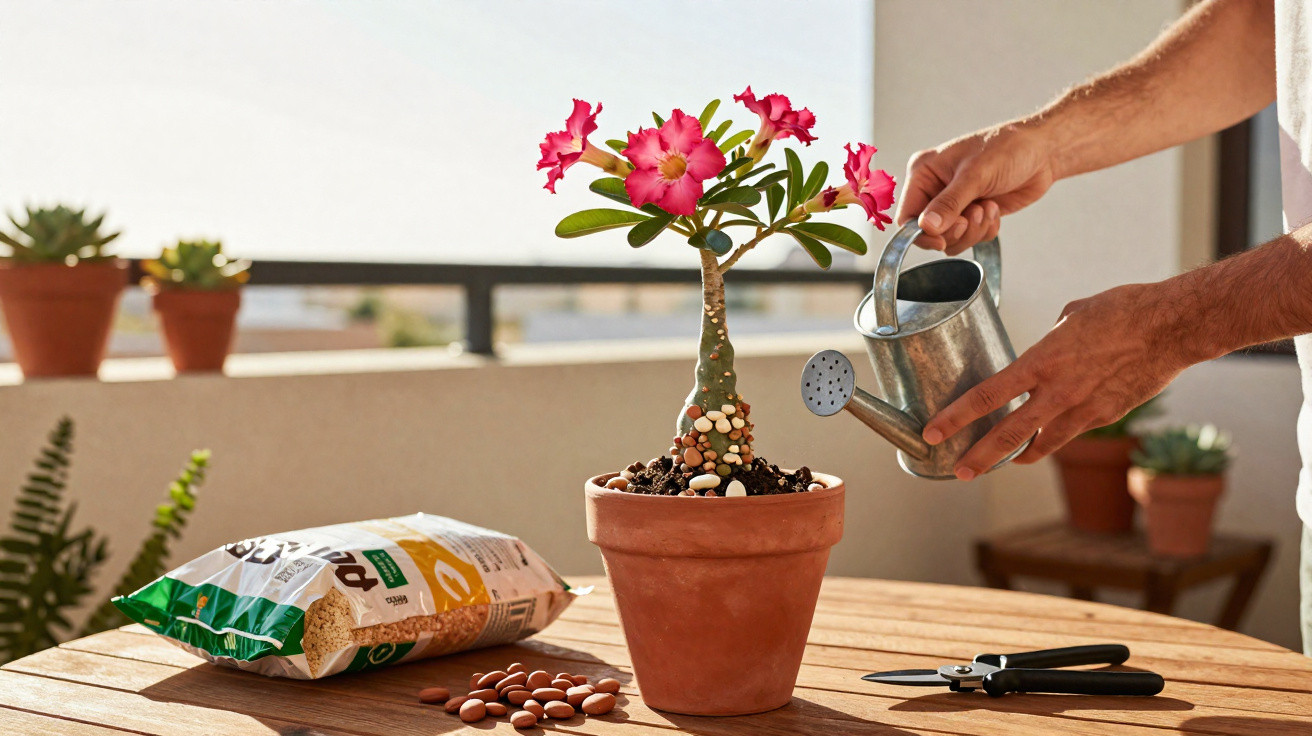
Growing exotic vegetables and ornamentals at home can add beauty and a sense of balance to family spaces. Even so, looking after the desert rose calls for commitment and hands-on know-how to avoid serious care mistakes. Getting the right care in place supports lasting health and spectacular blooms in the garden.
How can you ensure ideal lighting for the desert rose?
Sun exposure is the single most decisive factor in helping this fascinating species thrive. Keeping the pot in full sun ensures the branches develop strong and avoid the misshapen growth that shade can cause. This level of light encourages abundant, frequent flowering on patios and balconies.
Shady spots undermine the plant’s condition and stop new buds from opening. Families should opt for a bright garden area or a well-lit window where sunlight hits the plant directly. Without that energy, the plant quickly weakens and loses its natural vigour.
What is the biggest risk of getting desert rose watering wrong?
Too much water collecting around the roots can lead to hidden trunk rot, but the real warning sign appears when… Read more
What is the ideal frequency for watering?
Correct watering depends on restraint and regular checks of the potting mix. Spacing out watering is the key to keeping roots intact and preventing excess moisture. Only watering once the soil is completely dry helps avoid fatal problems.
The trunk stores water and nutrients to cope with long dry spells. For that reason, soaking the soil reduces aeration and quietly damages the root system. Families should feel the substrate to judge the real need for water.
Below is a video from the Spagnhol YouTube channel that explores the points discussed in this topic in more depth.
How do you prepare a high-quality free-draining substrate?
The ingredients in the potting mix largely determine whether home growing will succeed. Heavy soil holds onto water and harms the plant’s long-term health. Lighter mixes allow water to drain fast, echoing the original environment of this remarkable species.
Using porous materials such as coarse sand and small stones in the bottom of the pot helps prevent harmful water build-up. Pots with clear, unobstructed drainage holes make efficient drainage easier and give beginners more confidence. This careful preparation helps protect the caudex from destructive fungi.
Items for perfect drainage
Preparing the ideal pot: three crucial elements help prevent damaging water build-up at the bottom of your container:
- Coarse sand mixed into the mineral component to increase porosity;
- Small stones or expanded clay pellets positioned strategically at the base of the pot;
- A geotextile membrane to separate the layers and keep drainage flowing cleanly.
When does repotting become necessary?
Strong root growth means the container needs replacing from time to time to keep the plant healthy. When space becomes tight, the trunk shows clear signs of constraint. Correct repotting refreshes nutrients and provides space for new expansion.
Doing this during spring supports quicker recovery thanks to more favourable conditions. Carefully removing excess soil helps prevent severe injury to the most delicate underground parts. This household task renews the plant’s vitality and encourages healthy growth.
The essential steps below help you carry out the process without stressing the plant:
- Choose a pot that is slightly larger than the previous one;
- Add a fresh layer of highly free-draining substrate to the base;
- Position the plant with the caudex raised slightly for aesthetic effect.
How can you prune safely?
Removing dry or misshapen branches revitalises the plant’s above-soil structure. Using perfectly clean tools reduces the risk of contamination by harmful micro-organisms entering through fresh cuts. This technical care redirects sap towards forming new shoots and robust leaves.
Dusting the cut areas with ground cinnamon helps exposed plant tissue heal more quickly. Families can shape the canopy and achieve a balanced spread of new flowering branches. The result is a resilient plant that fits neatly into the family environment.
Comments
No comments yet. Be the first to comment!
Leave a Comment