
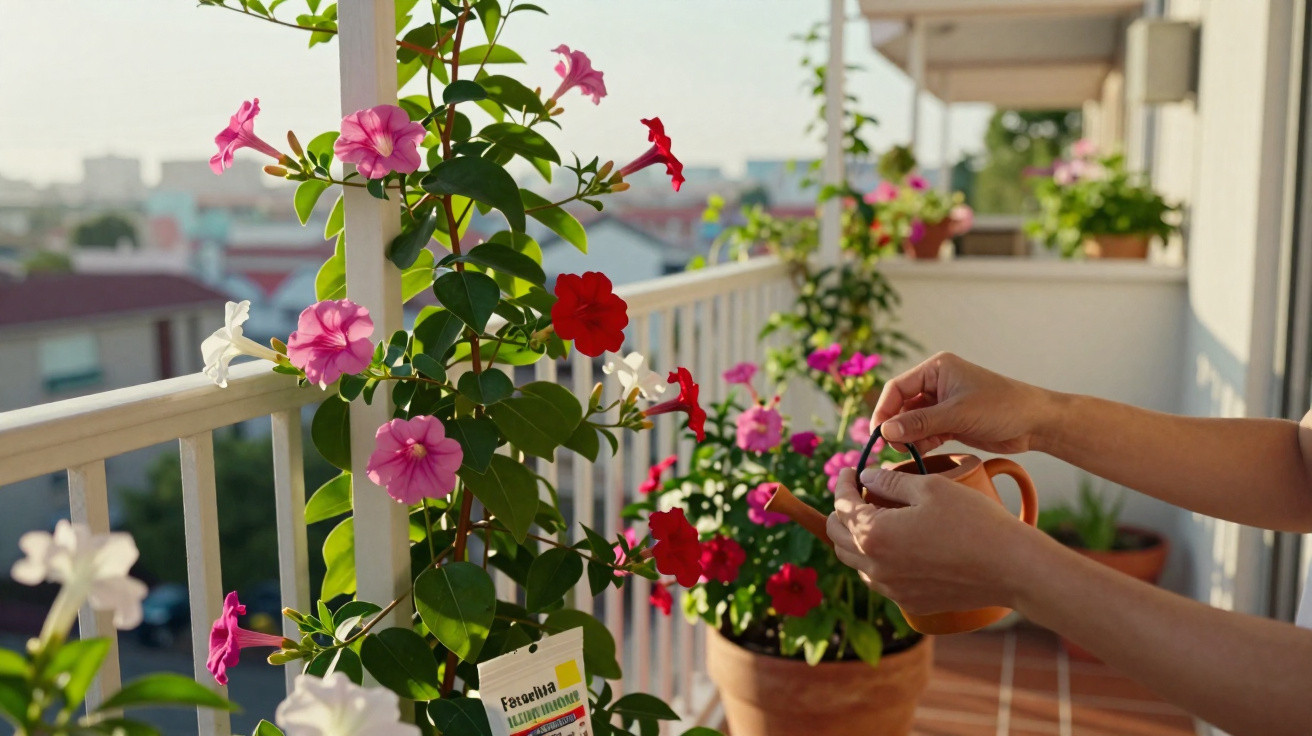
Among the many species grown in gardens and on balconies, only a handful cope well with intense heat without losing their vitality. In places where summer lingers on, keeping pots full of flowers and healthy green foliage can become an ongoing challenge. In that context, dipladenia, also known as mandevilla, stands out as a choice that combines toughness, strong decorative impact and relatively straightforward care.
What is dipladenia and why does it cope so well with heat?
Dipladenia is a vigorous, semi-woody plant that can be trained as a climber or kept more compact in pots. Its glossy, evergreen leaves create a deep-green backdrop for white, pink or red blooms, which appear for several months in warm climates.
Because it is naturally suited to sunny conditions, it generally grows well where summers are long and bright-so long as the compost does not become waterlogged. That is why it has become popular on flat balconies, building frontages and roof terraces, where it handles heat better than many ornamental plants.
Watch a video on Carol Alencar’s channel explaining how to grow dipladenia:
How to grow dipladenia for abundant flowering
To encourage lots of flowers, it helps to choose the right pot or bed and prepare the growing medium properly. Containers with generous drainage holes and a layer of drainage material prevent water from building up, while blends that include sand and organic matter keep the compost lighter and better aerated for the roots.
A few simple habits will keep the plant in good condition and promote fresh growth and flower buds throughout the growing season:
- Use a light, free-draining compost rich in organic matter.
- Water with gaps between watering, allowing the top layer to dry out each time.
- Place it where it receives plenty of direct sun for most of the day.
- Avoid severe cold and frost, particularly for pots left exposed.
- Feed in spring and summer using fertiliser formulated for flowering plants.
Feeding can be done every two weeks or once a month, following the instructions on the product you choose. In a well-balanced growing medium, the plant develops thick roots that store water and nutrients, which reduces the need for very frequent watering and improves tolerance during spells of extreme heat.
What care does dipladenia need in summer and winter?
In summer, dipladenia copes with full sun, but in areas that reach 38–40 °C it may benefit from light shade during the hottest part of the day. Shade netting or positioning near a wall can help protect the leaves from scorch without cutting the light too drastically.
In winter, the main priority is to avoid very low temperatures and frost. In colder areas, it is common to move pots indoors to a bright spot or use simple protective covers, while also reducing both watering frequency and feeding during the slower-growth period.
Why is dipladenia so popular in gardens, balconies and façades?
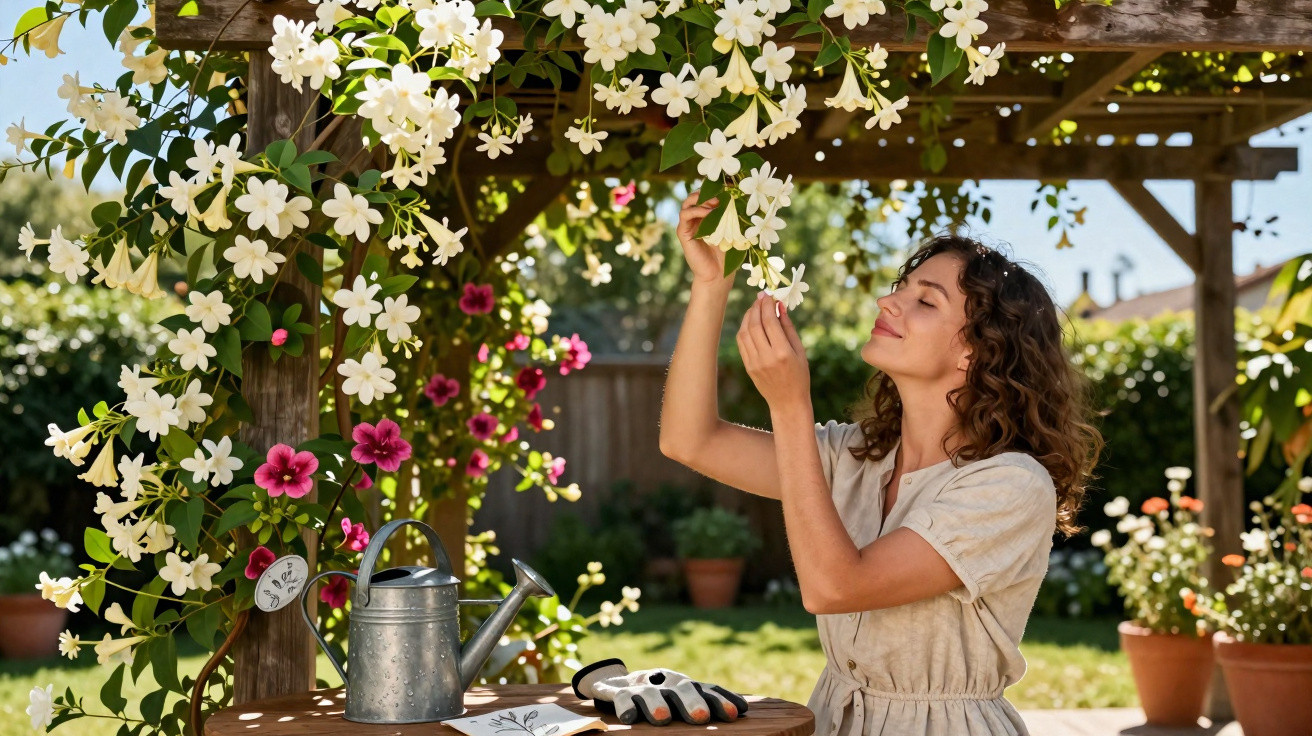
Dipladenia has become a familiar feature in residential and commercial landscaping thanks to its eye-catching look paired with low maintenance. In smaller spaces, it can be trained up spiral supports or arches; in homes with larger patios, it can cover pergolas and fences, forming a green, flowering screen for much of the year.
Another useful point is that, after the cold has passed, light pruning tends to trigger stronger regrowth and helps spread flowers more evenly along the stems. With a simple routine of watering, feeding and protection from severe cold, it usually keeps gardens, balconies and façades looking tidy and colourful for almost the entire year.

Comments
No comments yet. Be the first to comment!
Leave a Comment