
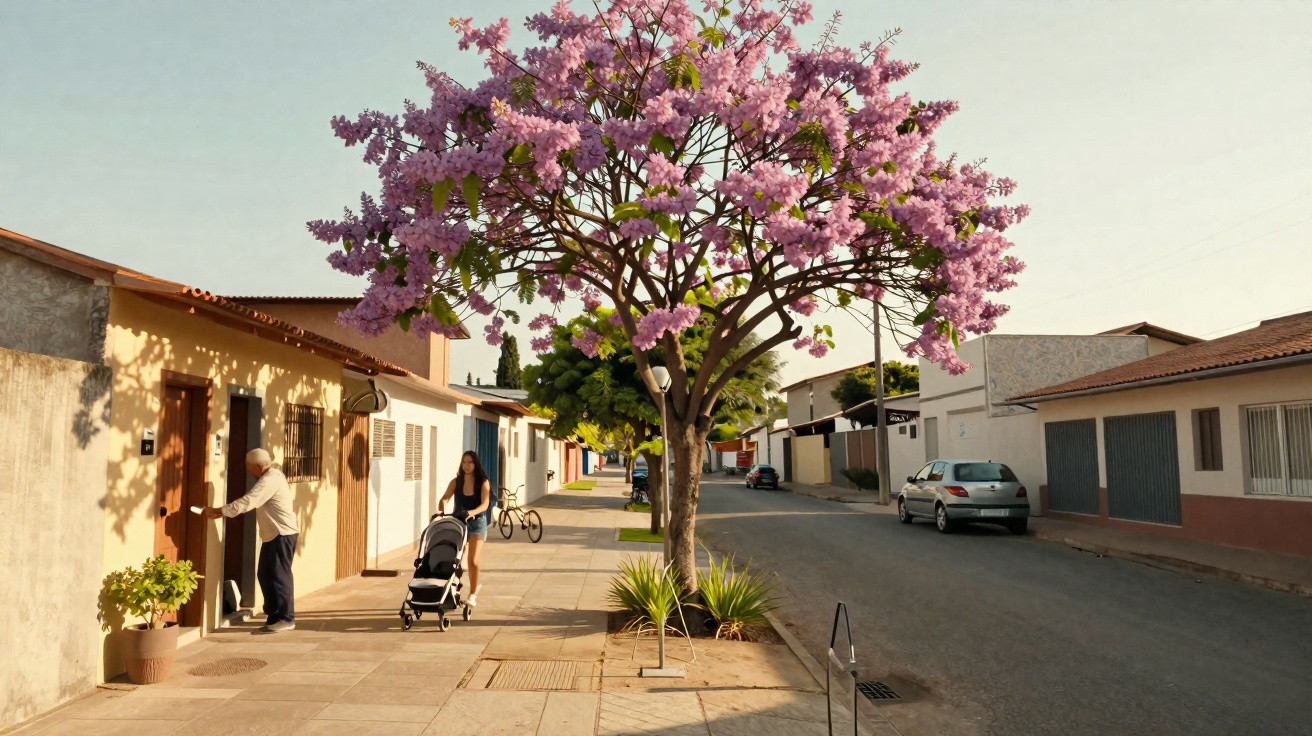
Choosing the right tree for residential pavements calls for extra care, especially when it comes to root behaviour and the chance of showy, ornamental flowering. Crape myrtle (Lagerstroemia indica) stands out as the perfect option for anyone wanting to lift the look of a frontage or a small garden with elegance and straightforward practicality.
Why is crape myrtle ideal for Brazilian pavements?
Over time, many tree species end up damaging urban structures because their growth is too aggressive. This ornamental tree, however, has shallow, fine roots that stay respectful of pavement concrete, helping to prevent annoying cracks and avoiding unnecessary repairs to the surface.
As well as protecting Brazilian pavements, it is known for a highly controlled, compact size. That naturally reduces the risk of conflict with overhead electrical cabling, greatly cutting down the need for severe, frequent pruning.
How do you choose a tree that won’t make a mess of the garden?
Some ornamental species can keep the pavement tidy because their flowers dry on the branches before dropping, ensuring… Read more
How does this species develop in full sun?
Unlike delicate plants that struggle in intense heat, this ornamental tree shows excellent climate resilience. It thrives in full sun for most of the day, turning strong light into the energy it needs to grow in a healthy, vigorous way.
High temperatures also work as a natural trigger for renewing its leaves and branches. In hot conditions, the species maintains a strong, healthy structure, which suits the tropical climate typical of Brazilian cities.
Below is a video from Rose Mary’s YouTube channel Manias that explores the points discussed in this topic:
https://www.youtube.com/watch?v=KoRO5mQzk98
What are the main attractions of its ornamental flowering?
In contemporary urban landscaping, the visual impact of Lagerstroemia indica is one of its biggest strengths. In the warmest months of the year, the tree becomes completely covered in vibrant flowers, with shades ranging from pink and white to purple and deep red.
This natural display can completely change the appearance of any residential frontage or an otherwise lifeless street. The striking contrast between the crinkled petals and the green leaves creates a charming feel and significantly enhances the surrounding property value.
Advantages of Crape Myrtle
Urban benefits - The main reasons to choose this species include:
- Full preservation of pavements;
- Excellent resistance to full sun;
- Beautiful summer flowering.
Why is the species so low-maintenance?
For people with a busy routine, growing demanding species can quickly become a burden. Crape myrtle stands out because its care is simple, requiring only regular watering in the first months after it is planted into urban soil.
Once established, the plant copes with dry spells without losing its characteristic vigour. Ongoing intervention is minimal, offering excellent day-to-day practicality for residents who do not want to spend time on complex gardening.
Key basic care steps to support the full development of this ornamental tree include:
- Pick a spot with strong exposure to direct sunlight;
- Apply organic fertiliser once a year before the flowering period;
- Carry out light training pruning only to remove dead branches.
How does crape myrtle add value to small urban spaces?
Limited space on modern pavements demands smart landscaping solutions that combine beauty with function. Thanks to its controlled, medium size, crape myrtle fits neatly into tighter areas without creating an uncomfortable sense of visual confinement around the frontage.
Making the right choice with this tree helps bring nature into the urban environment while avoiding future structural headaches. Residents can enjoy a flowering, cooler pavement that remains in excellent condition, reinforcing a thoughtful trend in residential green architecture.


Comments
No comments yet. Be the first to comment!
Leave a Comment