
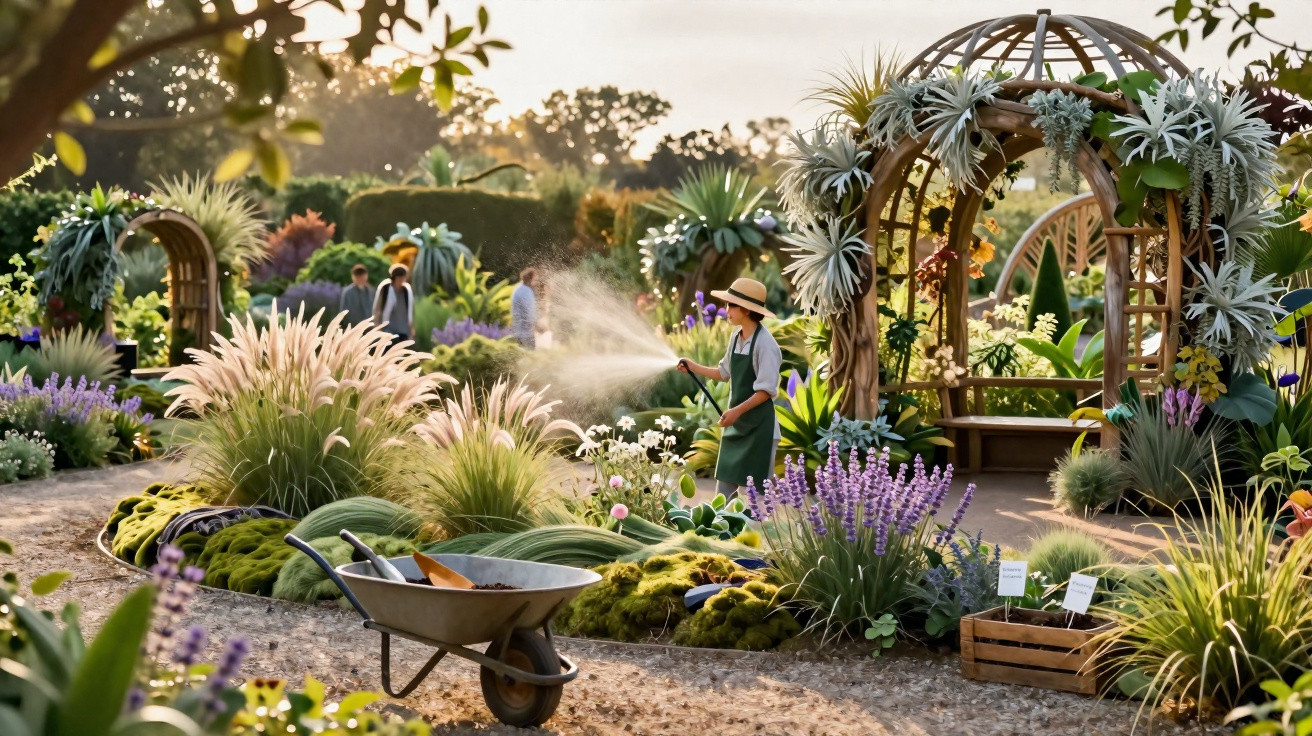
The International Garden Festival of Ponte de Lima is presenting 11 proposals on the theme of “Sleep”, bringing together ideas from different parts of the world, and the installations will continue to change as they develop until 31 October. The theme for next year has already been decided.
The gardens’ natural evolution over the season
One of the spaces drawing attention from the very start is “Dream Space [garden pavilion]”, designed by a Colombian architect for the 2026 edition of the International Garden Festival of Ponte de Lima. Since the first days, it has gained an extra feature that neither the designer nor the gardening team who built it had planned: a bird has nested in one of its shrubs. The surprise presence is also a sign of how these creations-renewed every year-shift over the five months in which visitors can experience them.
Plants used across the festival, including rarities such as the aerial tillandsias (which live hanging in another garden this year, “Dreamy Tillandsias”, by four Portuguese and Brazilian creators), grow and reshape the spaces. Over time, the gardens are also occupied by birds, frogs, butterflies, dragonflies and other species.
“Gardens end up having this interesting aspect: the public visits now, at the opening, and then comes back in a month or two to see how they’ve evolved. I think the festival is also appealing for that reason, because we can follow their development over a long period,” says Sandra Pereira, Head of the Environment and Green Spaces Division at Ponte de Lima Town Council. She stresses that when the event closes on 31 October, the temporary gardens on show since the 29th “will look different”.
The 21st edition: “Sleep” and the 11 selected proposals
The 21st edition, under the theme “Sleep”, features 11 gardens chosen through an international competition. Alongside these main entries, there are 11 additional gardens created by pupils from Ponte de Lima school clusters, as well as the two most-voted gardens from the 2025 edition.
Around 25 gardeners built the gardens, and in 2027 they will return to start work again, delivering new proposals under the theme “Smart Gardens”.
Life behind the scenes: reinvention, build time and the team’s work
“Every year we have to reinvent ourselves. This project has the advantage of keeping us constantly active. Even for the gardeners themselves, having to study the plans, interpret them and build them-I think they enjoy it and it motivates them every year,” Sandra Pereira says. She also recalls that between November and the end of May, the festival site is closed to the public and becomes “a building site” as preparations for the next edition get under way.
“I really like this job. They’re temporary gardens and that makes it even more enjoyable and more challenging. Every year is different and there’s huge pressure to meet the deadline we have to get everything ready. It’s wonderful,” says Fátima Pereira, who has worked as a gardener on the festival grounds for seven years, beside the Lima river.
“It’s part of our life, our day-to-day. You forget you even have a home, because you dedicate yourself completely to the project,” she says. Here, she adds, “we’re much more than gardeners-we’re carpenters, bricklayers, we do a bit of everything”. She admits that “it’s hard to dismantle some of them at the end, because they’re so beautiful, but we already know that the next one will be another work that’s even more beautiful”.


Comments
No comments yet. Be the first to comment!
Leave a Comment