
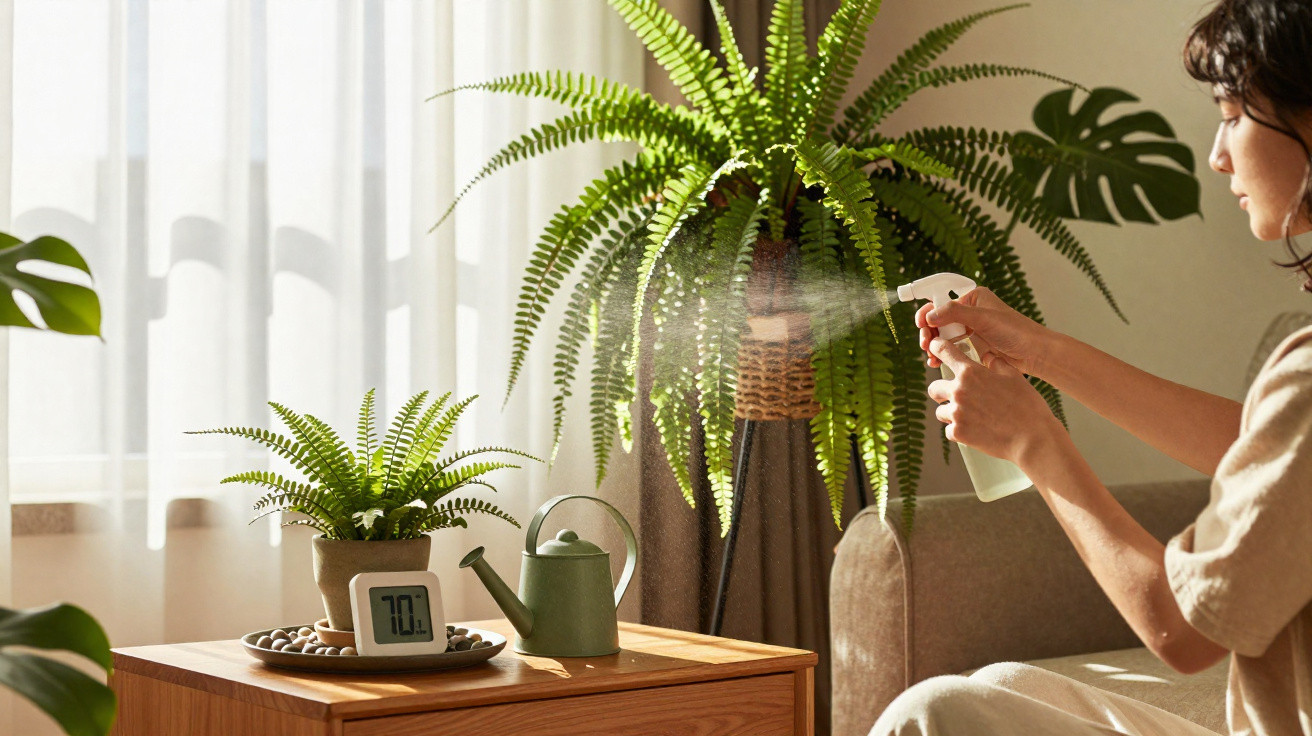
Among indoor ornamental plants, the fern stands out for the sheer volume of its foliage and its knack for turning any corner into a warmer, more welcoming space. To keep it growing thickly and looking genuinely healthy, occasional watering isn’t enough: the right light, balanced humidity, and steady indoor temperatures are what decide whether it stays lush or starts drying out and shedding leaves regularly.
What is the ideal light for an indoor fern?
For a fern kept indoors, bright, indirect light is the best option. It needs plenty of brightness, but the leaves should not be exposed to direct sun-especially from late morning through to mid-afternoon, when sunlight can scorch the tips and leave them brown.
If the room is too dim, the fern will stretch out in search of light, producing long, thin growth that looks sparse. In brighter spots-near windows with light curtains or frosted glass-it usually grows fuller, and simple changes to the pot’s position often bring back the plant’s vigour.
Which rooms in the home suit a fern best?
Indoors, certain rooms naturally combine softer light with better humidity, helping a fern stay more stable and more voluminous. When choosing where to place it, pay attention to both brightness and airflow, and avoid areas with strong draughts or sudden temperature swings.
To guide your choice, it helps to think of spaces that most closely mimic the conditions of humid woodland, where this plant thrives in nature:
- Bathroom with a window: pairs gentle light with higher humidity, keeping the leaves green and firm.
- Bright kitchen: often offers good ventilation and a slight rise in humidity-so long as the pot isn’t placed beside the cooker.
- Very bright living room: large windows with curtains filtering the sun create a steady, comfortable setting.
How do humidity and temperature affect the fern’s appearance?
Air humidity is crucial if you want the fern to look full and even, as it prefers conditions similar to the inside of a forest. In homes with strong air conditioning or a very dry climate, the tips often dry out even when watering is consistent, and the plant loses that “full clump” look.
As a rule, temperatures between 18°C and 26°C support healthy growth, provided there aren’t sharp changes during the day. Cold below 12°C slows development, while excessive heat combined with dry air leaves fronds limp and brittle, reducing the overall volume of the foliage.
What simple care keeps a fern looking its best?
A few practical tweaks can keep an indoor fern healthy all year round, even in a flat. One helpful trick is to create small, more humid “microclimates” by grouping plants together or using trays filled with water and pebbles, which helps limit leaf dryness.
It’s also worth treating the plant as a guide to its environment: brown tips usually point to dry air or too much sun, while very yellow leaves suggest too much water or too little light. By softening the light, keeping the pot away from strong heat and cold sources, and shifting its position as the seasons change, a fern typically responds with steady new growth and a deeper green-keeping the pot full and avoiding frequent leaf drop.

Comments
No comments yet. Be the first to comment!
Leave a Comment