
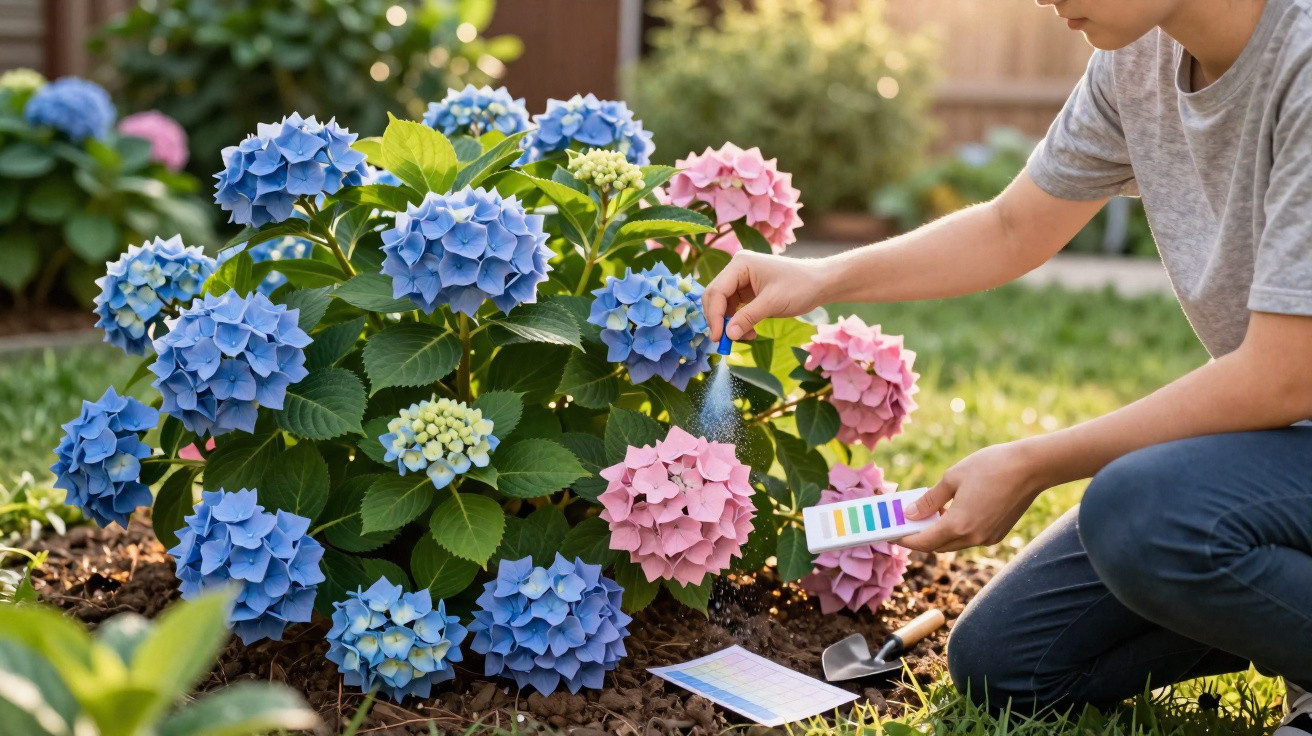
Hydrangeas can shift colour when the soil changes how much aluminium is available to the roots, particularly in certain Hydrangea macrophylla varieties. In acidic ground, blooms usually move towards blue; in more alkaline soil, they tend to appear pink. The gardener’s “trick” is not to dye the plant, but to patiently adjust pH through proper watering and carefully measured products.
Why do hydrangeas change colour?
Blue- and pink-flowering hydrangeas act almost like a living soil indicator. When the pH is lower, aluminium becomes more available in the soil; the plant takes it up, and the petals can develop bluer tones.
As the soil becomes less acidic, aluminium is harder for the roots to access. In those conditions, the same plant may open with pink, lilac, or purplish flowers, depending on the cultivar, the age of the blooms, and the conditions in the bed.
How can you make the flowers bluer?
To encourage blue flowers, the soil needs to be acidic and to contain aluminium in a form the plant can absorb. Gardeners commonly use aluminium sulphate or hydrangea-specific acidifiers, always diluted and applied to already-moist soil-never over leaves or flowers.
A dependable approach is to make changes gradually:
- Test the soil pH before applying any product.
- Aim for an acidic range, around pH 5.0 to 5.5.
- Apply aluminium sulphate exactly as directed on the label, without concentrating it close to the stem.
- Add an organic mulch of leaf mould, pine bark, or well-rotted compost to help keep the soil conditions steadier.
- Avoid very hard (chalky) water, as it can raise pH over time.
How do you make a hydrangea turn pink?
To steer colour towards pink, the goal is to reduce aluminium uptake. This is usually done by increasing soil pH using agricultural lime, applied in small amounts and lightly worked into the surface around the plant.
The change will not happen overnight. The hydrangea needs to go through new growth and flowering cycles before it shows the new response. In pots, control is simpler because there is less compost volume, and the water used for watering has less impact beyond the container.
What care helps prevent damage to the plant?
The most frequent mistake is trying to force a rapid colour change. Too much aluminium sulphate can harm roots, while excessive lime can lock up important nutrients and lead to yellowing leaves. Hydrangeas do best in fertile soil that stays moist (but not waterlogged) and is rich in organic matter.
Before focusing on colour correction, keep the plant in good condition:
- Water consistently, especially in hot weather.
- Do not apply amendments to dry soil.
- Do not use aluminium sulphate and lime during the same treatment phase.
- Make incremental adjustments, watching leaves, new shoots, and buds.
- Remember that white hydrangeas generally do not shift to blue or pink as a result of pH changes.
When does the colour change start to show?
The shift typically appears in the next flowering periods, not in blooms that are already open. Older flowers may change shade slightly as they mature, but the real result comes from buds formed after the soil has already been adjusted.
Best results come when pH, aluminium availability, watering, and organic matter work together. In acidic soil, hydrangeas tend towards blue; in more alkaline soil, they move towards pink. Between those points, they may show lilac or purple tones that reveal the chemical transition happening around the roots.
Comments
No comments yet. Be the first to comment!
Leave a Comment