
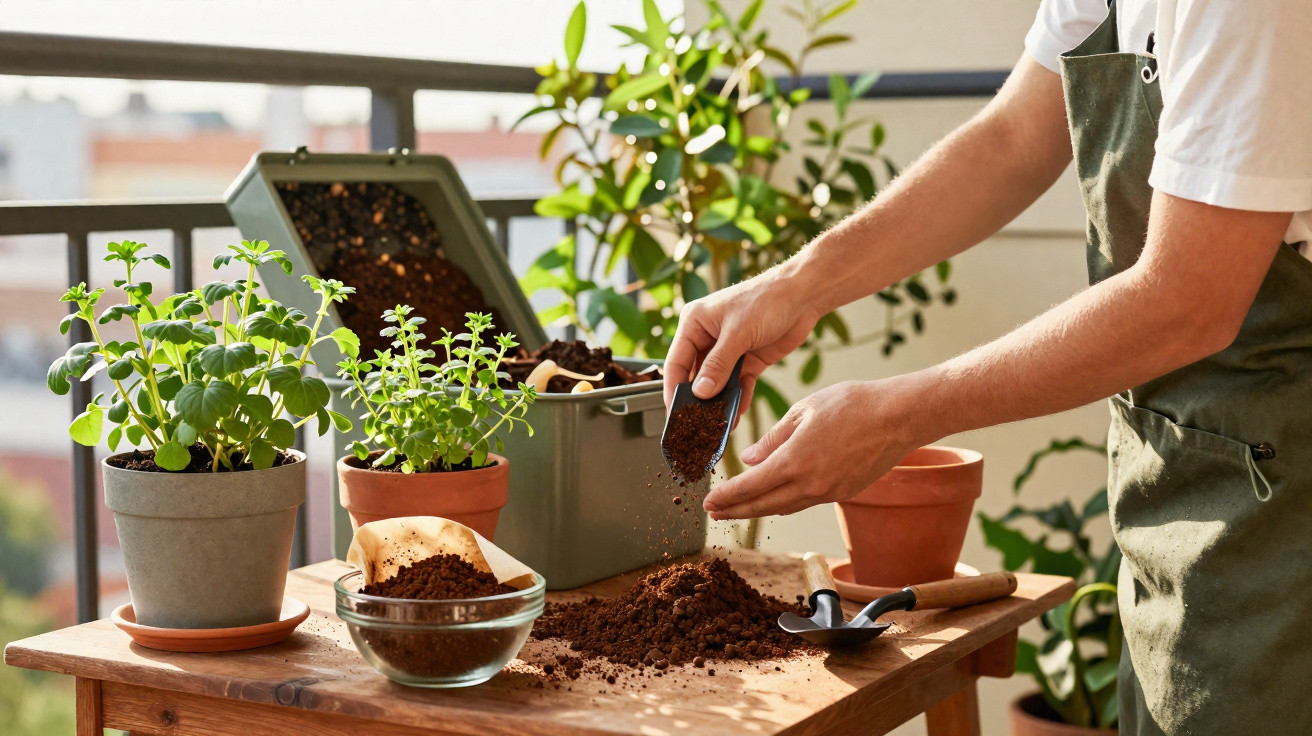
Coffee grounds can be reused in gardening and composting, but that does not mean they should be tipped straight into any pot as though they were a complete fertiliser. They can add organic matter, yet the amount you use - and how you apply it - matters if you want to avoid causing issues in the growing medium.
Can coffee grounds really be used on plants?
Yes - but it helps to be clear that coffee grounds are not a one-size-fits-all fertiliser. They provide organic matter and some nutrients, however their make-up on its own does not cover everything plants require.
If you spread too much directly on the soil, the grounds can create a dense, compacted layer. That can restrict the movement of water and air and, in certain conditions, encourage mould growth. For that reason, using more does not automatically mean you will get better results.
Why can composting be a better option?
Coffee grounds can be added to a compost heap or compost bin alongside other organic materials. As the compost breaks down, the grounds combine with leaves, plant trimmings and other sources of organic matter, helping to build the final compost.
This approach tends to make better use of the grounds because they are not treated as a standalone input; instead, they become part of a balanced mix. Once composted, the material can then be worked into the soil according to what your plants actually need.
Is it a good idea to put pure coffee grounds in a pot?
It is best not to turn coffee grounds into a thick layer sitting on top of the potting mix. When they build up on the surface, they can compact and change how easily water soaks into the soil.
If you want to reuse them directly in gardening, small amounts mixed into the soil or added to compost are a better option than dumping large quantities around plants. The outcome can also depend on the species and the growing conditions.
Do coffee grounds replace conventional fertiliser?
No. Coffee grounds can contribute organic matter, but they should not be viewed as a replacement for a planned feeding routine. Different plants have different nutrient needs, and soils vary in their own characteristics as well.
Where there is a nutrient deficiency, it is better to assess the growing conditions before choosing a fertiliser. Using coffee grounds indiscriminately can give the impression a plant is being fed when, in reality, its key requirements may still not be met.
What is the best way to reuse coffee grounds?
If you have a composter, add the grounds in balanced amounts along with your other organic waste. Mixing the materials thoroughly helps prevent any single ingredient from building up.
Another option is to use small quantities in the garden, watching how the plants respond and avoiding the creation of a thick layer on the soil surface.
The key point is not to treat coffee grounds as a “miracle fertiliser”. Their greatest value is as reused organic matter - particularly when incorporated into composting - while fertilising should be based on the genuine needs of each plant.
Comments
No comments yet. Be the first to comment!
Leave a Comment