
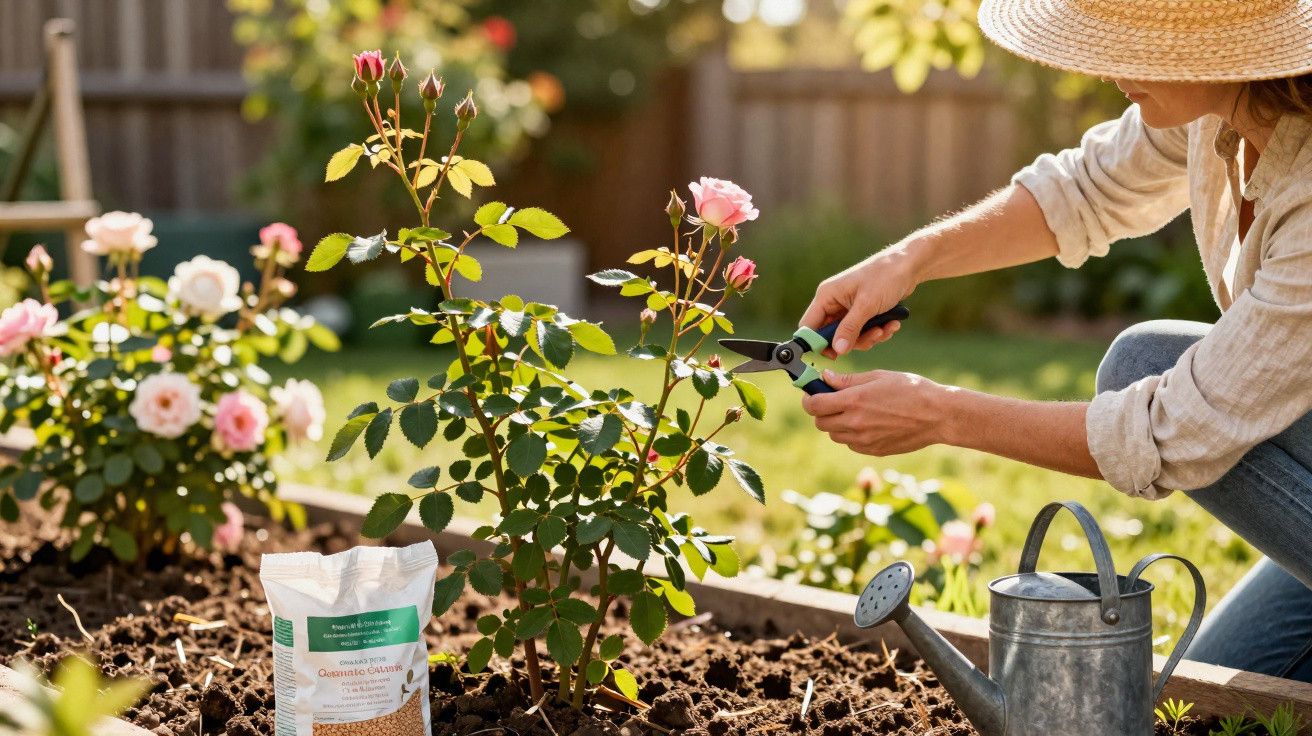
When a rose bush stops producing blooms, many gardeners start wondering what has changed in the way they care for it. More often than not, the cause sits in everyday routines-watering, pruning or feeding-that, over the months, add up and end up disrupting bud formation. Knowing what the plant needs at each stage is the first step towards getting it to fill the garden with colour again, with healthy flowers and vigorous new growth.
Why isn’t the rose bush flowering?
Rose bushes are demanding when it comes to light, nutrients and airflow, and any imbalance usually shows up in the foliage and in the absence of flowers. Too little direct sun, pruning at the wrong time or cutting back too hard, and compacted or waterlogged soil are among the most common reasons flowering is halted.
Container growing is another frequent factor: in pots, space is restricted and roots can become cramped, which reduces the plant’s available energy for blooms. Noticing weak stems, yellowing leaves or lots of shoots with no buds can help you pinpoint what’s going on and fine-tune care without drastic interventions.
Watch a video on the YouTube channel Fazendo em Casa that discusses recipes for powerful organic fertilisers to strengthen rose bush roots and encourage abundant flowering:
https://www.youtube.com/watch?v=W-L57kQ8I-M
How to identify the reason the rose bush isn’t blooming
To work out what’s happening, it helps to assess the plant step by step, starting with light: roses need four to six hours of direct sun each day. Next, check the soil: clay-heavy ground that’s very hard and waterlogged-or, at the other extreme, soil that is dry and low in organic matter-can restrict roots and reduce flowering.
Leaves and stems also “tell” you a lot and act as a quick thermometer for garden issues. The list below sums up a few common signs and what they often point to in day-to-day rose care:
- Too little light: lots of long, leggy stems, leaves spaced far apart, and almost no flowers.
- Waterlogged soil: leaves dropping, darkened roots, and a musty smell in the pot or bed.
- Lack of nutrients: a weak plant with small, dull leaves and flowers that fail to develop.
- Pruning too severely: few side branches and no buds on young new growth.
How to adjust pruning, watering and feeding to encourage new flowers
In many cases, simply correcting the basics is enough for a rose bush to return to regular flowering. Pruning should focus on removing dead, diseased and crossing branches, opening up the centre of the plant while keeping a few well-structured main canes-especially in late winter or early spring.
Watering should keep the soil lightly moist rather than saturated, with good drainage in both pots and garden beds. Feeding, in turn, needs to be balanced: prioritise phosphorus and potassium during the growth phase and just before flowering, and avoid overdoing nitrogen, which tends to push leaf growth at the expense of bud production.
Which fertilisers and care help a rose bush flower all year round?
To support flowering, it can be helpful to combine organic feeds-such as well-rotted compost and bone meal-with mineral blends formulated specifically for roses, always following the recommended dose. In containers, nutrients are used up quickly, so feeding needs to happen more often, but in smaller amounts to avoid scorching the roots.
Beyond nutrition, regular checks of leaves and buds make it easier to spot aphids, scale insects, caterpillars and fungal problems early on, preventing the plant from wasting energy on recovery. With the right light, moderate pruning, controlled watering and close attention to pests, a rose bush typically responds with shorter gaps between flowering cycles, keeping the garden colourful throughout the year.




Comments
No comments yet. Be the first to comment!
Leave a Comment