
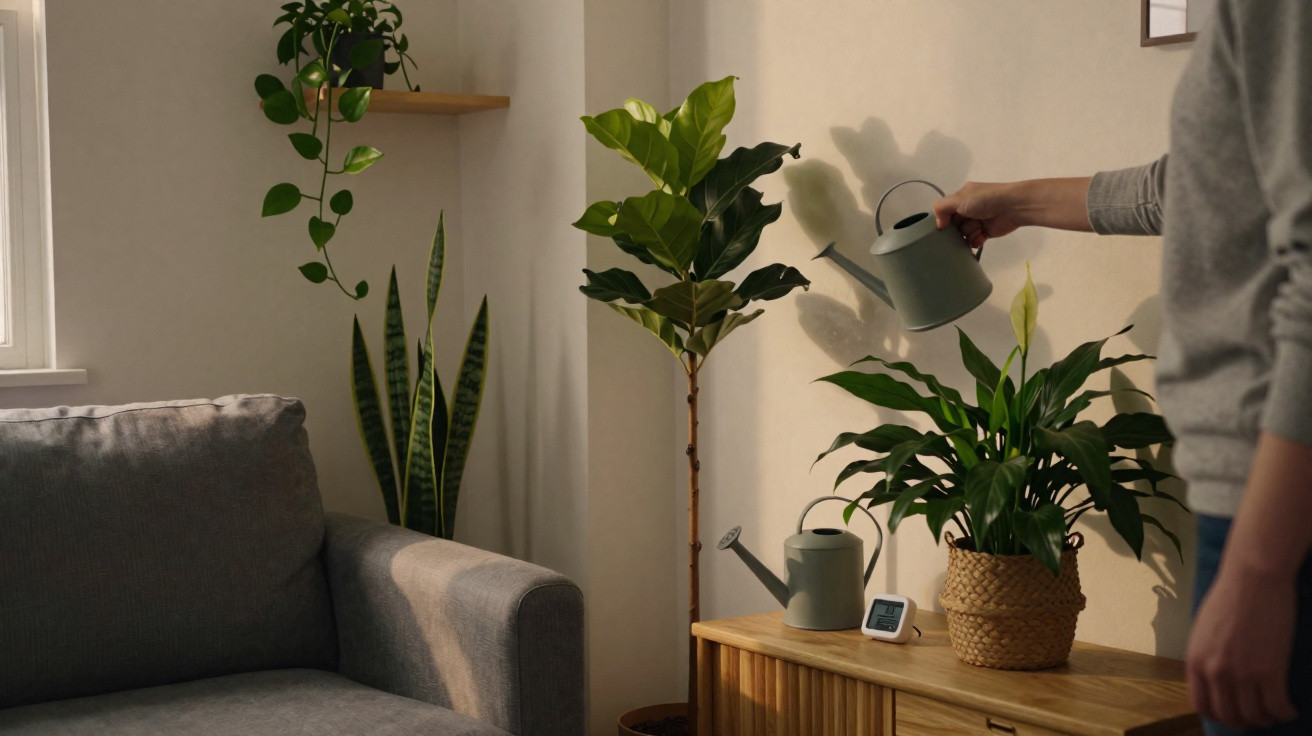
Keeping plants in dimly lit indoor spaces is no longer something only keen gardeners can pull off. These days, shade-tolerant species make it easy to bring corridors, bathrooms and small living rooms to life-even with small windows or only indirect light-while supporting your décor, improving perceived air quality, and boosting everyday wellbeing.
What are plants for low light, and why do they work so well indoors?
Plants suited to low-light conditions can still photosynthesise in places where the light is weak or indirect-such as corners far from a window or rooms that face internal areas. They often have broader or darker leaves, which helps them make better use of the limited brightness available and stay in good condition for longer.
Alongside coping with reduced light levels, many of these species can help filter airborne particles, which can be useful in a home office or a compact flat. They’re a popular choice in interior design because they combine air-purifying potential, an attractive look and straightforward upkeep-even when your routine is busy.
Which plants for low light are most used in houses and flats?
A handful of species have become firm favourites indoors thanks to how reliably they perform in shaded spots and how striking they look. They also do well in pots, on shelves and in awkward corners, so you can spread them around the home without needing to rework your space.
Among the most common choices in decorating schemes that prioritise low light and low maintenance are:
- Zamioculcas (ZZ plant) – exceptionally hardy, it copes well in corridors, entrance halls and living rooms with indirect lighting. Its glossy leaves suit pale-toned furniture and floor-standing pots.
- Snake plant (Dracaena trifasciata) – ideal for corners in bedrooms, living rooms and flat entrances, it tolerates drier air and temperature changes. It’s also frequently mentioned in lists of plants linked with air purification.
- Devil’s ivy (Epipremnum) – a trailing plant that works well on bookcases, shelves and on top of cupboards. It handles diffused brightness and can also be trained to climb decorative supports.
Where to position plants for low light in the darkest parts of the house?
Placement has a direct impact on growth and appearance, even for plants that are naturally shade-adapted. In living rooms with small windows, Zamioculcas is happy in corners near the sofa or TV unit, relying mainly on the daylight that reaches the room.
In corridors and entryways, the snake plant can be set in tall planters to define the space without much effort, while in internal bathrooms and cloakrooms devil’s ivy can stand out on higher shelves, with stems cascading down. It’s worth trying a few locations for several weeks and watching the leaf colour, shine and firmness-these details indicate whether the light, humidity and watering are right for keeping the plant looking good even in the darkest corners.
How to care for plants for low light and avoid overwatering?
The most common mistake with shade plants is giving too much water. Indoors, evaporation is slower and the risk of root rot increases, so it’s best to check the compost with your fingers before watering and then adjust the schedule based on the species and your local climate.
In general, these plants do best in free-draining mixes, pots with drainage holes, and a base layer of small stones or expanded clay pellets. Zamioculcas typically thrives with fortnightly watering and soil that’s almost dry; the snake plant prefers a slightly sandy substrate and moderate watering; and devil’s ivy likes the compost to be moist, but never waterlogged.
Comments
No comments yet. Be the first to comment!
Leave a Comment