
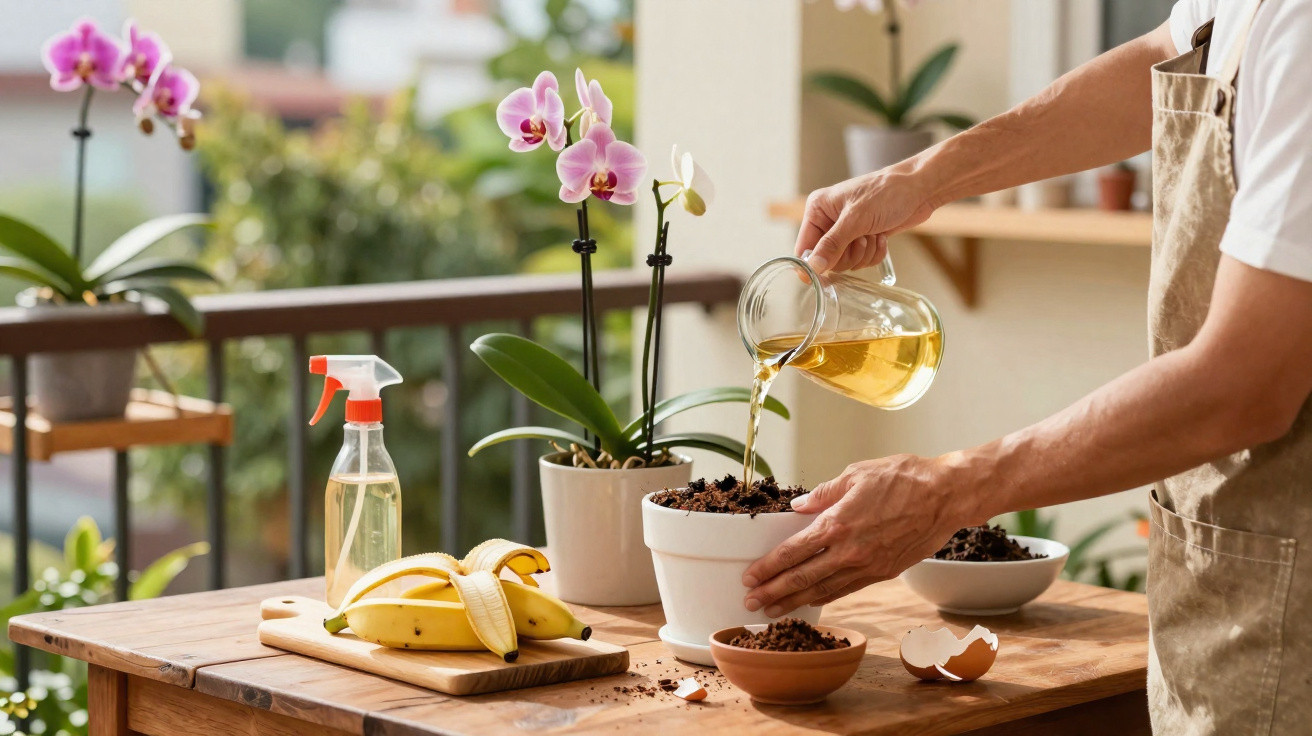
Banana peel has become a common choice among people who grow orchids at home as a low-cost, natural fertiliser option. The idea has spread because it is easy, makes use of a kitchen leftover and does not require advanced gardening know-how. Even so, it needs to be done carefully to genuinely improve the growing medium without creating bad smells or attracting insects.
What does banana peel release when used on orchids?
When it comes into contact with moisture and the micro-organisms in the pot, banana peel breaks down gradually and releases nutrients that the roots may take up. It does not replace orchid-specific fertilisers; instead, it works only as an add-on within good care for light, watering and airflow.
As it decomposes, the peel releases mainly potassium, along with phosphorus, calcium, magnesium and some micronutrients. Together, these are linked to plant resilience, the development of sturdier flowers and water balance. They can also feed beneficial micro-organisms in the growing medium, helping to keep the root environment more stable.
Why do so many people use banana peel for orchids?
Using banana peel as a fertiliser became popular because it costs virtually nothing, is straightforward to prepare and comes from a natural source. For beginners, reusing a household scrap can feel like an accessible way to support a plant before spending money on specialist products.
Posts on social media, videos and informal trial-and-error have helped push the practice, often connecting abundant flowering with the use of peel. Even so, it mainly provides potassium and only some of what orchids need. Orchids also require nitrogen and other elements found in fertilisers designed for them, such as balanced NPK feeds or orchid-appropriate organic fertilisers.
How can you use banana peel on orchids safely?
To lower the chances of fungus and insects, many people choose to dry or boil the peel before using it on orchids. Below are common ways to apply it, always in moderation and with close attention to how the plants respond:
- Dried, crushed peel: cut into thin strips, dried in the sun or in a low oven, then crushed. Add a small amount on top of the growing medium, without letting it touch the roots.
- Banana peel “tea”: boil pieces in water, strain and allow to cool. Use the enriched water for watering every few weeks, alternating with plain waterings.
- Whole, thoroughly dried pieces: place well-dehydrated strips on the surface of the growing medium in small amounts, allowing them to break down slowly.
Application is usually infrequent-around every 30 to 60 days-to avoid too much decomposing organic matter and unpleasant odours. Good ventilation matters, as does avoiding burying peel deeply. Stop using it if you notice an increase in fungus gnats, ants or visible fungal growth in the pot.
What other kitchen scraps can help nourish orchids?
A few household leftovers can supplement orchid nutrition, provided they are used sparingly so they do not reduce airflow in the growing medium. They should be treated as a light boost rather than the only source of feeding, and they require careful observation during cultivation.
Common options include dry coffee grounds, finely crushed eggshells and unsalted vegetable cooking water. Fruit leftovers, however, are best put into a separate compost bin rather than added directly to the pot, as they can cause flies and smells. In every case, the aim is to keep the growing medium free-draining, airy and not overloaded with organic matter, supporting healthy roots and stronger flowering throughout the year.
Comments
No comments yet. Be the first to comment!
Leave a Comment