
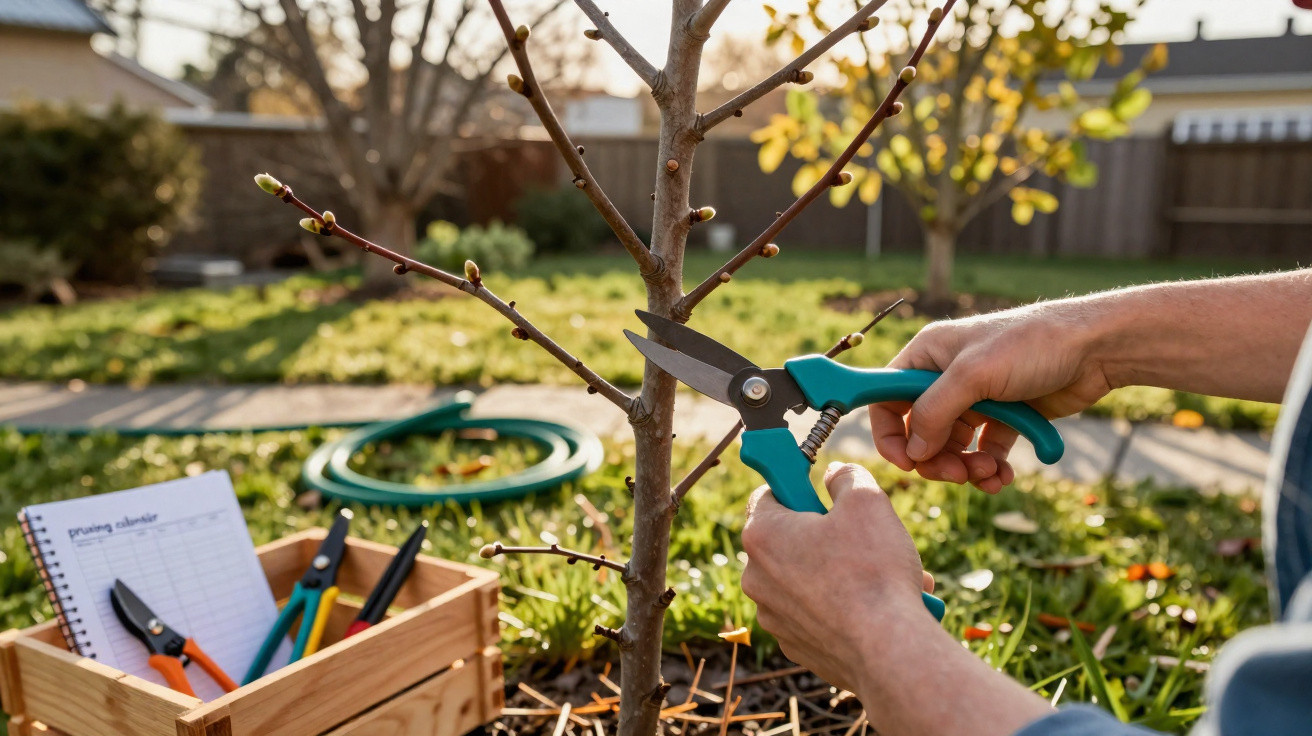
Pruning a tree is not simply a matter of cutting off branches that look like “too much”. The time of year, the species, the weather and the purpose of the cut all have a direct impact on the outcome. If you prune at the wrong time, you may remove important structures, disrupt flowering, or leave wounds exposed for longer than necessary.
Why does the pruning season vary between trees?
Each species follows its own growth cycle. Some trees flower on branches formed in the previous season, while others produce flowers on fresh, new growth. If those branches are removed at the wrong moment, you can end up cutting away exactly what would have produced the next flush of flowers and fruit.
Climate plays a part as well. Temperature, humidity and rainfall patterns can affect how quickly cuts seal over and how active certain organisms associated with wood may be. That is why there is no single “perfect month” that suits every tree.
When might pruning be more suitable?
For many deciduous trees, structural pruning is often done during dormancy, when the plant has dropped its leaves. With the canopy bare, it is easier to see the framework and, in some situations, this can make management simpler.
However, this guideline is not universal. Trees that flower in spring, for instance, may need a different approach so you preserve the branches that carry the next set of blooms. The best timing needs to reflect the species’ specific growth and flowering behaviour.
What is the problem with pruning at the wrong time?
One of the most frequent mistakes is removing productive branches shortly before flowering. Depending on the species, that can significantly reduce the number of flowers and fruits in that cycle.
Poorly timed cuts can also trigger strong, untidy regrowth. When a large number of branches are removed in one go, the tree may respond with rapid shoots from particular points, changing the intended crown structure.
Does every prune have to wait for the ideal time?
No. Broken, dead or hazardous branches may need to be dealt with regardless of the season, especially where there is a risk of falling or causing damage to people or property.
Even so, larger cuts or work on big trees requires extra care. If the job involves working at height, using cutting equipment, or dealing with branches near power lines, the safest option is to hire a properly qualified professional.
How do you know the right time to prune?
Before making any cuts, identify the species and find out when it flowers, which branches it flowers on, and what you want to achieve. Pruning to remove dead wood is not the same as pruning to control size or encourage a particular shape.
In that sense, the right time to prune trees cannot be decided by the calendar alone. Paying attention to the plant’s cycle, local weather conditions and the reason for pruning helps you avoid unnecessary intervention-and prevents you from removing key branches just as the tree is getting ready to flower.




Comments
No comments yet. Be the first to comment!
Leave a Comment