
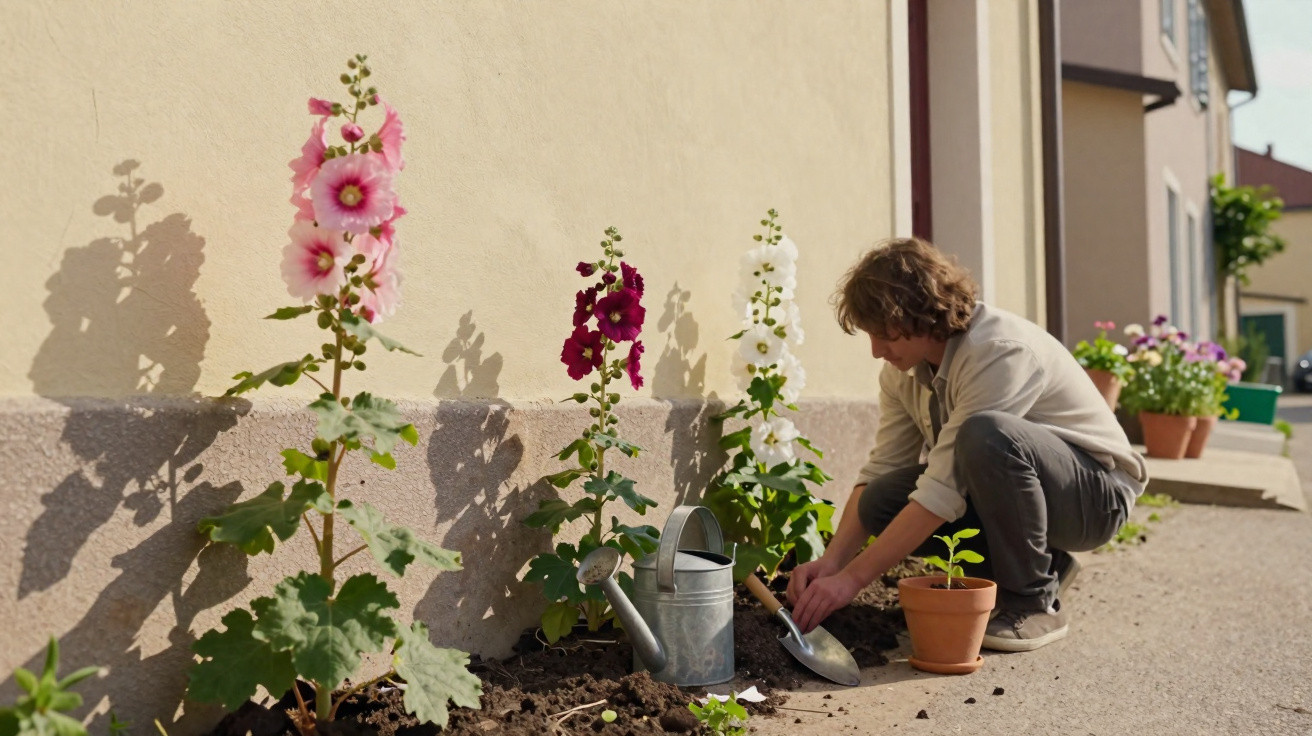
The hollyhock, scientifically known as Alcea rosea, is often seen growing against façades, boundary walls and older houses across many European villages. Although its tall, brightly coloured blooms may look purely decorative, the plant was also used to help manage damp at the base of walls-particularly in historic buildings that lacked modern waterproofing.
What is this flower seen on town façades?
Hollyhock grows upright, producing tall stems lined with flowers that can appear in shades of pink, white, red, purple and yellow. Because it frequently grows close to walls and masonry, it has become part of the familiar look of old streets, rural homes and stone façades.
Its appearance stands out because the blossoms form along the stem, creating a vertical column of colour beside the building. For that reason, many people assume it was planted only for ornament, without realising it once served a practical purpose.
Why was hollyhock planted next to walls?
In older houses, moisture could rise from the ground into the lower part of walls, especially after rainy spells. As many buildings did not have today’s barriers against water ingress, planting species with deep roots near walls became a straightforward way to help draw off some of the water held in the soil.
- Deep roots: they seek water in lower soil layers.
- Dense foliage: increases transpiration and the plant’s water use.
- Vertical growth: takes up little space right next to the wall.
- The flowers also helped brighten up plain façades.
- The plant could conceal imperfections, drainage points and old marks on walls.
How does this plant help control damp?
Hollyhock needs water to grow well, particularly in warmer periods. When planted at the foot of a wall, it can take up some of the moisture in that area, helping the surroundings stay less waterlogged.
- It performs best in well-drained soils.
- The wall helps shelter the plant from strong winds.
- Heat stored by the wall supports growth on cold days.
- The roots tend to grow downwards more than outwards.
- For that reason, it does not usually lift paving in the way that aggressively rooting plants can.
Does hollyhock still have a use in modern homes?
In modern buildings, hollyhock does not replace proper waterproofing, correct drainage or repairs to stop water ingress. If there is mould, flaking plaster or persistent damp, the issue needs a technical assessment.
Even so, the plant remains valuable in landscaping. It enhances walls, adds height to the garden, attracts pollinators and softens very rigid-looking façades-especially around rustic-style homes or in sunny outdoor spaces.
How to grow hollyhock near façades
It is best to choose a sunny spot with free-draining soil and enough room for the stems to grow without blocking doors or windows. Hollyhock benefits from regular watering, but not constant waterlogging, so the soil needs to let excess water run through easily.
Hollyhock shows how many gardening traditions came from practical observation. It dressed up the setting, added fragrance to the scene, helped disguise imperfections, and could still play a part in managing damp around walls-combining beauty and function in a single plant.


Comments
No comments yet. Be the first to comment!
Leave a Comment