
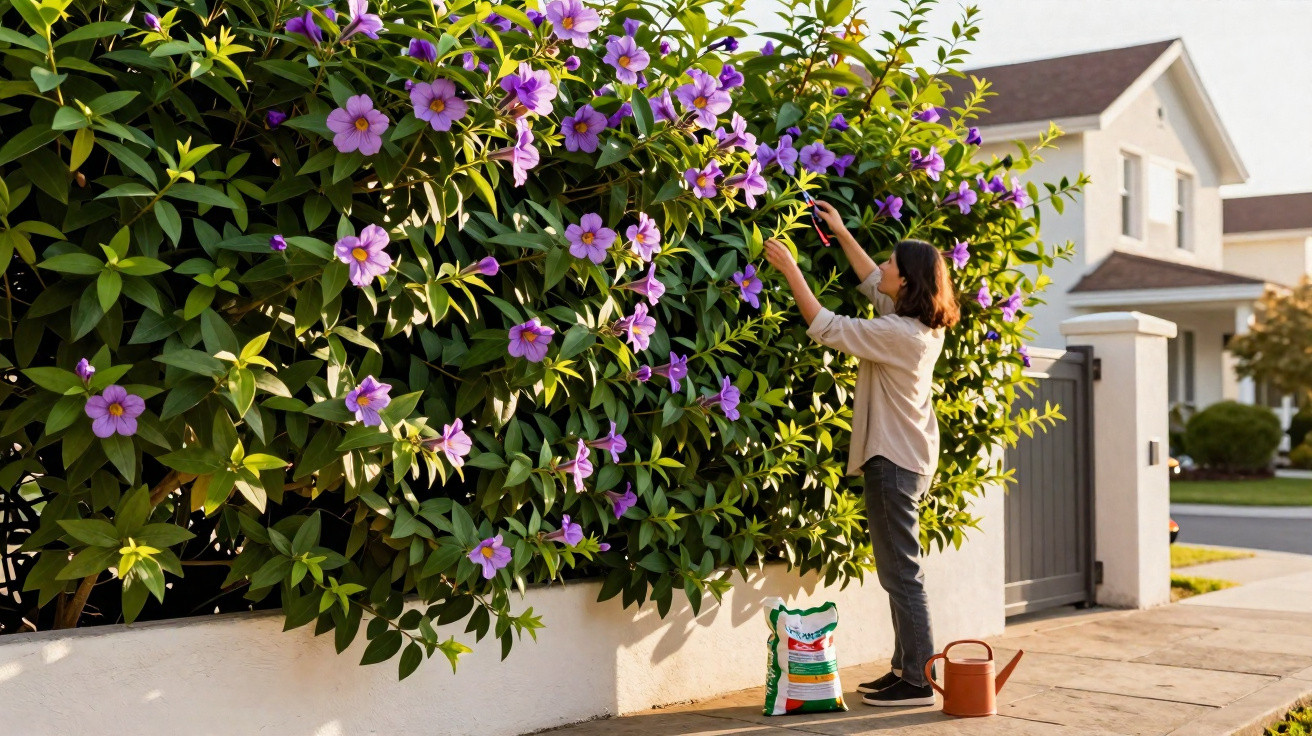
Finding privacy in built-up neighbourhoods often comes up against one problem: it is hard to keep green boundary walls looking good. Thankfully, one tough, reliable species has become a favourite in modern designs because it combines lush beauty with extremely easy management in full sun.
Why is shrub thunbergia the best choice for your front wall?
Choosing the right planting can dramatically change the feel of a home’s entrance. Shrub thunbergia has turned into a genuine contemporary trend because it forms an effective visual screen without requiring the resident to take on constant or complicated care.
As well as delivering strong seclusion, it lifts the space with lovely purple flowers across the seasons. It copes brilliantly with the intense heat of exposed boundary walls, offering a long-lasting, tropical, polished look for anyone wanting to add value and presence to their property.
Which climber protects the house from strong sun without damaging the wall?
Read more: This excellent landscaping option grows quickly and flowers heavily in spring, creating an impressive protective cover that…
How to plant Thunbergia erecta correctly to close in a wall
A successful green screen starts with selecting the right size of young plants. Specialists advise buying smaller specimens so they establish evenly, helping you avoid unwanted bare gaps near the base of the structure as the hedge matures.
For ideal planting, it is better to dig a continuous trench rather than separate holes. This approach makes it easier to spread nutrients and water consistently, allowing the roots to push down deeply and become strong enough to cope with dry spells.
Below is a video from the YouTube channel Garden Without Secrets that explores the points covered in this topic in more detail:
What are the essential fertilising steps for this hedge?
Good nutrition is what keeps the foliage vigorous and a rich, deep green. Applying mineral fertilisers in split doses through the year supplies the key elements the shrub needs to maintain steady growth.
Organic matter is also vital and should be added to the soil once a year. Doing this specifically at the beginning of spring drives fresh, healthy new shoots and helps the plant structure handle the hottest days.
Shrub Nutrition Guide
Recommended fertilisers
Use these products to keep your hedge consistently healthy and attractive:
- Mineral NPK fertiliser aimed at leafy growth;
- Organic compost applied to the soil once a year;
- Foliar supplement to correct yellowing leaves.
How do regular prunings ensure a dense green barrier?
Targeted pruning is the key tactic for breaking the shrub’s apical dominance. This prompts multiple lateral branches to form, changing the hedge’s look and ensuring it fills every gap properly.
Making frequent cuts to the tips and along the sides also helps you shape a fully vertical wall of greenery. This management stops the plant from spilling into paths or pavements, keeping the garden’s usable space neat and organised.
See the practical advantages of keeping up with this periodic control:
- Ongoing encouragement of new shoots from the base;
- Faster closure of the green screen against outside views;
- Maintaining the ideal, tidy alignment for the front of the home.
How to encourage abundant, long-lasting flowering in your garden
The standout purple flowers give this on-trend hedge a distinctive charm. To boost the appearance of these colourful blooms ahead of special occasions, a planned application of fertilisers high in phosphate can produce quick results.
Pairing the right nutrients with direct, full sun exposure brings out the species’ maximum ornamental potential. In this way, homeowners get a highly functional protective barrier that also continually enhances the front of the property.
Comments
No comments yet. Be the first to comment!
Leave a Comment