
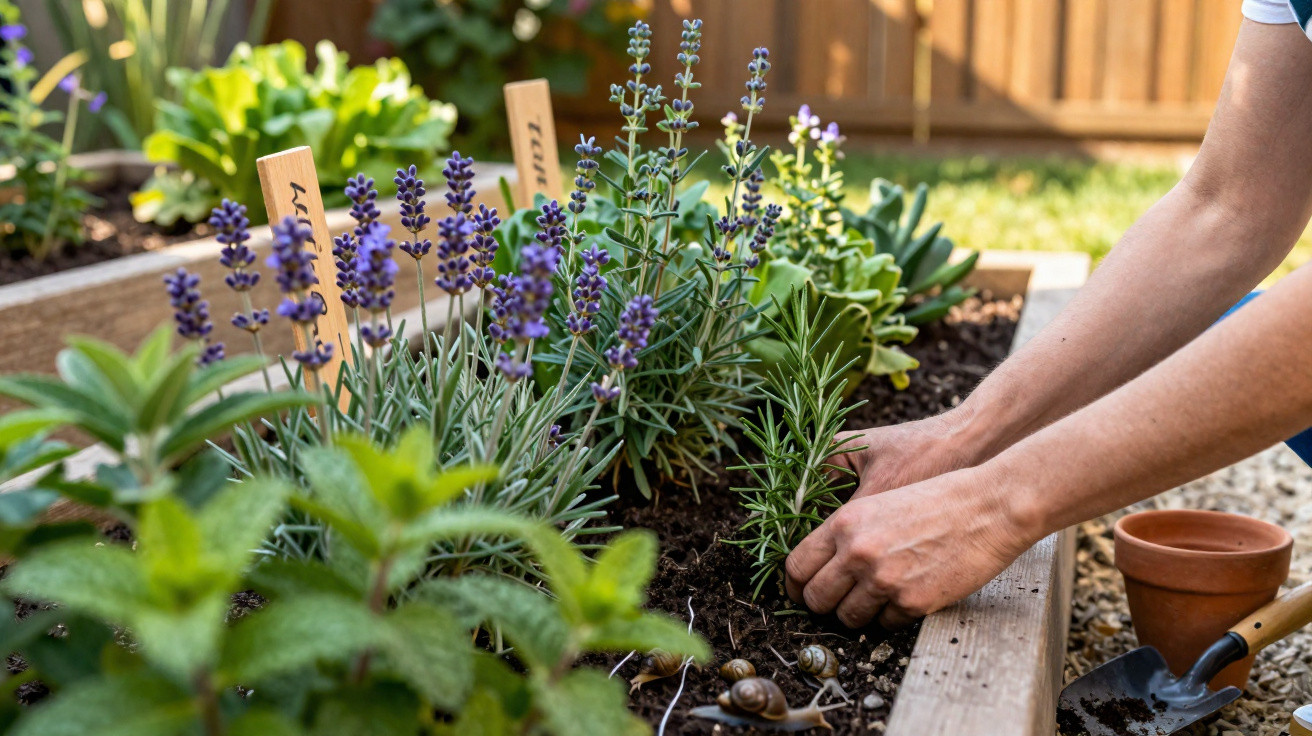
People who grow vegetable plots and ornamental beds often run into the same ongoing issue: keeping snails and slugs under control without upsetting the garden’s balance. These molluscs play a role in the food chain, yet they can quickly ruin young seedlings, tender leaves and fruits such as strawberries and tomatoes. That is why many gardeners look for natural options that discourage them without relying on harsh chemical products-creating living borders that both protect plants and make the space more attractive.
How do herbs help deter snails and slugs from the garden?
Snails and slugs tend to avoid rough, dry surfaces and very strong smells. Many herbs give off aromatic oils that make an area less appealing, particularly when the plants are mature and carrying plenty of foliage.
Rather than acting as a poison, this living barrier works as a deterrent, limiting how easily the animals can reach more delicate crops. At the same time, it adds variety to the garden and can even provide fresh seasonings for the kitchen.
Watch a video on the YouTube channel Horta do Ditinho about the repellent power of certain aromatic plants to keep snails, slugs and other pests away from garden beds:
https://www.youtube.com/watch?v=rX_jY8dK2aM
Which herbs help with control, and which should stay out of the border?
When planning a protective edging, it helps to separate plants that discourage snails from those that can end up serving as a “feast”. A strong fragrance does not automatically mean protection, and some culinary herbs may actually attract these molluscs even more.
Here are practical examples to guide what belongs on the outer border and what is better kept towards the middle of the bed:
- Lavender, rosemary and thyme – fragrant, hardy plants that suit well-drained soils;
- Sage and hyssop – firm leaves and a powerful scent, well suited to edging;
- Chives and wild garlic – a distinctive smell that tends to bother snails;
- Peppermint and spearmint – strong aroma, best in beds or in contained pots;
- Nasturtium – a slightly peppery note, useful around vegetables;
- Basil, parsley, coriander, dill, chamomile and oregano – can be attacked and should be placed in more protected inner areas.
How to set up a herb border to deter snails in practice
Before planting, confirm that the species you have chosen suit your local climate and soil type. Advice from reputable nurseries or agricultural advisory services can help you match each herb to the right light levels, moisture and spacing.
Once you have that information, mark out a perimeter around the areas that suffer the most damage. Use well-established young plants, set them close together, and group herbs with similar needs. To strengthen the barrier, you can place rough materials in front of the herb line-such as crushed eggshells, dried coffee grounds or copper strips-to increase contact discomfort.
Do herbs alone solve the snail problem in the garden?
A herb border works best as part of an integrated approach, especially during rainy periods when plenty of organic matter is available. At those times, snails and slugs may bypass an aromatic barrier in search of abundant, moist food.
For that reason, many gardeners combine herbs with night-time checks, simple traps, sensible waste management and crop rotation. Beyond helping with control, herbs also attract pollinators, provide aromatic leaves for cooking, and boost plant diversity-making the garden healthier and more interesting throughout the year.


Comments
No comments yet. Be the first to comment!
Leave a Comment