
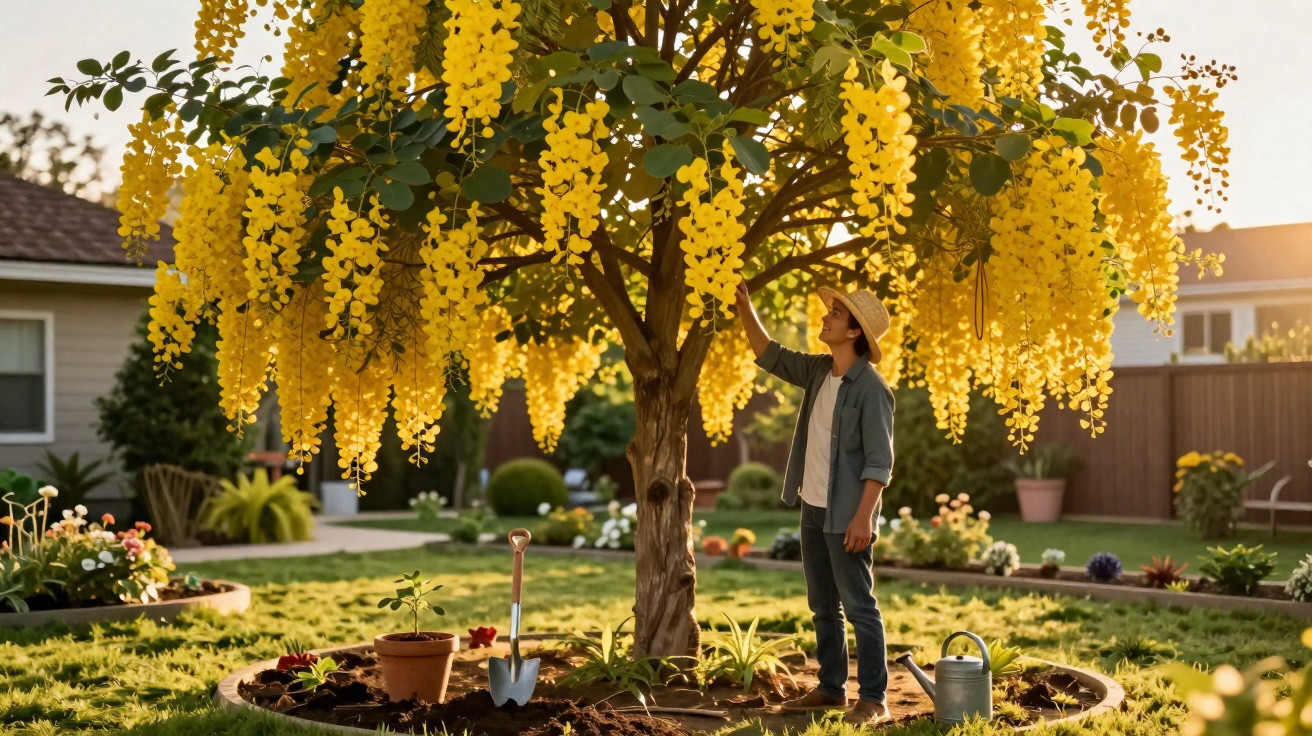
The golden rain tree, widely known in many countries as golden shower, is an ornamental species celebrated for its long, cascading clusters of yellow blooms. Linked to Cassia fistula and native to South Asia, it has been introduced across tropical and subtropical regions thanks to the striking display of its flowering and its ability to transform gardens, pavements and open public spaces.
What truly sets the golden rain tree apart is its drooping bloom: extended chains of yellow flowers that seem to spill from the branches like a glowing waterfall. This creates a strong focal point in the garden, particularly during the warmer months.
Beyond its intense colour, the broad canopy provides welcome shade and adds structure to planting schemes. For that reason, the species is found both in home gardens and along avenues, in parks and in public areas that need visual impact without looking heavy.
What are the main characteristics of this species?
Golden shower is a deciduous tree with green foliage, elongated pod-like fruits, and growth that is generally moderate to fast when the climate suits it. In favourable conditions, it can remain established in the same position for many years.
- Yellow flowers in hanging clusters.
- Most intense flowering in spring and summer.
- An elegant, open, ornamental canopy.
- Well adapted to hot, sunny regions.
- Attracts moths, butterflies and other pollinators.
Where should you plant the golden rain tree in the garden?
The best position is one that receives several hours of direct sunlight each day. Light supports flowering and helps keep growth vigorous, especially in tropical, subtropical or generally warm climates.
- Pick an open site, away from walls that are too close.
- Avoid planting beneath low overhead cables, as the canopy can spread.
- Choose fertile, light soil with good drainage.
- Allow enough room for both roots and crown to develop.
- Use the tree as a feature in gardens, at entrances or near seating areas.
How do you care for the tree for attractive flowering?
Once established, the golden rain tree is usually hardy, but it performs best when it is watered regularly during its first few years. That said, overwatering should be avoided, because waterlogged soil can damage the roots.
Pruning should be minimal and done only to remove dead, crossing or poorly placed branches. As the plant’s appeal lies in its flower clusters and the natural outline of the canopy, heavy pruning can lessen its ornamental effect.
Why does this tree add so much value to landscaping?
The golden rain tree elevates landscaping by combining colour, shade, movement and elegance in a single species. When it blooms, it changes how a space feels and creates a bold contrast against lawns, pale walls, stone paths and other green plants.
Its use simply requires forward planning: sunlight, drainage, space and attention to its eventual size. With those basics in place, golden shower stops being just an attractive tree and becomes the centrepiece of the garden, bringing brightness, life and a classic touch of tropical exuberance.


Comments
No comments yet. Be the first to comment!
Leave a Comment