
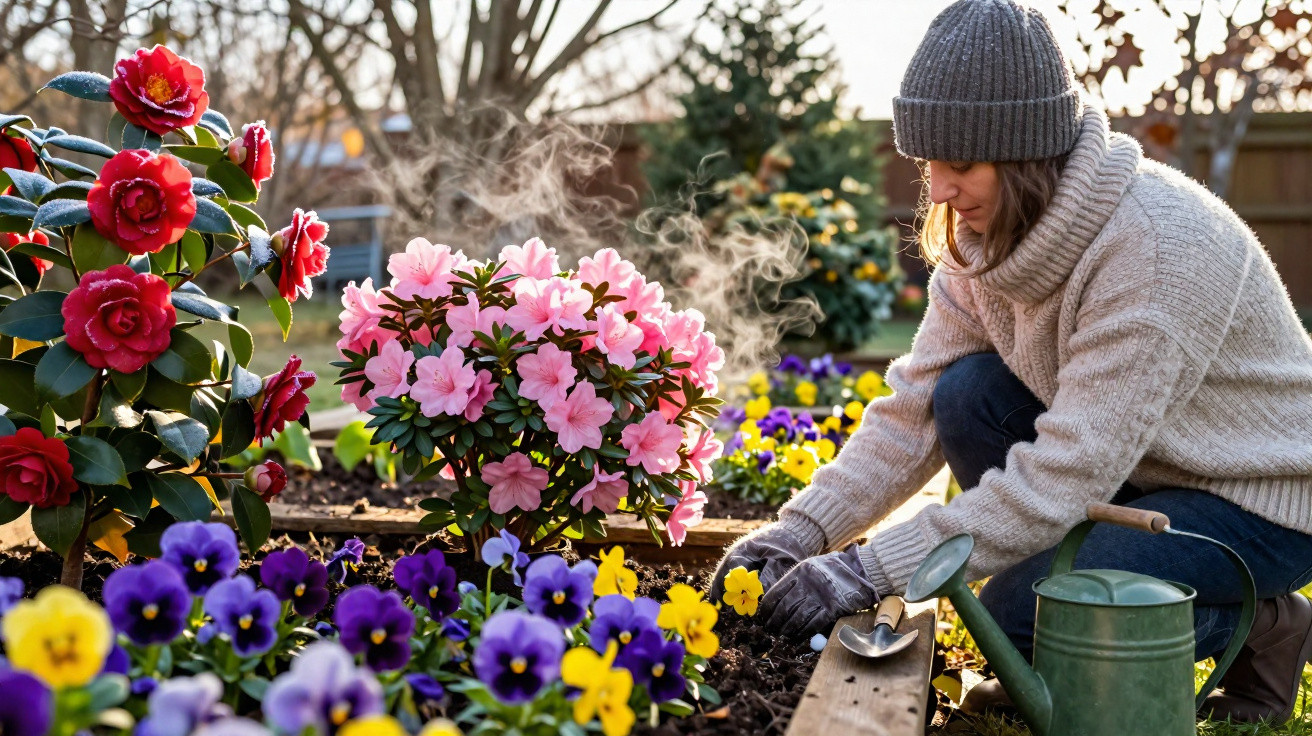
Keeping a garden full of colour through winter is a familiar challenge, yet certain species cope with the colder months while still holding their flowers and foliage in good condition. With the right plant choices and a few straightforward care routines, the space does not have to look dull in the coldest season. Among the many options available, some stand out for their cold hardiness and their ability to keep blooming.
Why choose cold-hardy plants for a winter garden?
Choosing plants that tolerate low temperatures helps the garden stay lively all year, preventing long spells with no flowers or with leaves that have been damaged. Species adapted to the cold handle icy winds, longer nights and sudden weather changes with less stress, which means fewer losses and less need to keep replacing plants.
Beyond lasting power, winter plants such as azaleas, camellias and pansies add a range of colours at a time when many species are resting. They work well in beds, pots, balcony planters and even compact urban spaces, creating striking contrasts between green foliage and vivid blooms.
How to keep azaleas flowering and vigorous in the colder months
The azalea is one of the best-known winter plants, producing plentiful flowers in shades of pink, white and red, as well as bicoloured variations. It suits cooler areas and copes with low temperatures, provided the soil drains well, as waterlogged roots encourage fungal problems and weaken the plant.
To help an azalea stay strong through winter, a few practical day-to-day steps can extend flowering and protect it from harsher cold:
- Light: favour morning sun with light shade in the afternoon, avoiding excessive heat.
- Soil: keep it slightly acidic, rich in organic matter and free-draining.
- Watering: water moderately, keeping the compost moist but never saturated.
- Light pruning: do this after the main flush of flowers, removing spent blooms and weak stems.
How to grow camellias and enjoy winter flowering
Camellias are a classic choice in mild-to-cool climates and typically bloom from late autumn into winter. Their large flowers, in pink, red or white, arrive when many other plants are dormant, and well-established specimens cope more easily with cold and light frosts.
For good winter growth, place camellias in a spot sheltered from strong winds, with bright indirect light or filtered sun. A mulch layer over the soil helps steady temperature changes, and any heavier pruning is best done after flowering, allowing time for new shoots to develop.
How to use pansies and combine winter plants in the garden
The pansy is a short-lived herbaceous plant widely used in beds and pots to add instant colour to a winter garden. Its flowers appear in many combinations of purple, yellow, blue and white, and they often show most strongly during colder periods, making balconies and entrances feel more welcoming.
When planning the display, azaleas and camellias work well as the backdrop to beds or as focal points in larger containers, while pansies fill edges and window boxes like a colourful “carpet”. With careful watering, protection from severe frosts and the right positioning, these three plants can keep a garden or balcony colourful and full of life even on the coldest days.
Comments
No comments yet. Be the first to comment!
Leave a Comment