
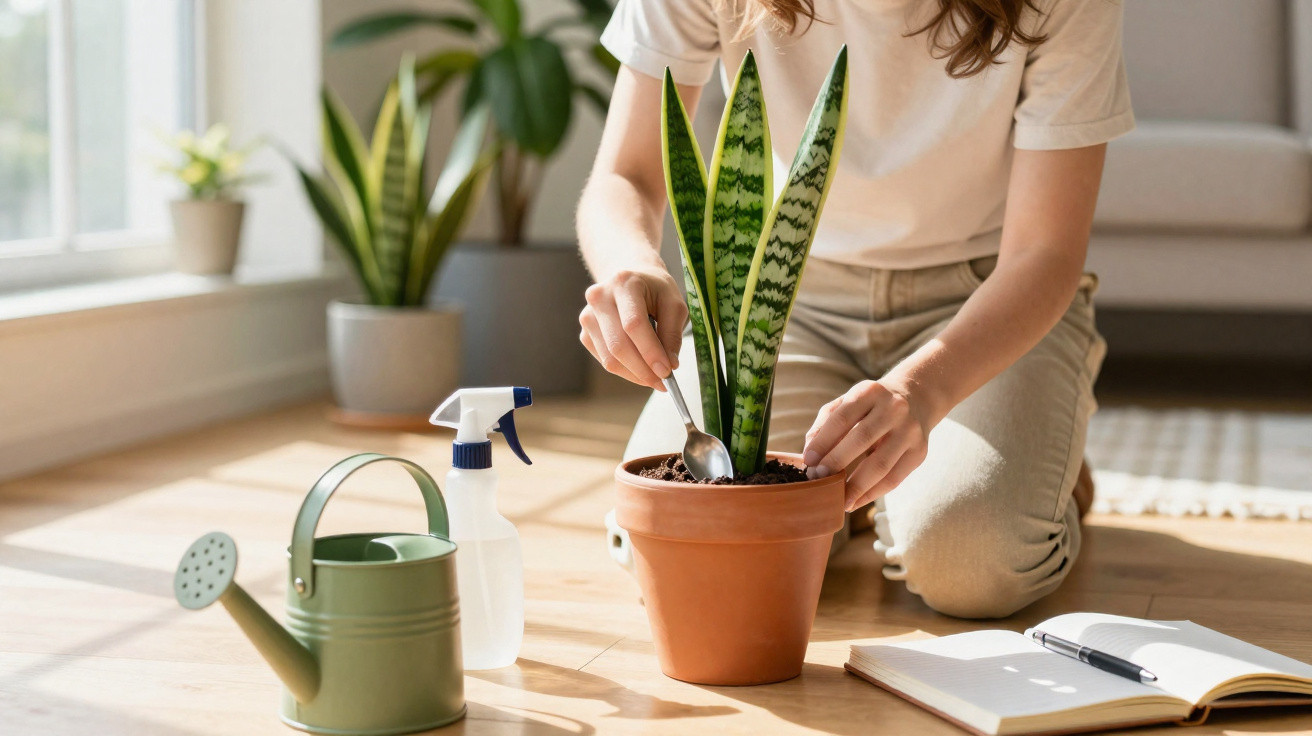
Mother-in-law's tongue, also called Saint George's sword or Sansevieria, is one of the most popular houseplants because it copes well with different indoor conditions and needs very little attention. Even so, overwatering remains one of the most frequent mistakes. For that reason, simple ideas-such as using a metal utensil to check soil moisture-often appeal to anyone who wants to keep the pot healthy for years.
What is the spoon technique for mother-in-law's tongue?
Mother-in-law's tongue is a succulent that stores water in its leaves and does not cope well with waterlogged compost, so small household tools can help prevent watering errors. The metal spoon technique involves pushing a spoon down into the potting mix to a reasonable depth, then pulling it out to see what the compost that sticks to the metal looks like.
If the spoon comes out with damp compost attached, it suggests there is still enough moisture deeper in the pot, and it is better to wait before watering again. If the metal comes out almost clean and dry, the mix is dry through much of its depth and it is a more suitable time to water. It is a straightforward visual cue for anyone who is not yet confident judging moisture by touch.
Watch a video on the YouTube channel Vida no Jardim covering specific care for Saint George's sword, drainage tips, and simple tricks to keep the soil in good condition:
https://www.youtube.com/watch?v=kS1z6T6_tO4
How does the spoon help measure moisture in the potting mix?
In practical terms, the spoon acts like an improvised probe, reaching layers of compost you cannot normally see but that directly affect the sensitive roots of mother-in-law's tongue. The surface of the pot can look dry while the inside remains wet, which raises the risk of fungal issues and rot at the base of the plant.
Some people adapt the approach with other similarly shaped metal items, such as a blunt knife or a narrow spatula, always inserting it, waiting a few moments, and then removing it to check what moisture is clinging to it. This gives a more reliable read of the compost and helps avoid watering again when the mix is still saturated. It can also be used alongside moisture meters or the traditional finger test.
What basic care keeps mother-in-law's tongue healthy?
Beyond occasionally using a spoon to confirm moisture, a few general practices are key to keeping mother-in-law's tongue in good shape, since it copes far better with too little water than too much. Pot choice, the potting mix, light levels, and your watering pattern make a noticeable difference day to day and help prevent yellowing, drooping, and rotting at the base.
You can treat the points below as a simple checklist, making it easier even for gardening beginners to keep the plant attractive and stable indoors for many years.
- Proper drainage: use pots with holes in the base and, if possible, add a layer of gravel or expanded clay.
- Light, free-draining mix: combine general potting soil, sand, and organic matter to help water drain away.
- Moderate watering: allow the compost to dry out almost completely between waterings, avoiding soaking the pot.
- Suitable light: place it where it gets bright, indirect light, rather than strong direct sun for many hours.
- No standing water in the saucer: pour away any excess that collects under the pot so the roots are not left sitting in water.
How to set up a simple care routine for mother-in-law's tongue
If you want a more organised way to look after mother-in-law's tongue, a straightforward observation routine helps you spot issues early, before the roots are affected. This basic sequence makes you less dependent on tricks and keeps day-to-day care calmer and more intuitive.
Check the light regularly, look at the condition of the leaves, and assess deeper moisture with the spoon or your finger. Water only when the compost is dry through most of the pot, and remove any water that has collected in the saucer. With controlled watering, good drainage, and appropriate light, mother-in-law's tongue generally stays healthy and decorative in houses and flats with minimal maintenance.

Comments
No comments yet. Be the first to comment!
Leave a Comment