
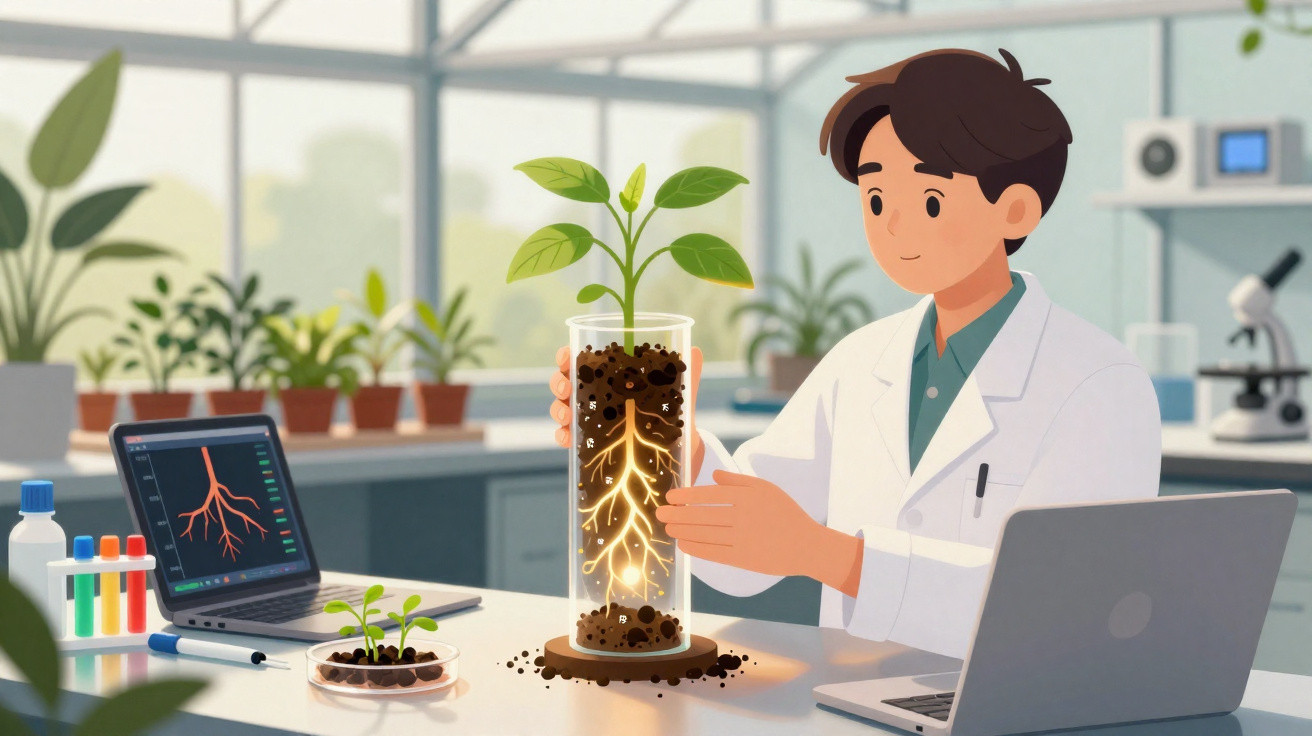
Plants cannot simply step into the shade or switch on a fan. When the air warms up, they remain where they are and must cope. Whether they live or die depends on how effectively they adapt - particularly below the soil surface.
Even in tough conditions, roots continue to extend as they hunt for water and nutrients. When that underground growth slows markedly or stalls, the whole plant is put under strain.
Scientists have long recognised that temperature strongly influences the speed of root growth, and that warmer conditions often accelerate it. Yet exactly how plants detect temperature and convert that information into a growth response has, for years, been difficult to pin down - a kind of black box. Something within the plant was clearly taking readings from the environment and deciding what to do.
A hidden control system inside plant cells
New research points to an unexpectedly straightforward mechanism. Rather than depending only on changes in hormone concentrations, plants also rely on proteins that function as miniature sensors inside cells.
Because these proteins can react directly to shifts in temperature, they can alter growth almost immediately.
This finding expands our understanding of plant biology: instead of having to manufacture entirely new molecules, plants can rapidly rearrange and redeploy what is already present. That saves both time and energy - an advantage when conditions change quickly.
The work was led by plant biologist Lucia Strader at the Salk Institute. The study explains how specific proteins connected to a familiar plant hormone enable roots to respond to heat.
The balancing act of growth signals
At the heart of the mechanism is auxin, a hormone that governs many dimensions of plant development. It shapes how cells elongate, influences root formation, and guides stem growth - but it does not operate like a simple on–off switch.
“It has to be just right, because too little or too much can inhibit growth.” noted Strader.
That sensitivity creates a puzzle. Higher temperatures generally raise auxin levels and, at the same time, promote root growth.
Yet elevated auxin is also known to reduce the elongation of root cells. This apparent mismatch led researchers to suspect another factor must be helping roots grow when it is warm.
Proteins that act like thermostats
The key turns out to be a set of proteins known as Auxin Response Factors, or ARFs. ARFs determine which growth-related genes are switched on or off. The unexpected twist was that ARFs themselves can sense temperature directly.
In cooler conditions, these proteins remain clumped together in clusters inside the cell, and in that clustered state they are inactive.
When temperatures increase, the situation shifts: the proteins become more stable and disperse from those clusters. Once released, they can enter the cell nucleus and activate genes that promote growth.
“You have this reservoir of protein that can be activated depending on the environment, and temperature allows the cell to shift more of that protein into an active form,” said Dr. Edward Wilkinson, first author of the study.
“We think this is something to do with the properties of the protein itself-at higher temperatures, it is more stable and more soluble, so it can readily accumulate and drive temperature responses.”
Because the plant does not need to make fresh proteins, the response can be rapid: it simply converts existing protein from an inactive to an active state.
“You can think of it as a built-in thermostat within the cell – a very clever way to regulate growth,” said study co-first author Dr. Katelyn Sageman-Furnas.
Why root growth matters more than ever
A plant’s root network is its lifeline, drawing in water and nutrients - especially when above-ground conditions become severe.
As climate patterns change and heatwaves become more frequent, the capacity of roots to keep extending could be the difference between a thriving crop and a failed harvest.
By revealing how temperature is detected at the molecular level, the work also creates new possibilities.
If researchers can steer or fine-tune these internal control systems, it may become possible to help crops continue growing at higher temperatures. That could help sustain food production in areas facing rising heat.
“It’s been known for a long time that plants grow at different rates at different temperatures,” said Strader.
“Now we have discovered this protein that can directly sense temperature and consequently adjust root growth, which is a huge step toward understanding how plants integrate environmental cues into life.”
A shared effort across labs
The breakthrough was not achieved by one group alone. It emerged through collaboration between teams based in different parts of the world.
A closely connected study was carried out in parallel by researchers in Argentina. After meeting at a conference, the two groups aligned their approaches and coordinated their work.
“This kind of discovery really represents Salk’s collaborative spirit, and how our culture encourages relationships within and beyond our campus,” said Strader.
“Our cooperation helped optimize resources, getting us closer to understanding plant signaling without competing or wasting time or money.”
That cooperative approach helped move the science forward more quickly in a field where speed matters. The complete study was published in Nature Communications.






Comments
No comments yet. Be the first to comment!
Leave a Comment