
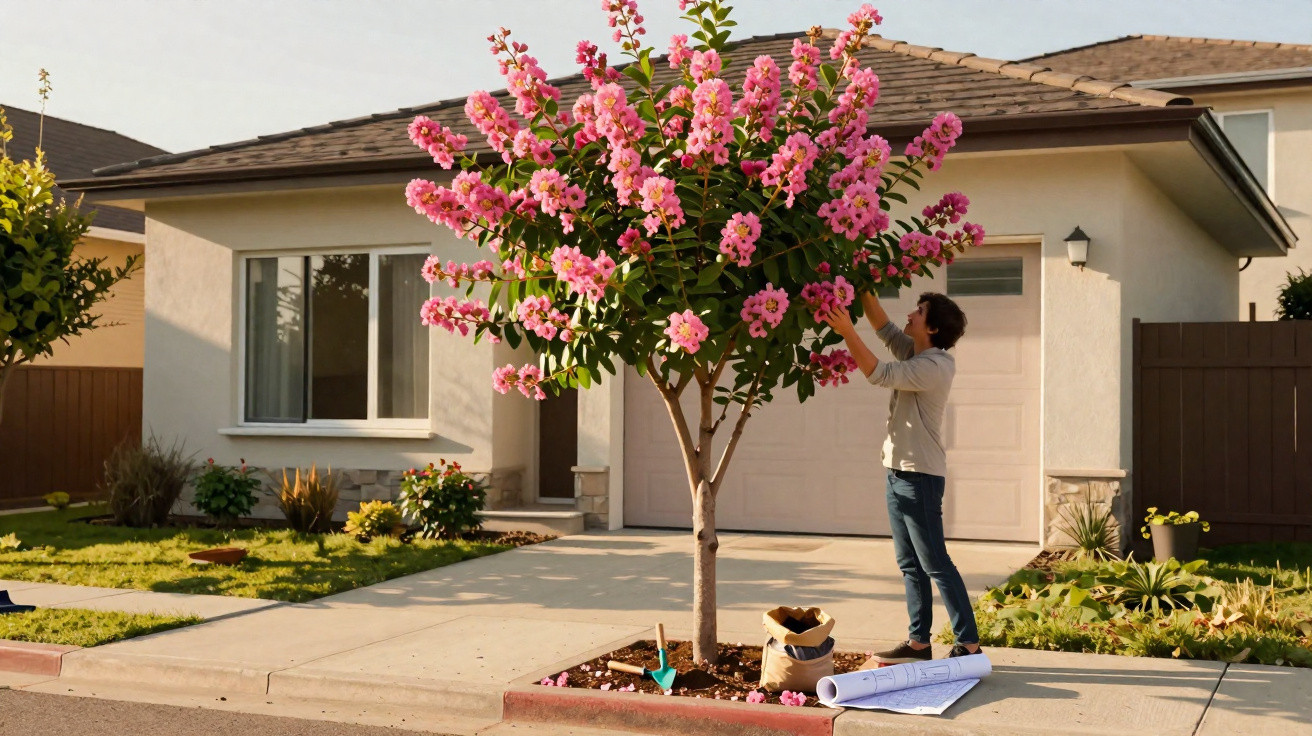
Choosing the right tree for the front of your home takes careful planning, especially where urban pavements are narrow. The crape myrtle is an excellent landscaping choice because it enhances the frontage without harming nearby concrete structures.
Why is the crape myrtle ideal for small pavements?
This ornamental species grows in a controlled way and brings striking beauty to modern residential settings. Many people end up dealing with lifted paving, but this plant has a gentle, shallow root system that helps protect the structural integrity of your pavement.
As well as reducing the chance of troublesome cracks in exterior surfacing, it has a small-to-medium size that suits areas with overhead power lines. For residents in housing developments, it offers the right balance between urban preservation and lush greenery.
Key features that make this tree such a strong option for small pavements include:
- Ornamental flowering: Vibrant petals that brighten up urban frontages.
- Sun tolerance: Handles full sun without leaf scorch.
- Non-invasive roots: A shallow root system that helps preserve pavements.
- Ideal size: A great fit for narrow pavements and residential developments.
- Quick clean-up: Leaf drop happens in a more concentrated period, making daily sweeping easier.
How does the plant cope with full city sun?
Intense heat in built-up areas often affects plants that are sensitive during the hottest seasons. However, Lagerstroemia indica shows impressive resistance in warm conditions, keeping its leaves healthy even with direct sun all day.
This robust climate adaptability means the tree can stay vigorous and attractive without demanding exhaustive watering or complicated daily care. Home gardens gain lasting colour from this hardy plant, which tolerates strong solar radiation on the home’s frontage.
Below is a video from the YouTube channel Admiring Nature that explores the points discussed in this topic in more detail:
What are the ornamental flowering benefits in landscaping?
The visual display created by its colourful blooms can quickly transform the look of any street or public garden. This strong decorative effect draws admiring attention from passers-by and can enhance the property’s appeal, with a wonderful, abundant flowering through the warm period.
Lagerstroemia indica
The Landscaping Favourite
The crape myrtle flowers intensely during the hottest months of the year, bringing colour to the pavement.
Its hardy structure copes well with urban pollution and with formative pruning without losing vigour.
Beyond the obvious aesthetic improvement for local residents, this greenery also brings a pleasant sense of wellbeing to urban pavements. Making this smart choice helps create a beautiful natural architecture that blends into everyday life in the residential neighbourhood.
Aesthetic benefits this plant brings to urban areas include:
- Vibrant colour that elevates the front of the home.
- Attraction of pollinators that enrich the local ecosystem.
- A perfect match with contemporary architectural elements.
Why does this tree prevent maintenance headaches?
Plants with aggressive root systems often damage underground pipework and concrete surfaces, leading to expensive, repeated repair work. Growing the crape myrtle removes those recurring concerns because its fine roots respect the physical limits of its growing space.
Leaf fall tends to happen in a more concentrated way, making it easier to keep the outside area tidy without constant build-up on urban pavements. This everyday practicality appeals to homeowners who want an elegant frontage alongside extremely simple, practical care.
Main factors that help reduce maintenance costs for this species:
- No thick roots that crack concrete paving.
- Leaves that drop seasonally and make sweeping easier.
- Controlled growth that reduces the need for frequent canopy intervention.
How should you plan planting a crape myrtle on your pavement?
For the best development of this ornamental sapling, pick a sunny spot with continuous direct sunlight. The soil needs good drainage to prevent excess moisture build-up, supporting healthy growth and a much more intense display of flowers.
Keeping a minimum setback from the kerb ensures branches can spread more freely without obstructing pedestrian movement. Following these basic steps from the start leads to a stunning tree that strengthens urban planning and enhances your property.
Read also: The tree that has become a trend in urban landscaping

Comments
No comments yet. Be the first to comment!
Leave a Comment