
Why does it really happen?
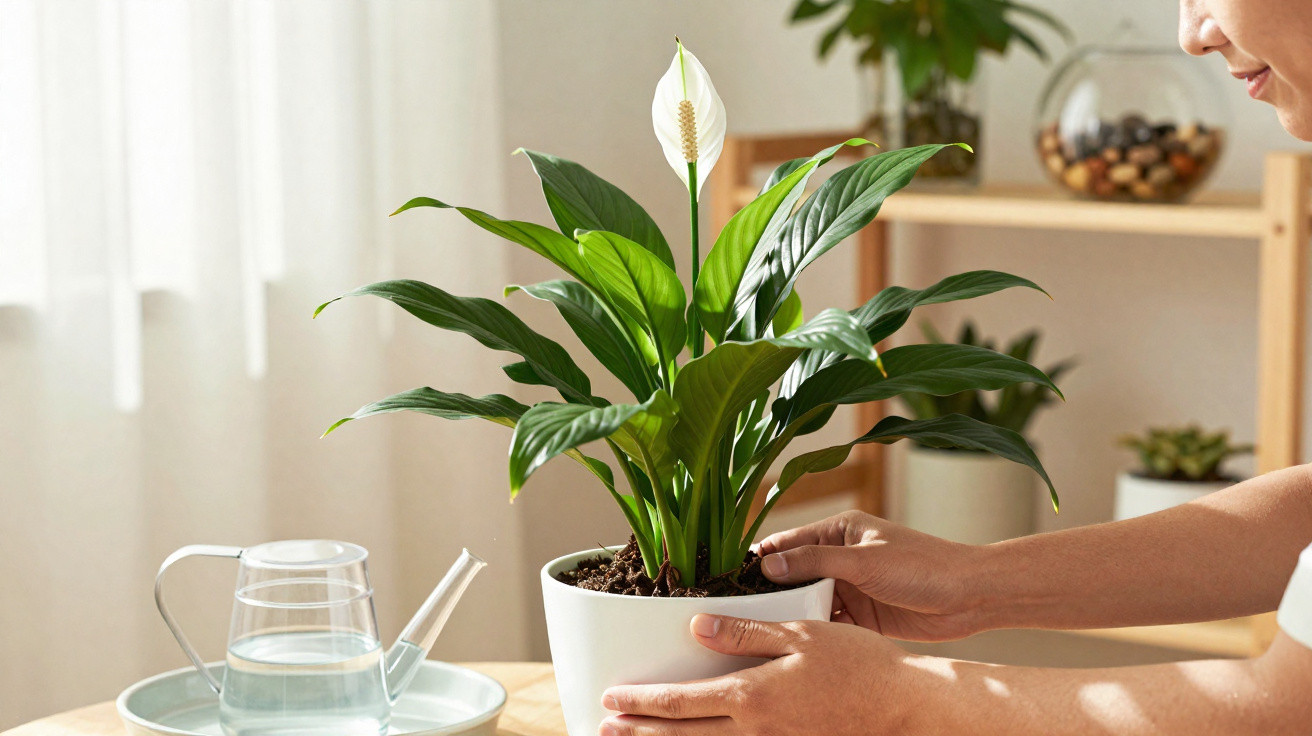
Anyone who keeps a peace lily (botanical name Spathiphyllum) will recognise the situation: the plant looks healthy, the leaves are glossy, yet fresh blooms never seem to arrive. You switch fertiliser, you repot it too - and still nothing much changes. In many cases, the hidden sticking point isn’t the compost or the position at all, but a routine that sounds almost too simple: watering.
Why your peace lily still won’t flower despite good care
Peace lilies come from shady tropical forests. In their natural habitat they grow beneath the canopy, sheltered from direct sun, in ground that stays consistently moist - but never waterlogged. That exact balance is what often goes missing in a pot at home.
If the plant gets too little water, it goes into survival mode. It may keep going, but it conserves energy and puts flowering on hold. Too much water is just as harmful: the roots sit in soggy compost, oxygen can’t reach them properly, rot can set in - and the plant stops producing flowers.
"A peace lily will only flower reliably when the compost inside stays gently moist at all times, but never soaking wet - and when the surface is allowed to dry out in between."
A lot of people water by the calendar: Wednesdays and Sundays, the same watering can every time. For a tropical houseplant, that kind of fixed routine is often counterproductive. Water demand can vary widely depending on the season, room temperature, pot size and light levels.
The “finger test”: the most important rule when watering
The easiest way to catch the right moment is the old-fashioned - but highly effective - finger test. It makes any watering app and rigid schedule unnecessary.
How the finger test works day to day
- Push your index finger about 2–3 cm into the compost.
- If the top layer feels dry but it’s still slightly cool and fresh underneath, that’s the ideal time to water.
- If it’s clearly moist even at 2–3 cm depth, wait before watering again.
- If everything feels dust-dry, your peace lily urgently needs water.
If you do this regularly, you’ll quickly notice how much the pace changes: in a warm, bright living room in summer, the plant may ask for water once to three times a week; in a cooler corner in winter, a moderate watering every two to three weeks can sometimes be enough.
There’s also a practical bonus: a peace lily is quite “talkative”. When the leaves droop limply, that’s very often a sign of underwatering. If you then water promptly, the leaves typically perk up again within a few hours. That response helps you develop a feel for the timing.
Water like a pro: bottom watering instead of watering from the top
Many experts recommend watering peace lilies mainly from below. The reason is straightforward: the roots draw up only as much water as they actually need, and the risk of waterlogging is much lower.
Bottom watering - step by step
- Fill a bucket, bowl or the sink with a few centimetres of water.
- Remove the decorative outer pot and place the inner plant pot directly into the water.
- Wait 10–15 minutes for the compost to soak up what it needs.
- Lift the pot out, let it drain thoroughly, and pour away any excess water.
- Only put the pot back into the outer pot once no more water is dripping.
If you water often, the difference is obvious: when watering from above, water can run down the sides of the pot or collect in the outer pot. With bottom watering, moisture spreads more evenly through the entire root zone.
"Bottom watering reduces the risk of root rot and ensures the peace lily absorbs exactly the amount of water it can actually use."
One point really matters: after the soak, don’t leave the plant sitting in water for hours. Whatever hasn’t been absorbed after 20 minutes should be tipped away.
Light, humidity and temperature: the quiet support team
Even the best watering habit has limits if the basic conditions aren’t right. Peace lilies prefer bright, indirect light. A spot about 1–2 metres from a window is ideal, as long as strong midday sun isn’t hitting the leaves directly.
In a dark corner, a peace lily may continue to grow, but it will rarely flower. On a sunny windowsill in full sun, leaves can scorch in places and develop yellow or brown patches - and flowering often fails there too.
| Factor | Ideal for the peace lily |
|---|---|
| Light | Bright, but no direct midday sun |
| Temperature | 18–24 °C, no cold draughts |
| Humidity | Slightly higher, avoid extremely dry air from heating |
| Watering rhythm | Based on the finger test, not the calendar |
Another factor many people underestimate is humidity. In tropical forests it’s high; in a typical home in winter, it’s often very low. If the peace lily sits right next to a radiator, both leaves and compost dry out quickly and the plant reacts with stress.
How to raise humidity without much effort
- Place the pot on a tray filled with damp clay pebbles.
- Group several plants close together so they create a more humid microclimate.
- When temperatures are above 20 °C, mist the leaves occasionally with low-limescale water.
Avoid spraying the flowers directly. The white bracts can develop marks or age faster.
How to spot stress and care mistakes in a peace lily
A peace lily usually makes it fairly clear when something is off. If you read the signals correctly, you can adjust quickly and encourage flowering again.
- Yellow leaves, mushy roots: usually points to waterlogging and watering too often.
- Droopy, dry leaves; compost pulling away from the pot edge: the plant is far too dry.
- Brown leaf tips: often caused by air that’s too dry or very hard (limescale-heavy) water.
- Hardly any flowers despite healthy leaves: a position that’s too dark, or compost that’s too rich and kept constantly wet.
For watering, room-temperature tap water is fine as long as it isn’t extremely hard. If you live in a hard-water area, you can use water that has been left to stand or collected rainwater. Cold water straight from the tap slows growth and can damage roots.
When fertiliser really helps - and when it doesn’t
Once your peace lily is watered correctly, you’ve created the foundation for abundant flowering. A suitable fertiliser can boost the effect, but it never replaces the right amount of water. During the growing season from spring to late summer, a weak liquid houseplant feed every two to four weeks is completely sufficient.
In autumn and winter, reduce feeding significantly or pause briefly. Growth slows, the plant needs fewer nutrients, and it becomes more sensitive to overfeeding. Too much fertiliser can scorch roots and weaken the plant even if your watering routine is otherwise spot-on.
Why the effort is worth it: the peace lily as a green air filter
With good care, a peace lily gives you more than attractive white blooms. These plants are widely regarded as hardy indoor air improvers. They trap dust, raise humidity slightly, and can absorb certain pollutants from the air.
Especially in small flats, a home office or a bedroom, a strong peace lily adds a calm look, dampens a bit of noise, and makes the room feel more pleasant. With the finger test, bottom watering, and a suitably bright spot, the ongoing effort stays manageable.
So if you have a plant that has been reluctant to flower so far, there’s no need to give up. Often it’s enough to use the watering can more deliberately, check the compost regularly, and offer a little more light and humidity. In many cases, the peace lily responds within a few weeks with new, bright white bracts - a clear sign the new routine has taken hold.

Comments
No comments yet. Be the first to comment!
Leave a Comment