
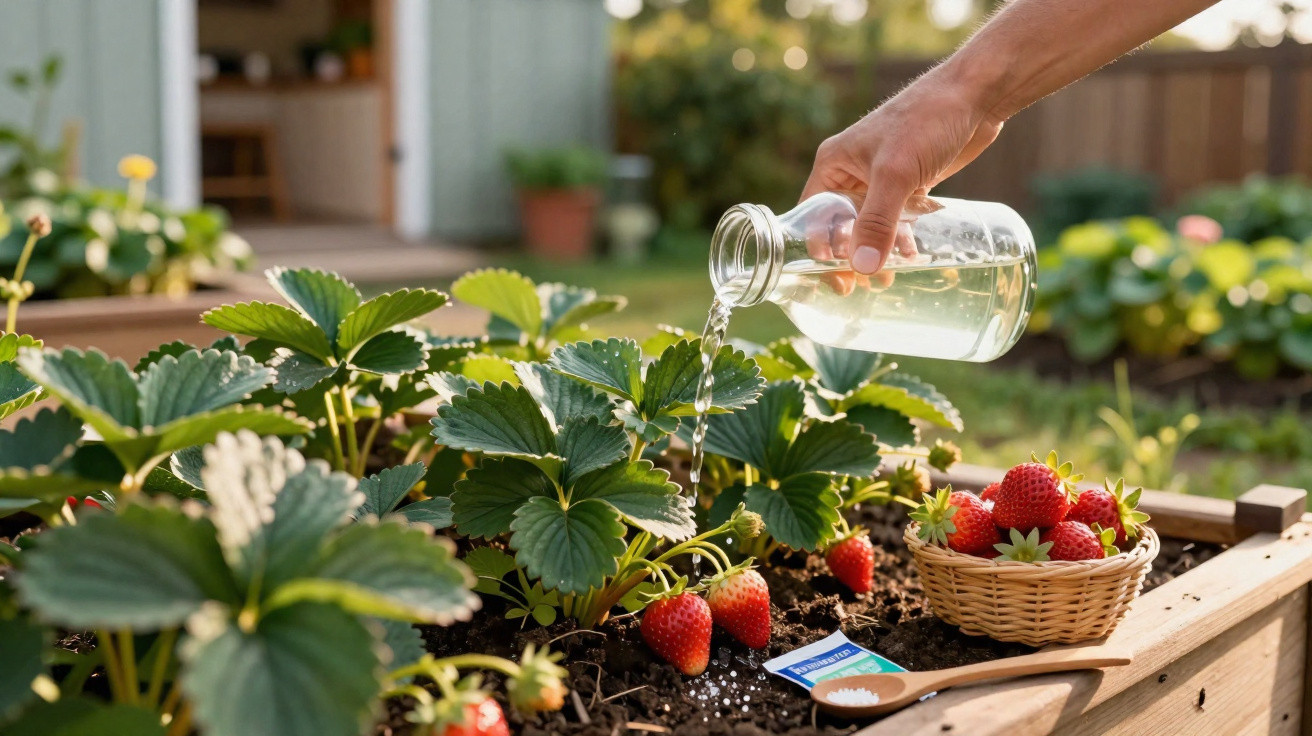
A modest three-ingredient mix is currently causing a stir in gardening forums. Instead of buying pricey specialist feeds, more and more people are turning to a homemade remedy they can mix up in minutes. Used properly, it works deep in the soil, supports roots and foliage - and can make strawberries noticeably larger and more fragrant.
The simple secret recipe: yeast fertiliser from the kitchen
At the heart of the method is a liquid fertiliser made from yeast, water and sugar - items most households already have. The real trick isn’t the effort involved, but getting the combination and application right.
"If you prepare this yeast mix correctly, you give your strawberries a nutrient boost you can see directly in the size of the fruit after just a few weeks."
To make the DIY fertiliser, you’ll need:
- 50 g fresh yeast or about 1 teaspoon dried yeast
- 1 litre lukewarm water
- 1 tablespoon sugar
How to do it:
- Crumble the fresh yeast into the lukewarm water, or whisk in the dried yeast.
- Add the sugar and stir everything thoroughly.
- Leave the mixture at room temperature for 24 hours so it can ferment.
- After a day, dilute it at a ratio of 1:5 with water (one part starter to five parts water).
- Apply around 0.5 litre of the diluted solution per strawberry plant, poured around the root area.
Before you feed, the soil should already be slightly moist so the fertiliser doesn’t simply run through dry ground. Ideally, water in the morning, while the soil hasn’t heated up yet.
Why yeast can drive strawberries towards giant fruit
The impact of this feed isn’t magic - it’s easy to explain biologically. Yeast is made up of living micro-organisms and contains plenty of B vitamins, proteins and minerals. In the soil, it stimulates other beneficial microbes, helping make nutrients available to plants.
The added sugar acts as a fuel source for these soil organisms. They multiply faster, break down organic material and, in the process, release nitrogen, phosphorus and potassium - exactly what strawberries need for strong growth, flower formation and larger fruit.
"Active soil packed with micro-organisms acts like a biological engine: it turns seemingly poor earth into a nutrient store for your plants."
Improved root development also helps plants cope better with drought and stress. You’ll notice this not only in bigger fruit, but also in juicier leaves and a generally more vigorous plant.
How often should you use yeast fertiliser?
For strawberries to benefit, it’s enough to apply it sparingly but consistently during the growth period. A rough schedule:
- First application shortly before flowering
- Second application when the first small fruits can be seen
- If growth is very strong, a third application two to three weeks later
More doesn’t automatically mean better. Too much liquid feed can soften the soil and make plants more susceptible to fungal diseases. If you’re also using compost, it’s best to be especially cautious with the dosage.
More natural fertiliser tricks for strong strawberry plants
Yeast fertiliser is a useful tool, but it’s not the only route to plump strawberries. Many gardeners combine it with other household approaches to improve soil over the long term.
- Liquid old bread: Soak stale bread in water, leave it for a week, then dilute 1:10 with water. The mixture contains broken-down grains and micro-organisms that help enliven the soil.
- Nettle tea (nettle liquid feed): Cover fresh nettles with water and leave to ferment for several days to weeks, then dilute 1:20. It mainly provides nitrogen and trace elements.
- Soured milk in the compost: Pour small amounts of old milk over the compost. As it breaks down, it forms a lime- and calcium-rich feed that supports the stability of plant cells.
- Poultry manure, heavily diluted: Mix chicken droppings with water at 1:10 and apply only before flowering. It’s very nutrient-rich, so use sparingly.
Each method brings a slightly different nutrient profile. If you know your beds, you can adjust accordingly: lots of leafy growth but few flowers often means there’s already plenty of nitrogen, and a more balanced option such as yeast or compost is the better fit.
Conditions: without sun and water, even the best fertiliser won’t do much
Even the cleverest fertiliser idea only works if the basics are in place. Strawberries are hardy, but they respond clearly to site and care.
| Factor | Recommendation |
|---|---|
| Light | 6–8 hours of direct sun daily for sweet, large fruit |
| Watering | Keep soil evenly moist, avoid waterlogging, ideally water in the morning |
| Soil pH | Between 5.5 and 6.8, slightly acidic to mildly neutral |
| Plant spacing | About 30–45 cm between plants so air can circulate |
If strawberries are planted too close together, you increase the risk of fungal problems and end up with smaller fruit. Leaves and berries need airflow and light. A mulch of straw or wood chips helps retain moisture and stops berries sitting directly on the soil and rotting.
Practical tips and common mistakes when using yeast fertiliser
In practice, the same missteps crop up again and again. A few simple rules prevent most issues:
- Use only fresh yeast or yeast stored correctly: Old, inactive yeast has little effect.
- Always dilute the mixture: The starter is highly concentrated; used neat, it can irritate roots.
- Don’t pour onto dry, hard soil: Water normally first, then apply the feed.
- Avoid daily applications: The soil needs time to process the nutrient boost.
- Watch the smell: A strong rotten odour suggests the mix has been left too long - in that case, make a fresh batch.
For potted strawberries on a balcony or terrace, use an even lighter hand. Roots are more confined, and excess nutrients can’t drain away as easily.
Why strawberries respond so strongly
Strawberries are among the crops that show a very clear reaction to good nutrition. They form shallow roots, so they absorb nutrients mainly from the upper soil layers and benefit greatly from lively soil biology. A short-lived but intense boost like yeast fertiliser lands exactly where it’s most useful.
If you grow varieties that are naturally vigorous - for example, garden strawberries or everbearing strawberries with high yields - the effect can be even more noticeable. Combined with a sunny position and loose, humus-rich soil, fruit can end up clearly larger than on conventionally fertilised plants.
"Experienced gardeners report that their fruit visibly increases in size after just a few weeks - without chemicals, simply using a kitchen-cupboard trick."
Healthy soil, better harvest - also interesting for other plants
This yeast approach isn’t limited to strawberries. Many berry bushes, tomatoes, cucumbers and peppers respond similarly well when soil life is activated. For heavy-feeding crops, you can apply the fertiliser selectively to support periods of strong growth.
Even with the advantages, it pays to stay attentive: if you have very heavy, clay-rich soil, it helps to improve structure alongside feeding - for example with compost, sand or leaf mould. That allows yeast fertiliser to work far more effectively. In sandy soils, more organic matter helps prevent nutrients from being washed out too quickly.
Overall, the method shows how much can be achieved with simple means: a look in the kitchen cupboard, a little patience while it ferments - and strawberry plants can repay you with plump, juicy fruit that stands out in the bed.


Comments
No comments yet. Be the first to comment!
Leave a Comment