
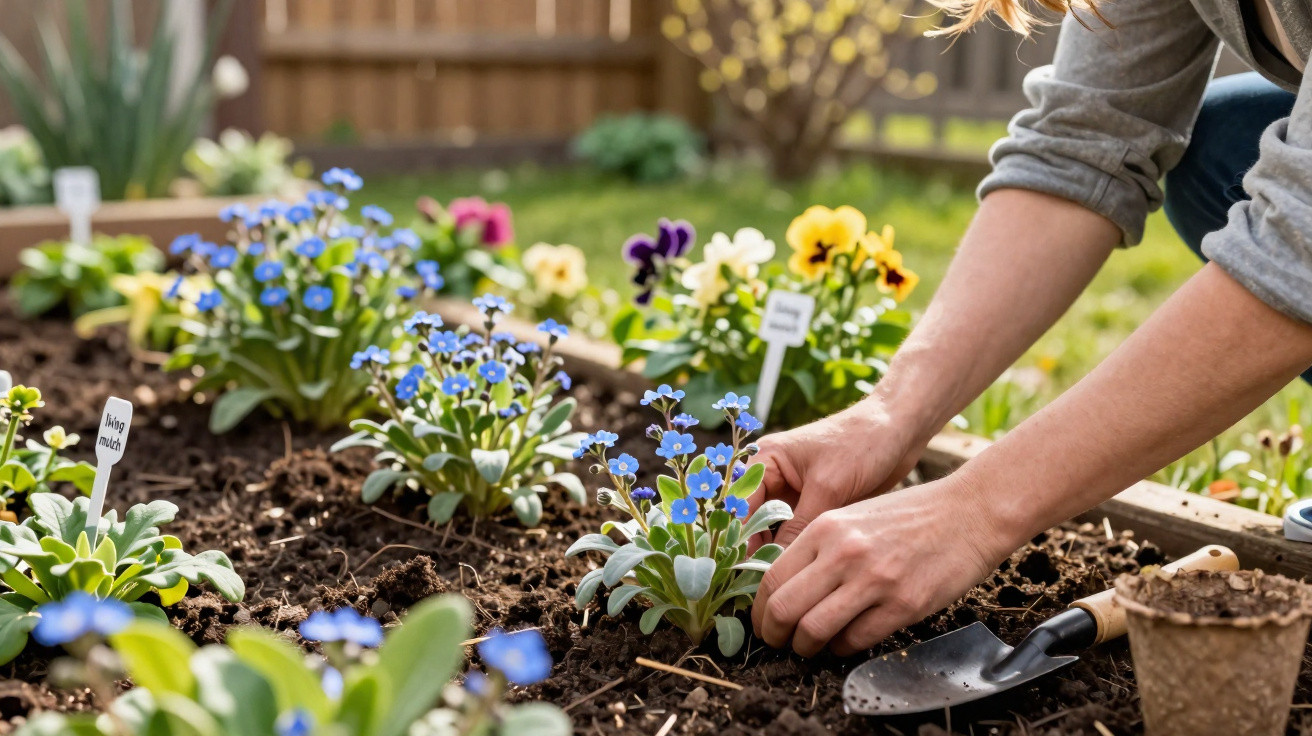
If you don’t want to spend every weekend in spring on your knees weeding, a smart planting approach can make your garden almost weed-free.
Instead of hauling basket after basket of weeds out of your borders, more and more home gardeners are turning to a living carpet of perennials. With the right ground cover plants chosen carefully and planted close together, they take over the job that would otherwise fall to hoe and hand - and March is the best time to get started.
Why weeds keep coming back even though you weed constantly
In the soil there’s a huge reserve of seeds. Gardeners call it a “seed bank”. Seeds that have sat there for decades are simply waiting for light, moisture and air before they spring into action - and that’s exactly where the trouble begins.
When you hoe deeply or leave beds bare for long periods, you bring those seeds up to the surface. They get light, they germinate - and the whole weeding cycle starts again. In other words, every vigorous bit of cultivation effectively “opens” that seed account.
“Bare soil over the long term practically invites wild plants in. Every gap gets filled - either by your perennials, or by what you experience as weeds.”
On top of that, not every unwanted plant behaves the same way. Annual weeds such as chickweed or purslane mainly spread via seed. Perennials with deep taproots - for example dandelion or cleavers - sit far down and will re-sprout from leftover root fragments.
Different strategies for different weeds
If you want less work, you need a rough idea of what you’re dealing with. For day-to-day gardening, this simple grouping is often enough:
- Annual wild plants: germinate from seed, flower, die back, and leave fresh seed behind
- Perennial deep-rooters: form strong roots and re-grow from pieces left in the ground
- Woody seedlings: tiny trees and shrubs which, if removed too late, take a lot of effort to get out
With annuals, it’s usually best to cut them off just above the soil surface instead of digging around. That way you kill the plant without dragging new seeds up from deeper layers.
Perennial deep-rooters need a different approach: aim for soil that’s damp but not waterlogged. Then you can work the taproot free fairly deeply using a dandelion fork (weed puller) or a narrow spade. The fewer root remnants you leave behind, the less often the plant will return.
Small seedlings of maple, beech or ornamental shrubs can also become a real issue. Ignore them and, within a few years, you’ll have root problems in the border. Ideally, pull these young plants out in their first year - later on you’ll be forced to dig.
Living mulch: when perennials simply crowd weeds out
A classic method for suppressing unwanted growth is bark mulch. It covers the soil and slows down many seeds. However, it needs topping up regularly, it can tie up a bit of nitrogen as it rots down, and it doesn’t suit the look of every garden.
Much more interesting is “living mulch”. This means perennial ground covers that spread into a green, flowering layer across the soil. They shade the ground, deny seedlings the light they need, and take up water and nutrients before the “unwanted” plants can.
“A dense carpet of perennials barely lets any light reach the soil - seedlings simply don’t stand a chance.”
These plants come with several benefits at once:
- They keep the soil cooler and more evenly moist.
- They protect against capping and erosion during heavy rain.
- They provide insects with pollen, nectar and shelter.
- Over time they save a lot of effort, because there’s far less hoeing to do.
Brunnera macrophylla - the standout among spring ground covers
Among professionals, Caucasian forget-me-not (Brunnera macrophylla) is seen as a real workhorse for shady and semi-shady spots. It forms dense clumps, spreads readily on its own, and puts on a strong floral display in spring.
Typical characteristics of this perennial:
| Feature | Brunnera macrophylla |
|---|---|
| Position | Partial shade to shade, humus-rich soil |
| Flowering period | Roughly mid-March to mid-May |
| Flower colour | Bright blue, forget-me-not-like |
| Growth habit | Forms dense carpets, self-seeds readily |
| Special feature | Also available as cultivars with silvery patterned leaves |
In shaded borders, beneath shrubs, or along the edge of woody planting, this perennial turns dull ground into a light, flowered carpet. Where you previously had to hoe around individual plants, later on a quick glance is often enough - just to see whether any stubborn intruder is poking through.
How to plant in March: step by step
March works so well because the soil is often dry enough to work, yet still fresh. The plants then have a full growing season to establish before the next winter arrives.
- Prepare the soil
On a frost-free day, remove existing weeds thoroughly, including their roots. Loosen only the top layer rather than digging deeply, so you don’t activate new seeds. - Work in compost
Add a thin layer of well-rotted compost and lightly rake it in. This supplies nutrients while keeping the soil relatively undisturbed. - Keep spacing tight
Ground covers are intentionally planted closer than traditional perennials. Depending on the species, spacing of 20–30 cm makes sense. The aim is for the foliage to meet within one to two years. - Water in thoroughly
After planting, water each plant well so the soil settles around the roots. This closes air pockets and helps establishment. - Support the first season
In year one, water occasionally - especially during dry spells - and pull any weeds that do appear as early as possible.
“March is considered the ‘starting gun’: plant carefully once, and then the perennials increasingly take over your weeding work.”
Which perennials will close the ground densely over the long term
Brunnera macrophylla is only one example. For different parts of the garden, there are other ground covers that perform just as reliably.
Suitable species for shade and partial shade
- Caucasian forget-me-not: flowers early; likes humus-rich, slightly moist soil.
- Barrenwort (Epimedium): delicate spring flowers; surprisingly tolerant of dry conditions under trees.
- Waldsteinia: evergreen with yellow flowers; a good choice for awkward corners beneath trees.
Sunny spots: flowers instead of gravel
In full sun, you’ll need sturdy species that can handle heat and drought:
- Thyme and other cushion herbs: fragrant, free-flowering and attractive to bees; ideal for edging and dry-stone walls.
- Stonecrop types (Sedum): cope well with poor soils and store water in their leaves.
- Cranesbill varieties: form loose but fairly closed carpets and bring plenty of colour to borders.
It’s important to plant several of the same kind rather than mixing everything together at random. A larger block of one perennial looks calmer and closes the ground more effectively than a patchwork of single plants.
Tips to keep a flowering carpet low-maintenance for the long run
Living mulch isn’t completely hands-off. Still, a few simple habits will keep the workload low:
- Don’t keep digging and hoeing: the less you disturb the soil, the quieter the “seed bank” remains.
- Keep an eye on edges: if ground covers become too enthusiastic, slice them back with a spade and gift the surplus or replant it elsewhere.
- Respect the light: perennials in shade often grow a little taller and looser. In heavy shade, it can pay to combine different species.
- Feed selectively, not excessively: in most gardens, a little compost once a year is entirely sufficient.
If you’re unsure how a species behaves, trial it in a smaller patch first. You’ll quickly see whether its habit, height and flowering suit your own garden style.
What terms like “living mulch” really mean
The phrase “living mulch” is ultimately a straightforward idea: instead of laying organic material such as bark pieces over the soil, a cover of plants performs the same job - with far more life and colour.
For the soil, that means less temperature fluctuation and more consistent activity below ground. Earthworms and micro-organisms tend to do better, and over the years that improves soil structure. Water infiltrates more easily, and both waterlogging and bone-dry conditions become less common.
The risks are limited, provided you avoid extremely aggressive spreaders. If you plant ground covers that run too freely - for example some ivy or goutweed forms - you’ll have to intervene more later on. Better choices are species that knit together, but can still be guided.
The concept is also interesting when paired with vegetable gardens. Between tall-growing crops, you can use low, tough plants to protect the soil. Examples include low-growing thyme varieties around the edges, or clover in quieter corners. That creates a system where crops and ground covers work together - and the weeding basket ends up much lighter.
Comments
No comments yet. Be the first to comment!
Leave a Comment