
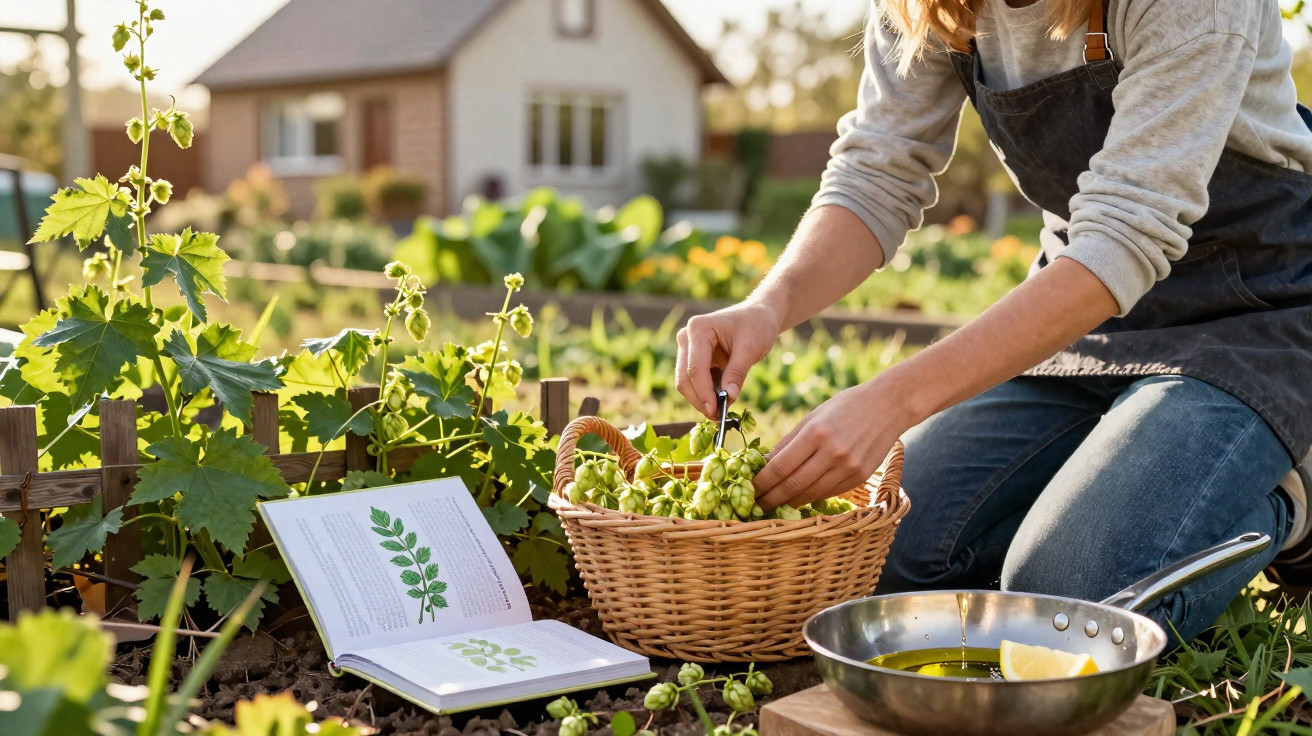
When people tidy the garden in spring, they often cut back an unremarkable green climber growing through the hedge. It spreads quickly, clings to anything it can wrap around, and returns year after year from the same rootstock. For most amateur gardeners it is simply an annoying weed. In fine dining, however, this very plant is a quiet seasonal star-and, at one specific stage, it can fetch several hundred to as much as 1,000 euros per kilogram.
A “weed” as a delicacy: wild hops in the spotlight
What looks like a nuisance is wild hops. It is not the cones known from beer production that command the high prices, but the soft, young shoots that appear in early spring. Among food lovers they are nicknamed the “truffle of the North” or “poor man’s asparagus”, because they are both highly sought-after and hard to obtain.
On top markets for gourmet cuisine, freshly harvested, hand-picked wild hop shoots can reach up to 1,000 euros per kilogram in spring.
That price is driven by several factors at once: harvesting is labour-intensive, yields are tiny, and the season is extremely short. At the same time, the shoots are prized for a distinctive, elegant flavour-gently bitter and nutty, with subtle herbal and citrus notes. They are particularly well-known as a spring delicacy in Belgium and parts of France, and increasingly they are also attracting interest from inventive kitchens in Germany.
Why the shoots cost so much
To make up 1 kilogram of the coveted shoots, collectors need hundreds of individual spears. Each one weighs only about 1 gram, and the usable part is typically just the top 2–3 centimetres-the tender, buttery tip. Lower down, the stem is often already fibrous.
On top of that, foragers usually come across the plant in places that are not especially easy to work: woven through hedges, on verges and woodland edges, alongside streams, or in overgrown corners of gardens. There, the shoots must be found, correctly identified, cut carefully and sorted immediately. That takes time, practice and a good eye.
- Work involved: entirely by hand, often while crouching
- Short season: essentially only a few weeks in March and April
- Limited locations: only where the site and soil suit the plant
- High expectations from top chefs: only flawless, very fresh produce
For that reason, the often-quoted 1,000 euros per kilogram refers to exceptional batches intended for high-end hospitality. A casually picked handful from the back of the garden will not achieve that figure, but it can still be sold locally or offered directly to restaurants-provided quality and freshness are right and the legal position (for example, collection rights in the wild) is in order.
How to identify wild hops in your own garden
Wild hops is a perennial climbing plant with a rough vine that can feel slightly prickly. It winds itself around almost anything it can reach: old shrubs, fences, posts and even other perennials. One feature is especially helpful for identification: the stems always twist upwards clockwise, meaning from left to right.
The leaves sit opposite each other in pairs along the stem. They are palm-shaped, coarsely toothed and faintly reminiscent of vine or maple leaves. The plant favours moist, nutrient-rich soil and often shows up in places such as:
- hedges and garden boundaries
- banks of streams or ponds
- woodland edges and open scrub
- neglected, semi-shaded corners of the garden
In early spring, the valuable shoots appear: slender, flexible stems in a delicate green, sometimes with a violet tinge. When they grow in shade they can look almost white. If you gently rub them between your fingers, a resinous, lightly lemony, savoury aroma becomes noticeable-another clue that you are dealing with hops.
Risk of confusion: not everything that climbs is edible
Less experienced foragers can easily mistake wild hops for other climbers. It becomes dangerous with poisonous species such as white bryony (a dioecious plant). It can also occur in hedges, climbs in a similar way and may look comparable when young. If there is any uncertainty, non-experts should avoid eating it and instead ask an experienced plant specialist.
If you are not one hundred per cent sure you are holding wild hops, it is better to leave the shoots where they are.
Even harmless plants such as bindweed can look similar at first glance, but they do not have the characteristic hops aroma. Accurate identification is essential before anything is taken into the kitchen.
From “garden annoyance” to a source of income: what you can do with hops
Once you have clearly identified the plant in your own garden, there are several ways to put it to use. The simplest is to harvest the young shoots and cook with them. Many chefs treat them much like fine asparagus.
Popular preparation methods include:
- briefly blanched in salted water, then tossed in butter
- steamed and served with lemon butter
- stirred through risotto or pasta, similar to green asparagus
- served as a side dish with fish, eggs or veal
The taste is slightly bitter, reminiscent of young leafy vegetables, with a nutty edge. Paired with richer ingredients such as butter, cream or eggs, it creates an aromatic contrast that is valued in high-end cooking.
The female hop cones that appear later in the year are used differently. They can add flavour to craft-brewed beer, or be included in herbal tea blends that are believed to have a calming effect. Herbal practitioners often combine them with lemon balm or valerian for evening teas.
How much can you harvest legally and sustainably?
In your own garden, the owner decides what happens. If hops is growing along your hedge, you can harvest the shoots without concern as long as you do not destroy the plant entirely. In the wild, however, nature conservation rules and collection limits apply. In many areas only small amounts for personal use are permitted; large-scale harvesting for sale requires permission.
From an ecological point of view, restraint is sensible too. The plant provides habitat for insects, and its vines offer birds cover. Leaving some shoots each year helps protect the stand and ensures a continuing supply-whether in the garden or along field margins.
Practical tips for hobby gardeners and food lovers
If you would like to try it, start looking deliberately for the first hop shoots from late winter onwards. It helps to remember-or mark-where the climber grew most vigorously the previous year. Those spots usually produce the greatest number of shoots the following spring.
- note or mark last year’s locations
- check regularly from March to see whether shoots are visible
- cut only the tender tips using a clean knife or scissors
- use quickly, or keep chilled wrapped in a damp cloth
If you want a more reliable supply, you can also choose to tolerate one or two plants in the garden. A sturdy fence or a dedicated climbing arch makes it easier to keep growth under control. That way the plant stays manageable, provides fresh shoots each year, and does not overwhelm the rest of the border.
For anyone who enjoys experimenting with regional ingredients, wild hops can be a fascinating addition: a spring delicacy on the plate, a flavouring for home-brewed beer, or a calming component in an evening tea. With a little knowledge and care, what seemed like a hedge problem can become a useful resource-and, in the best case, even a small sideline if nearby restaurateurs are actively looking for it.

Comments
No comments yet. Be the first to comment!
Leave a Comment