
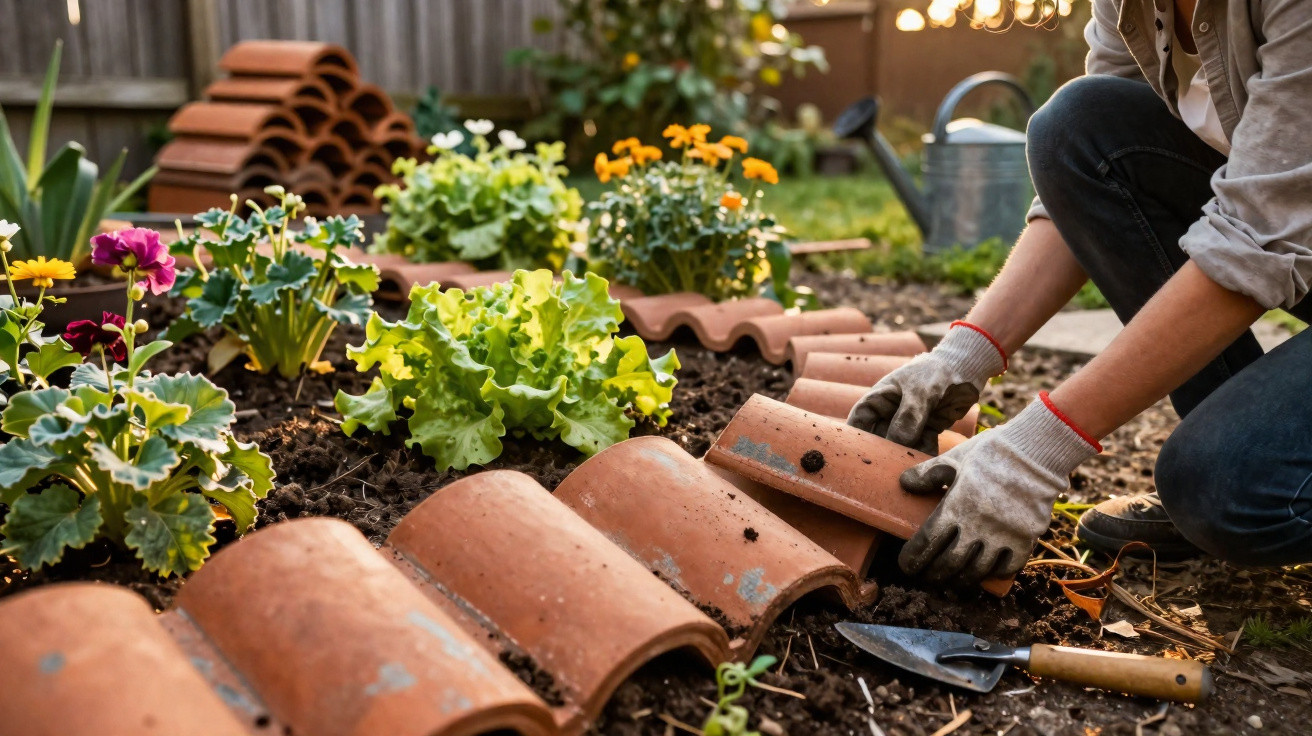
Reusing old roof tiles in the garden is no longer just a quick fix; it has become a well-used landscaping approach. As well as cutting down on construction waste, clay roof tiles bring a rustic look, sit comfortably with a wide range of outdoor styles, and can be turned into bed edging, small walls, supports for vegetable patches, and even sheltered spots for garden wildlife.
Why use old roof tiles in the garden?
Using old roof tiles in the garden combines sustainability, cost savings and creativity. By extending the lifespan of this material, homeowners reduce the need for new supplies and lower the amount sent to landfill, linking reuse with other habits such as composting and harvesting rainwater.
Because they are made from fired clay, roof tiles have strong thermal mass: they take in heat during the day and release it gradually overnight. This can help keep soil temperatures steadier in beds and vegetable plots, supporting plants that prefer cooler conditions and contributing to a more balanced microclimate.
Watch a video on the YouTube channel Orchard and Vegetable Garden in Pots about reusing old building materials, such as roof tiles and bricks, to make decorative borders and shelters in the garden:
https://www.youtube.com/watch?v=F0B6bUjscb4
How can you use old roof tiles in the garden creatively?
There are plenty of ways to work old roof tiles into landscaping without major building work. It is best to choose pieces that are still sound, avoiding tiles with deep cracks, to improve safety and help the finished features last longer outdoors.
These tiles can help structure the space, mark out paths, and even act as bases for pots and succulents. Below are a few flexible uses that suit gardens of many different sizes:
- Bed edging: Set upright, angled or laid flat, they tidy up planting beds and make it harder for grass to creep in.
- Small retaining edges: Stacked in layers, they create simple supports for gentle level changes and raised beds.
- Targeted decoration: Use them as stands for succulents, platforms for pots, or accents within gravel paths.
What practical ideas work for old roof tiles in vegetable patches and planting beds?
In home vegetable patches and ornamental beds, roof tiles help hold soil in place, protect the ground surface, and add useful structure. Styles such as “monk and nun” tiles, or flatter tiles, can be alternated to produce wavy edging or upright panels that also define where people should walk.
Another practical option is building raised beds, which improve drainage, warm the soil more quickly, and make day-to-day care easier for anyone who needs to avoid frequent bending. To extend durability, it can help to build on a base of blocks or concrete, reducing the tiles’ direct contact with constantly damp soil.
What should you watch out for when reusing old roof tiles in the garden?
Before fitting the tiles, it is worth sorting through them and discarding any that are badly cracked or have crumbling edges. For taller features-such as raised vegetable beds or small retaining edges-the foundation should be level and, where necessary, strengthened with stones or blocks for added stability.
Handling also calls for care around sharp corners and chips, so using gloves, closed-toe footwear and suitable tools is sensible. With these precautions, old roof tiles can take on a new role as both structural and decorative elements, supporting drainage, providing shelter for beneficial insects, and helping create a tidier, more sustainable garden.





Comments
No comments yet. Be the first to comment!
Leave a Comment