
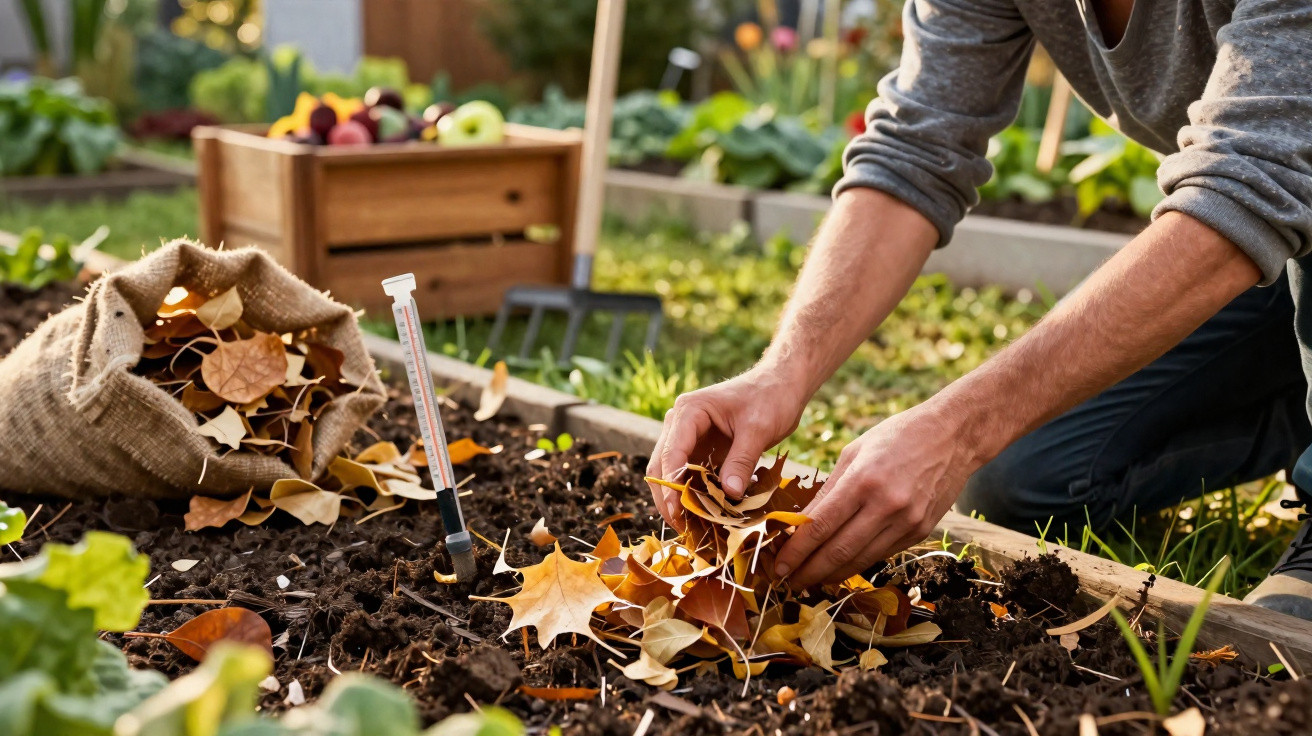
Many people rake up the debris that drops on lawns without noticing the remarkable fertile potential locked inside that organic matter. Rather than sending everything to the general waste bin, turning this biomass into natural fertiliser strengthens the soil and helps safeguard the garden through shifting weather patterns.
Why are dry leaves valuable for the earth?
As this plant cover breaks down slowly, it returns essential elements to plants and encourages underground biological life. When you keep leaves in the garden, they supply valuable nutrients that improve soil aeration and form an effective layer of thermal protection against severe frosts.
On top of that, leaving these plant leftovers on beds helps the soil hold on to water for far longer. This approach cuts the need for frequent watering, delivering sustainable savings while preserving the moisture required for strong root development in cultivated species.
How can you turn kitchen scraps into effective fertiliser?
Techniques recommended by specialists point to precise ratios of organic waste that can speed up home composting without… Read more
How can you reuse organic material in composting?
Home composting is a sensible destination for the leaf litter gathered after sweeping patios and gardens. By combining this dry biomass with wetter waste, the gardener produces a balanced compost that hastens breakdown and enriches the final humus with nitrogen.
Shredding the leaves before adding them to the heap makes the decomposers’ job much easier and brings results sooner. This ongoing aeration prevents unpleasant smells, while drawing in beneficial earthworms that turn raw material into excellent organic fertiliser for roots.
Below is a video from the Minhas Plantas (YouTube) channel on YouTube that sets out the best practices for using it:
What is the importance of mulch on garden beds?
Applying dry leaves directly over the surface works as an indispensable thermal insulator for pots and beds. This plant-based barrier shields roots from sudden drops in temperature, keeping conditions suitable for the continuous growth of ornamental plants.
Another major advantage is the physical control of self-seeding weeds that compete for space and sunlight. By blocking direct sun, the mulch reduces unwanted germination and improves the biological structure of the soil’s top layer.
Essential Soil Kit
Natural Cover Management - Key actions for applying biomass effectively:
- 1
Shred the leaves to speed up breakdown; - 2
Spread even layers beneath shrubs and across beds; - 3
Keep the soil slightly damp to attract microorganisms.
What precautions should be taken when using leaves?
Although extremely beneficial, using fallen leaves requires attention to the health of the material you collect in the garden. Throwing away leaves with spots or signs of pests helps prevent serious diseases spreading to the rest of your home planting.
It is also essential to avoid overly thick, compacted layers that could smother roots or block oxygen from getting through. Proper handling ensures clean decomposition, creating long-lasting fertility without undermining the vigour of the species growing in your favourite beds.
Follow these essential steps to keep management safe:
- Set aside diseased leaves before you begin;
- Avoid building up layers that are too thick and compact;
- Keep appropriate clearance around the main stems.
How does this habit transform the garden routine?
Adopting this sustainable practice reduces household waste and removes the constant need to buy pricey chemical inputs. The gardener builds a balanced biological cycle, where each plant residue becomes rich nutrition and returns vitality to ornamental plants.
With small day-to-day tweaks to garden upkeep, the soil develops natural resilience against bad weather and extended dry spells. Looking after beds with this abundant resource supports local biodiversity, encouraging a thriving ecosystem that is far more productive.
Comments
No comments yet. Be the first to comment!
Leave a Comment