
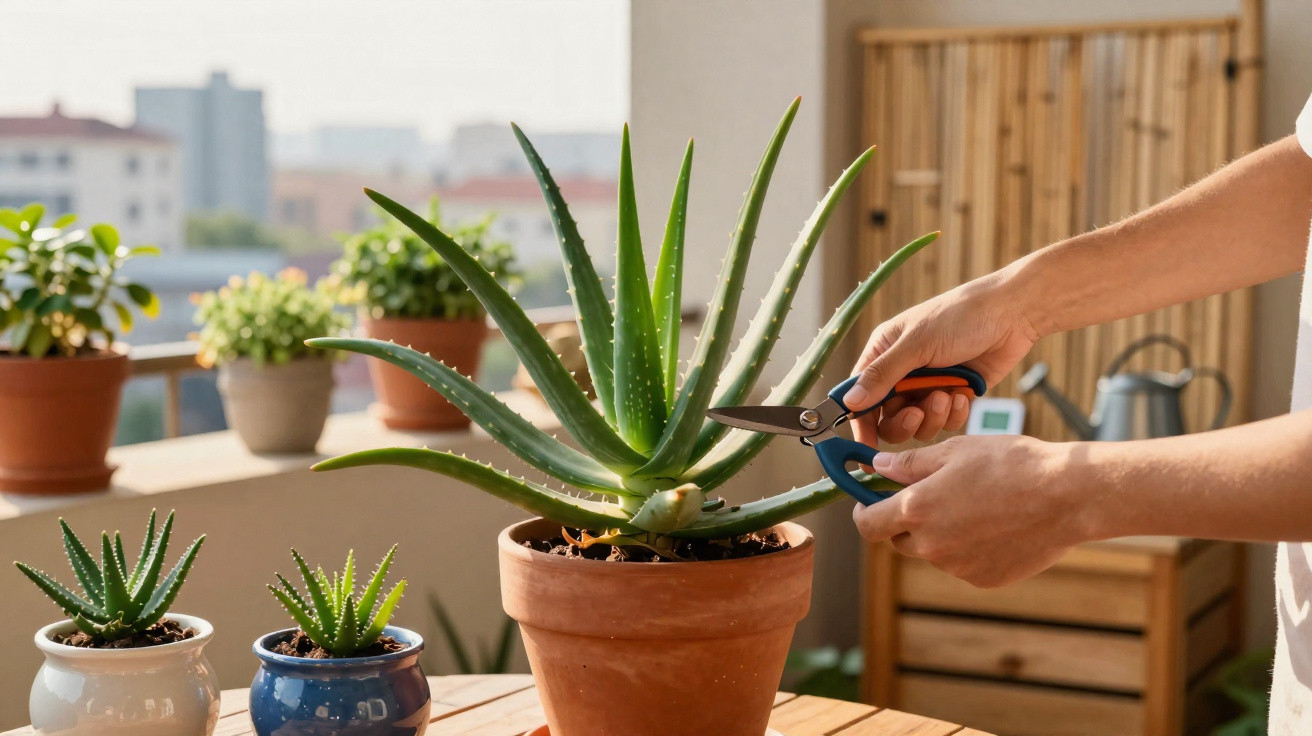
Keeping a beautiful, vigorous aloe on your balcony means understanding how this species grows when it is confined to a pot. The key to long life is not how often you water it, but the careful, absolute preservation of its lower basal leaves.
How do you keep your aloe vera looking good and healthy on an apartment balcony?
Many residents make the mistake of stripping away the plant’s lower sections to make the pot look neater. That impulsive tidying-up can upset the plant’s nutritional balance, because it relies on those older structures to support ongoing, healthy development.
If you want a plant that stays upright, full and attractive, the priority is protective upkeep and saying no to unnecessary cuts. Below is a clear set of the main points to help you safeguard the base of your green plant with success and practicality.
- Natural protection: Older leaves form a physical barrier that shields the stem from urban fungal issues.
- Water reserve: The base stores crucial water for periods of intense heat on the balcony.
- Mechanical stability: Lower weight helps keep the pot perfectly balanced in strong winds.
What is the big Asian secret to aloe vera longevity?
By looking at traditional techniques used in Thailand, it becomes clear that long-lasting cultivation is rooted in respecting the plant’s natural biological cycle. They recognised that disturbing the base weakens the structure-whereas leaving it intact allows the specimen to stay strong and healthy for many seasons in a row.
This eastern know-how has reshaped how people approach potted plants in modern flats across today’s major cities. Following this principle prevents premature losses and delivers striking foliage, changing day-to-day care for such a resilient species.
To see exactly how Asian growers handle this correctly without harming the plant, it is worth watching the excellent explanatory content from the Vida Verde YouTube channel, which demonstrates this valuable, practical secret in a very clear way:
Why can incorrect pruning harm leaf development?
Removing basal leaves without a sound reason disrupts the flow of essential nutrients. This abrupt interference creates unnecessary stress for the plant, slowing the appearance of new shoots and diminishing the look of your pot on the balcony of your apartment.
Incorrect Handling Alert
Consequences of cutting too early
When we take off the lower leaves without a genuine plant-health reason, we leave exposed wounds that become an entry point for harmful micro-organisms.
On top of that, we interrupt the plant’s natural process of reallocating resources on its own to keep the top growth strong and attractive.
Understanding this biological dynamic helps you avoid serious mistakes and ensures your specimen grows in a balanced way. Here is an essential list of the exact times removal is truly necessary to protect your plant safely.
- Leaves that are completely dry and brown.
- The appearance of soft rot caused by excessive moisture.
- A severe pest attack that compromises the leaf structure.
How do you water correctly without compromising the plant’s structure in pots?
Correct watering plays a crucial role in root development when growing in confined spaces. Watering only when the compost is dry prevents harmful damp entirely, helping the lower leaves stay firm, healthy and far more resistant.
To achieve the best possible results in your own space, here are the main water-care practices recommended. These straightforward steps can transform your daily routine, bring more vitality to your indoor pots, and deliver impressive durability with real simplicity.
- Check deeper moisture by pressing a finger into the compost.
- Use pots with effective drainage holes so water can escape quickly.
- Do not allow water to sit in the saucer underneath the container.
What essential care ensures it lasts for years?
This species’ longevity depends directly on the grower taking a patient approach. Avoiding needless aesthetic interference at the leaf base is the central pillar for keeping the specimen vigorous and decorating your home with lasting elegance and beauty.
By adopting these simple habits and respecting the plant’s natural integrity, you secure an impressively long life cycle. The results bring real personal satisfaction, establishing a green space that is genuinely charming, harmonious and filled with enduring life and vigour.
Comments
No comments yet. Be the first to comment!
Leave a Comment